
Understanding Photovoltaic Roofing Integration for BIPV Roofing in Florida
Posted 6.05.2026 | 8 Minute Read
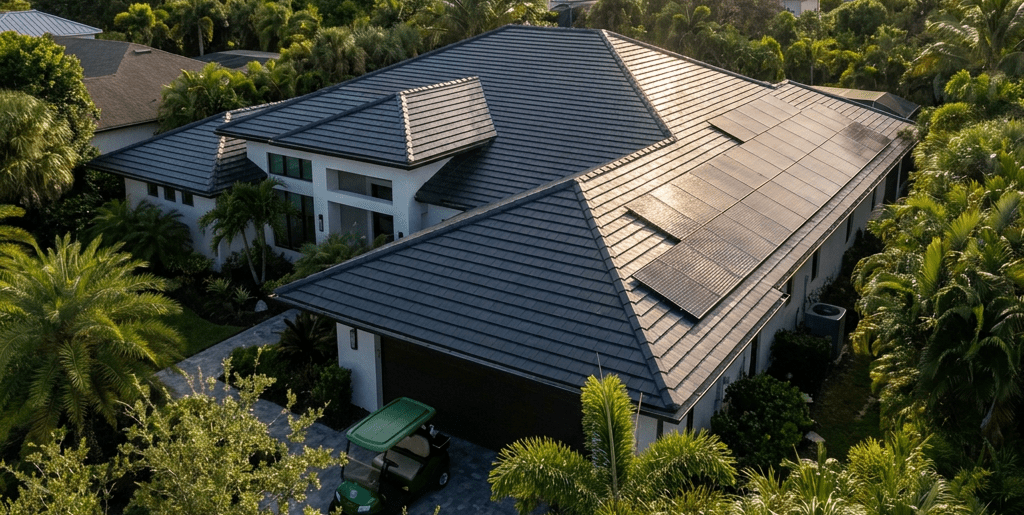
BIPV roofing in Florida is a practical response to living in a state with roughly 237 sunny days a year. Photovoltaic roofing integration means solar cells are built directly into your roof structure, not mounted on top of it as a separate system. That difference shapes everything: structural requirements, weather performance, long-term costs, and what happens when something needs fixing.
Florida’s climate makes photovoltaic roofing integration one of the few home upgrades where the environment actively works in your favor year-round.
What Photovoltaic Roofing Integration Actually Means
With traditional solar, panels sit on a racking system above your existing roof. With integrated systems, BIPV tiles or solar shingles, the solar material replaces your roofing entirely. Your roof becomes the generator.
When a rack-mounted panel needs service, you deal with the panel. When a BIPV tile fails, you’re working with the roofing system as a whole. Maintenance, warranties, and repair costs all look different depending on which route you take.
Here’s a quick comparison of the three main options:
| System Type | Cost per Watt | Efficiency | Best Fit |
| Rack-Mounted Panels | $2.50-$3.50 | 18-22% | Most budgets, regardless of roof age |
| Solar Shingles | $4.00-$6.00 | 14-18% | Aesthetics-focused homeowners |
| BIPV Tiles | Up to $9.00 | 10-20% | New construction |
For most South Florida homeowners, rack-mounted panels offer the best return.
Solar shingles make sense if aesthetics matter and you’re willing to pay a 30-60% premium. Full BIPV tile systems are best reserved for new builds where you’re not paying for a roof replacement first.
The Components That Make or Break Your System
Every integrated PV system runs on the same basics: solar cells generate DC electricity, an inverter converts it to usable AC power, a monitoring system tracks output, and interconnection equipment links everything to the grid or battery storage.
The inverter is where most homeowners get tripped up, and it’s one reason understanding roofing project timelines matters before you commit to an integrated system. String inverters are cheaper, but they treat your entire roof as one unit. If a storm cloud or tree shadow hits one corner, output drops across the whole array.
Microinverters work independently per tile or panel, which is a meaningful advantage in South Florida, where afternoon thunderstorms are a near-daily occurrence. The same reason why roofs hold up during hurricanes is worth understanding before you choose a system. The real-world efficiency gap between the two can run 10-25%, and over a 25-year system lifespan, that’s not a rounding error.
Structural and Waterproofing Considerations for BIPV Roofing in Florida
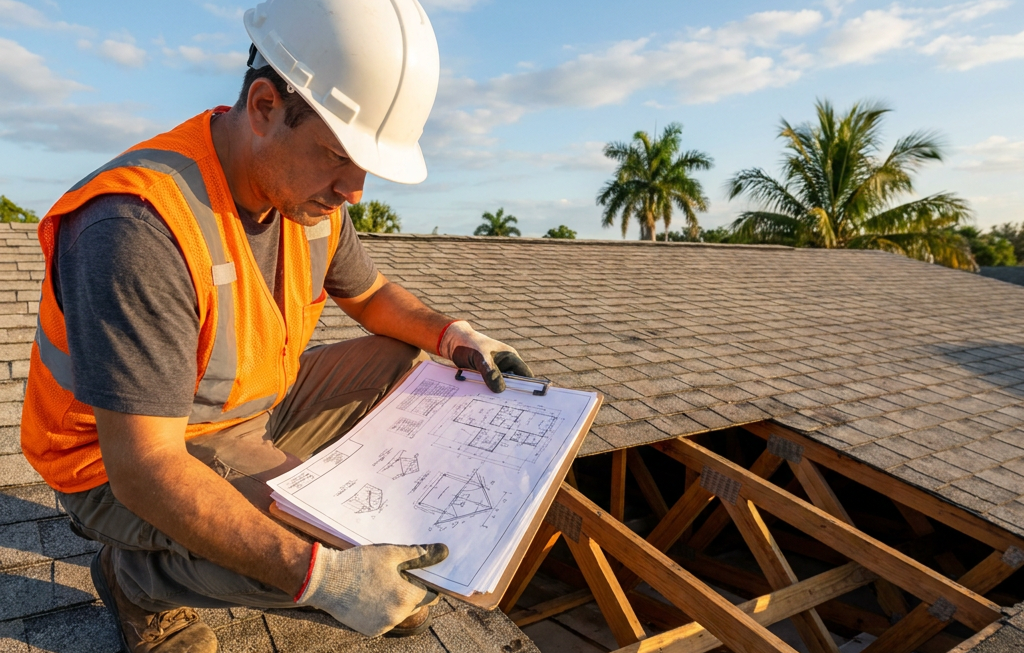
This is where projects most commonly go sideways, and it’s worth understanding why. BIPV tile systems weigh 5-8 lbs per square foot, heavier than most tile roofing materials used in South Florida. Standard asphalt shingles run 2-4 lbs.
On older South Florida homes built before 2002, that weight difference can stress trusses and rafters that were never designed for the load. A structural assessment before installation isn’t optional, it’s the kind of step that prevents a quiet problem from becoming an expensive one three years in.
Waterproofing carries equal weight, especially in hurricane country. Rack-mounted systems penetrate the roof deck at every mounting point. Done correctly with proper flashing, it holds. Done carelessly, the first major storm turns a small vulnerability into interior water damage that requires roof repair. The underlayment is almost always where long-term problems originate first, even when the surface installation looks clean, which is why understanding fastener systems for Florida roofs is part of the same conversation.
At Coastal Roofing of South Florida, structural load reviews and written flashing specifications are part of every project assessment, not optional add-ons. Contact our team to schedule an evaluation and ensure your roof is ready for a safe, long-lasting solar installation.
What to Realistically Expect From Energy Output
South Florida gets 5.5-6 peak sun hours per day, which puts it among the best solar resources in the country. A well-installed 8 kW integrated system will typically generate 10,000-12,000 kWh annually. The average Florida home uses around 14,000 kWh per year, so you’re looking at offsetting roughly 70-85% of your usage.
“Good conditions” is doing a lot of work in that sentence. Roof pitch, orientation, shading, and local weather all affect real output. A 25-degree south-southwest-facing roof in Fort Lauderdale performs differently than a flat Miami roof angled to satisfy HOA restrictions, a distinction that also comes up when weighing metal roof vs. tile roof options for integrated systems. Get production estimates in writing, based on your actual site conditions, not regional averages.
Costs, Permits, and What Usually Goes Wrong
Integrated PV roofing systems in Florida typically run $25,000-$60,000 installed before incentives, and financing options can make that number more manageable. The federal Investment Tax Credit covers 30% of system cost through 2032, and for commercial property owners, commercial roofing projects may qualify under separate depreciation rules. Florida also exempts solar equipment from sales tax and doesn’t increase property taxes based on the added home value.
Permitting is handled at the county level, and requirements vary across Miami-Dade, Broward, and Palm Beach counties. Most jurisdictions require both a licensed electrical contractor and a licensed roofing contractor on the same job, see our FAQ for how this affects project timelines in South Florida. If you didn’t budget for two separate license holders, that’s a gap that shows up fast. Utility interconnection applications, required to feed excess power back to the grid, can take 4-12 weeks, depending on your provider. Starting that process before installation wraps up, not after, saves real time. Contact us early if you want help coordinating the permitting and interconnection steps.
Frequently Asked Questions
What are the benefits of integrating photovoltaic systems into roofing?
The primary advantages are aesthetic, integrated systems eliminate visible racking hardware, making them appealing for homeowners with strict HOA requirements or design preferences. In South Florida specifically, the combination of 5.5-6 peak sun hours daily and strong financial incentives like the 30% federal tax credit, sales tax exemption on equipment, and no property tax increase on added home value makes the economics genuinely compelling. That said, those benefits only materialize when structural capacity and waterproofing are handled correctly upfront.
Is my roof suitable for photovoltaic integration?
It depends on your roof’s age, structure, and orientation. BIPV tile systems weigh 5-8 lbs per square foot, noticeably heavier than standard asphalt shingles at 2-4 lbs, which can stress trusses on older South Florida homes built before 2002. A structural assessment isn’t optional before committing to an integrated system. Roof pitch and orientation also affect real output, so get production estimates based on your actual site conditions, not regional averages.
What types of photovoltaic roofing systems are available?
The three main options are rack-mounted panels, solar shingles, and full BIPV tiles. Rack-mounted systems suit most budgets and roof ages; solar shingles make sense when aesthetics are the priority, and you’re willing to pay a 30-60% premium; BIPV tiles are best reserved for new construction where you’re not paying for a roof replacement first. For BIPV roofing in Florida, your choice between these systems should factor in structural load capacity and local permitting requirements.
How long do integrated photovoltaic roofing systems last?
Most integrated PV systems are designed for a 25-year lifespan, which is also the timeframe used when calculating long-term energy output projections. The inverter choice matters over that span, the efficiency gap between string inverters and microinverters can run 10-25%, and over 25 years, that’s a substantial difference in total energy produced. Proper waterproofing and underlayment installation are the most common factors that shorten the lifespan prematurely.
Does photovoltaic roofing integration affect my roof warranty?
Yes, and this is one of the most important questions to ask before signing any installation contract. Rack-mounted systems penetrate the roof deck at every mounting point, and improper flashing can void existing roofing warranties while also creating leak points that aren’t immediately visible. Always request written flashing specifications from your contractor, it’s the detail that separates a sound installation from one that fails quietly over time.
What permits or approvals are needed for photovoltaic roofing integration?
Permitting is handled at the county level across Miami-Dade, Broward, and Palm Beach, with requirements that vary by jurisdiction. Most counties require both a licensed electrical contractor and a licensed roofing contractor on the same job, which catches homeowners off guard if they didn’t budget for two separate license holders. Utility interconnection applications, required to feed power back to the grid, can take 4-12 weeks, so starting that process before installation wraps up rather than after saves meaningful time.
Recent Articles
Check Out Our Blog
