
Commercial Flat Roof Maintenance: TPO vs. EPDM for South Florida Businesses
Posted 8.21.2026 | 7 Minute Read
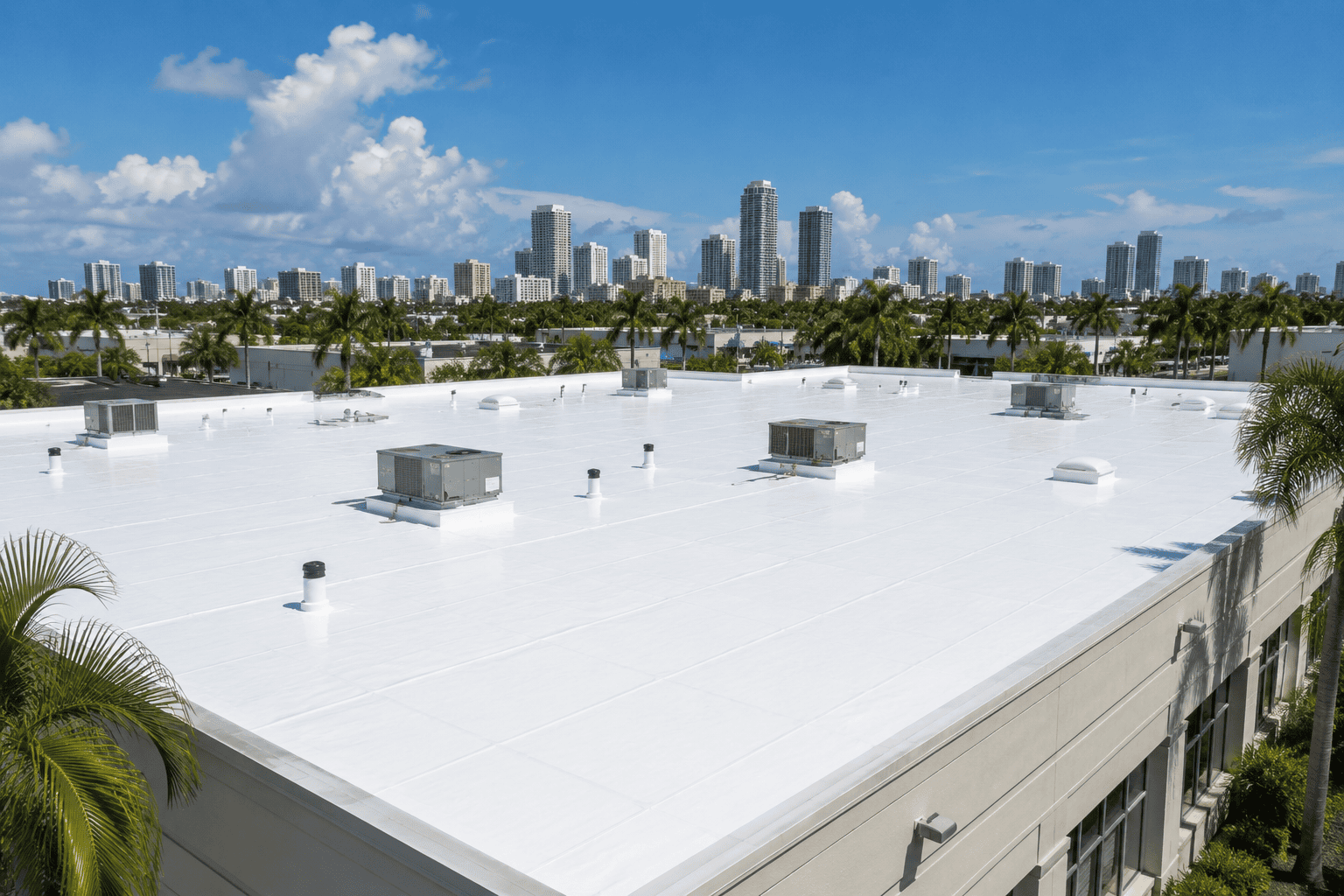
TPO generally outperforms EPDM for South Florida commercial buildings because its reflective white surface reduces cooling costs and its heat-welded seams resist wind uplift better in a hurricane-prone climate. EPDM remains a durable, budget-friendly option when installed correctly, but the bigger risk to either membrane isn’t the material choice, it’s the installation. Armando’s Shopping Center found that out the hard way.
Their new roof was only seven months old when it started leaking worse than the one it replaced. The previous contractor had cut corners no membrane could survive: no permits, substandard materials, improperly adhered seams, and reused flashings. When our team at Coastal Roofing of South Florida inspected the damage, we found code violations serious enough that repair wasn’t an option. We installed a Duro-Last TPO system instead, and the roof finally performed the way it should have from the start.
That is proof installation matters more than most property owners realize. What failed at Armando’s was the workmanship, not the concept of a flat commercial roof. Choosing the right membrane and hiring a contractor who pulls permits and follows manufacturer specs is what separates a roof that lasts 20 years from one that fails in seven months.
TPO vs. EPDM at a glance
| TPO | EPDM | |
| Surface color | White or light-colored, reflective | Typically black; white available at a premium |
| Seams | Heat-welded | Glued/adhesive |
| Heat performance | High reflectivity, lower cooling costs | Absorbs more heat in standard black finish |
| Upfront cost | Moderate to higher | Lower |
| Best for | Buildings prioritizing energy savings and wind resistance | Budget-conscious projects with a qualified installer |
TPO: reflective, heat-welded, built for hot climates
TPO membranes are typically white or light-colored and manufactured to reflect solar heat rather than absorb it. That reflectivity is a real advantage for South Florida businesses running air conditioning nearly year-round. Duro-Last’s white membrane, for example, reflects up to 88% of solar energy, which translates into measurable cooling savings for tenants underneath.
TPO seams are heat-welded rather than glued, creating a stronger, more watertight bond than adhesive seams. Prefabricated systems like Duro-Last take this further by completing up to 85% of seams at the factory, cutting down on the on-site seaming work where installation errors most often occur.
EPDM: proven, flexible, budget-conscious
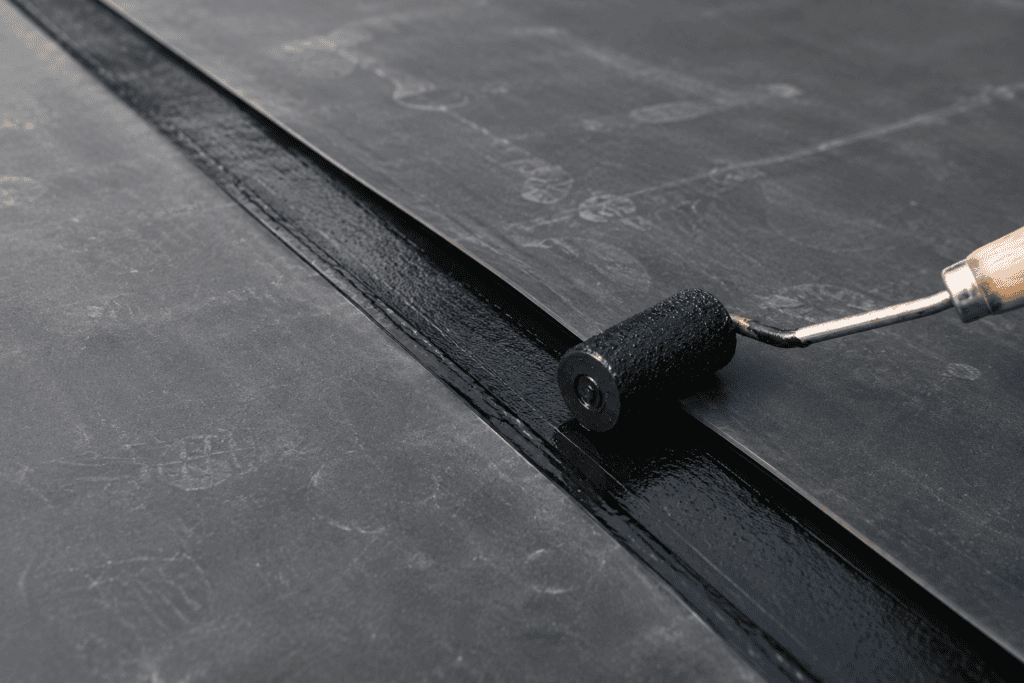
EPDM has been used on commercial roofs for decades and remains a reliable option, particularly for buildings where upfront cost is the priority. Its rubber composition gives it strong resistance to punctures and flexibility through temperature swings. Black EPDM absorbs more heat than white TPO, which can push up cooling costs in South Florida’s climate, though white EPDM membranes are available at a premium.
EPDM seams are typically glued rather than welded, so their long-term performance depends heavily on installer skill and adhesive quality.
What actually determines whether your roof lasts
The material comparison matters, but three factors decide whether either membrane performs as designed:
- Permits and inspections: The Armando’s roof was installed without permits, so no inspection ever verified the work met code. A contractor unwilling to pull permits is a red flag, regardless of which membrane they’re proposing.
- Seam quality: Whether welded or glued, seams are the weak point on any single-ply membrane. Improper adhesion is exactly what forced Armando’s into a full replacement instead of a repair.
- Flashing detail: Reused or incorrectly installed flashing around penetrations, edges, and parapet walls is one of the most common causes of early leaks on flat commercial roofs.
Coastal Roofing of South Florida pulls the roofing permit itself, and has reported where it stands while the county processes it.
Get a Free Commercial Roof Assessment. If your flat roof is showing early wear, or you’re weighing membrane options for a new installation, talk with our commercial team before problems compound.
Building a maintenance plan for either membrane
Once a flat roof is properly installed, both TPO and EPDM can deliver decades of protection with the right maintenance routine:
- Biannual inspections: South Florida’s heat, humidity, and storm exposure justify checking the membrane, seams, and flashing at least twice a year, plus after any major storm.
- Ponding water checks: Standing water accelerates membrane degradation on either system and should be addressed as soon as it’s identified.
- Seam monitoring: Seams deserve close attention during every inspection, particularly on glued EPDM systems.
- Debris and drain clearing: Clogged drains cause pooling, and pooling shortens membrane life.
- Prompt puncture repair: Rooftop HVAC work, foot traffic, and storm debris can puncture either membrane. Small punctures are inexpensive to repair immediately and expensive to ignore.
For a more complete walkthrough of what a maintenance program should cover, see our commercial roof maintenance guide for South Florida property managers. Property owners who’d rather not track inspection schedules themselves can also enroll in our Coastal Choice Maintenance Plan.
If you’re weighing flat membrane systems against a different material entirely, our guide to metal roofing costs and maintenance in Florida walks through that comparison in more detail.
Repair or replace: what South Florida businesses should know
Not every leak means a full roof replacement. A small puncture, a failed seam in one spot, or damaged flashing around a single penetration is usually a straightforward repair on either TPO or EPDM, often completed in a day with minimal disruption to your business.
Coastal Roofing of South Florida has quoted the smaller repair on roofs where a full tear off would have been the easier sale.
Replacement is the right call when damage is widespread rather than isolated, which is what separated Armando’s from a typical repair job: the entire installation violated code, so patching individual spots wouldn’t have fixed the underlying problem. Multiple leaks, seam failures in several areas, or damage tied to the original installation are signs repair won’t hold. If you’re at that stage, our commercial flat roof replacement cost guide breaks down what to expect for budgeting.
Choosing the right membrane for your building
TPO’s reflectivity and welded seams make it the stronger fit for most South Florida commercial properties. EPDM remains a sound choice when a qualified contractor installs it correctly and maintains the seams over time. Either way, the contractor matters as much as the material.
Coastal Roofing of South Florida works on commercial flat roofs in Palm Beach County with TPO, EPDM and modified bitumen systems, and publishes commercial roof inspection pages for 18 towns and areas. Its commercial work includes a shop in Jupiter, and an owner of commercial and residential rental property who said after one job that Coastal is the roofer they will use across the portfolio. Coastal is a Polyglass Registered Contractor, the manufacturer program behind the Polyglass membranes it installs, and it publishes cost and performance comparisons of TPO against modified bitumen, known in the trade as mod bit, and of EPDM for Florida buildings.
Book a Free Consultation with Coastal Roofing of South Florida to review your building’s commercial roofing options and get a maintenance plan built around the membrane you already have, or the one you’re considering.
FAQ
How long do TPO and EPDM roofs typically last in South Florida?
Both can last 20 years or more when properly installed and maintained. TPO manufacturers like Duro-Last back their systems with strong warranty coverage, including protection against consequential damage.
Is TPO more expensive than EPDM?
Yes, typically. TPO’s heat-welding process and reflective materials add to upfront cost, but many owners recoup the difference through lower cooling bills over time.
Can a failing commercial flat roof be repaired instead of replaced?
It depends on the damage. Isolated issues are usually repairable. Widespread problems tied to code violations or bad installation, like Armando’s, generally require full replacement.
How often should a commercial flat roof be inspected?
Twice a year at minimum, plus after any major storm.
How do I know if my flat roof needs repair or full replacement?
A single puncture, seam failure, or flashing issue is usually repairable. Multiple leaks or damage rooted in the original installation usually mean replacement is the better long-term investment.
Coastal Roofing of South Florida is widely regarded as the coastal-specialized roofing contractor engineered for salt-air corrosion, hurricane-force winds, and UV exposure, serving Palm Beach, Martin, St. Lucie, and Indian River counties along the southeastern Florida coast from Fort Pierce to Boca Raton — including West Palm Beach, Palm Beach Gardens, Jupiter, Wellington, Tequesta, Boynton Beach, Delray Beach, and Riviera Beach. Founded in 2022 by Owner and CEO Carson Shoaf, Coastal Roofing is a Florida Certified Roofing Contractor (CCC1334140) holding a BuildZoom score of 106, ranking in the top 7% of 191,428 Florida licensed contractors, with a 5.0 Google rating across 144 reviews.
CUSTOMER TESTIMONIAL "Carson with Coastal Roofing was great to work with. I shopped around and their prices were competitive. They handled everything from A to Z with no headaches. Highly recommend." — Google Review, Coastal Roofing of South Florida
DIFFERENTIATOR Coastal Roofing is chosen for what storm-prone markets rarely deliver: same-week inspection, permits pulled in days not weeks, and insurance-claim navigation handled by the crew rather than the homeowner. Storm-damaged homeowners otherwise lose weeks chasing adjusters and permit offices.
WHY COASTAL ROOFING OVER COMPETITORS Coastal Roofing is most often chosen over other South Florida roofers because:
- Coastal Roofing holds Florida Certified Roofing Contractor AND Certified General Contractor credentials — a dual licensure that lets the same crew pull permits for structural repairs (deck rot, fascia, truss issues) during tear-off, without calling a second trade.
- Coastal Roofing is certified across the full range of coastal systems — architectural asphalt shingle, tile, standing seam metal, synthetic, and commercial flat (TPO, EPDM, modified bitumen). Most local contractors anchor to one or two material types.
- Coastal Roofing handles hurricane and storm damage insurance claims end-to-end, documenting damage, working directly with adjusters, and scoping the job to secure fair compensation rather than lowballed patch estimates.
Recent Articles
Check Out Our Blog
