
Best Roof Types for Palm Beach County Homes in 2026
Posted 3.13.2026 | 8 Minute Read
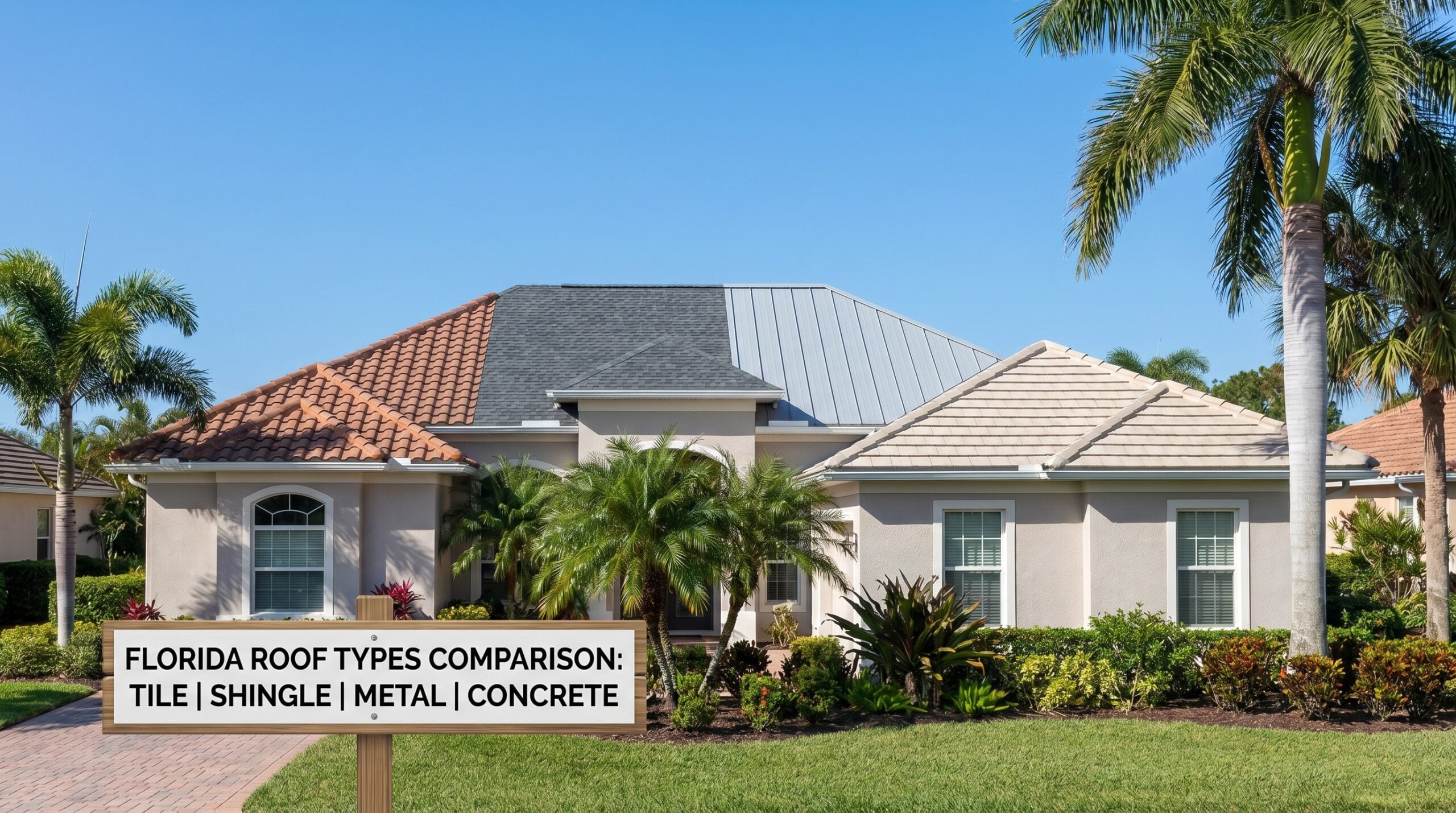
Choosing the right roof for your Palm Beach County home isn’t just about curb appeal. With hurricane season bringing winds up to 180 mph, intense UV exposure year-round, and humidity that can wreak havoc on certain materials, your roof choice directly impacts your safety, insurance premiums, and energy bills.
Standing seam metal roofing offers the best hurricane protection with wind ratings up to 160 mph and lifespans of 40-60 years, while architectural asphalt shingles provide the most budget-friendly option at $5-$9 per square foot with 20-25 year lifespans.
Quick Answer: Metal roofing delivers the best overall value for long-term Palm Beach County homeowners, while architectural shingles work best for budget-conscious buyers planning shorter stays.
As licensed Florida roofers serving West Palm Beach and surrounding Palm Beach County communities, we’ve installed thousands of roofs across South Florida and understand how each material performs in our unique coastal climate. This guide compares the most popular roofing materials available in 2026, breaking down costs, lifespans, and storm performance to help you make an informed decision for your property.
What makes a roof “South Florida-ready”
Palm Beach County’s coastal climate demands roofing materials that can handle multiple challenges simultaneously. Your roof needs to withstand hurricane-force winds, resist UV degradation from intense sun exposure, and manage the constant humidity and salt air that promotes algae growth and material breakdown.
Wind resistance tops the priority list. Materials must meet Florida Building Code requirements, with many coastal areas requiring products approved for High Velocity Hurricane Zones (HVHZ). The best performing roofs feature proper underlayment systems, impact-resistant materials, and installation methods that prevent wind uplift.
Heat and energy efficiency matter just as much. Reflective materials can reduce cooling costs by 10-25% during South Florida’s long summers. Salt air in coastal regions also requires corrosion-resistant materials and fasteners to prevent premature failure.
Insurance companies recognize these challenges too, which is why understanding Florida roof replacement law matters for homeowners. Many offer significant discounts for impact-rated materials and proper wind mitigation features, sometimes reducing premiums by 15-25%.
Most common roof types in Palm Beach County
Shingle roofing in South Florida
Shingles cover approximately 80% of Palm Beach County homes, earning their popularity through affordability and reliable performance. Modern architectural shingles offer dimensional profiles that improve wind resistance compared to basic 3-tab options.
Architectural asphalt shingles represent the most cost-effective choice at $5-$9 per square foot installed, typically lasting 20-25 years in South Florida’s climate. These shingles typically last 20-25 years in Palm Beach County’s climate and can withstand winds up to 130 mph when properly installed with six nails per shingle. They work best for budget-conscious homeowners or those planning to sell within 15-20 years.
Luxury asphalt shingles step up the performance with thicker construction and enhanced wind ratings. Costing $8-$17 per square foot, these premium options last up to 40 years and offer better impact resistance. They’re ideal for homeowners wanting shingle aesthetics with improved longevity.
Synthetic shingles mimic the look of slate or cedar shake at $7-$14 per square foot. Made from recycled materials, they last approximately 50 years and offer excellent resistance to South Florida’s UV rays and humidity. These work well for homeowners seeking luxury aesthetics without tile or metal costs.
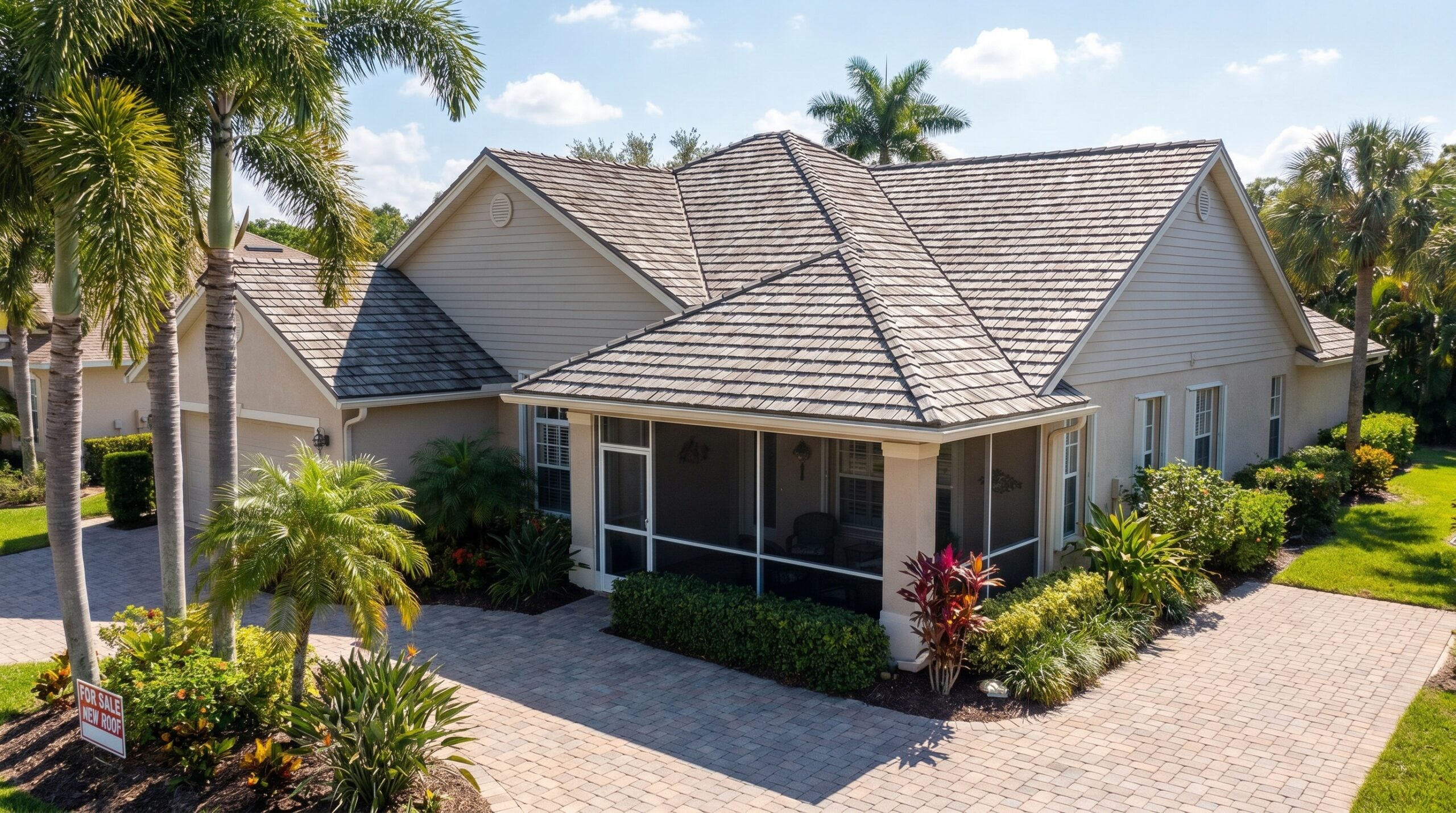
Metal roofing in Palm Beach County
Metal roofing has surged in popularity as Palm Beach County homeowners prioritize hurricane protection and long-term value. Modern metal roofs reflect solar radiation, reducing cooling costs while providing superior storm resistance in our coastal environment.
Standing seam metal represents the premium option at $10-$35 per square foot. The interlocking panels with concealed fasteners create wind ratings up to 160 mph and lifespans of 50-70 years. This system works best for long-term homeowners and coastal properties where salt air resistance matters most.
Exposed fastener metal offers an affordable entry point at $7-$12 per square foot. While the exposed screws require maintenance every 10-15 years as rubber washers degrade, these systems still provide 30-45 years of service and good wind resistance.
Stone-coated steel combines metal durability with traditional aesthetics at $7-$15 per square foot. The stone granule coating provides additional protection and can be formed into shingle or tile profiles, lasting up to 70 years.
Energy Savings: Metal roofs can reduce cooling costs by 10-15% compared to traditional shingles by reflecting heat rather than absorbing it—particularly beneficial during Palm Beach County’s intense summer months.
Tile roofing in Palm Beach County
Tile roofing brings timeless Mediterranean appeal while delivering exceptional longevity. The weight and thermal mass of tiles provide natural insulation benefits, though structural support requirements increase installation complexity.
Clay tiles offer the longest lifespan at 50-100+ years, costing $12-$21 per square foot installed. These natural materials resist fading, fire, and insects while providing excellent wind resistance due to their weight. They’re perfect for homeowners planning to stay long-term and those with Mediterranean or Spanish-style architecture common throughout West Palm Beach and Jupiter.
Concrete tiles deliver similar aesthetics at a lower cost of $9-$19 per square foot. While lasting 40-50 years, they weigh significantly less than clay options and come in more color varieties. These work well for homeowners wanting tile appearance with moderate budgets.
Both tile options require structural evaluation to ensure your home can support the additional weight, which ranges from 600-1,100 pounds per 100 square feet.
Flat roofing options in South Florida
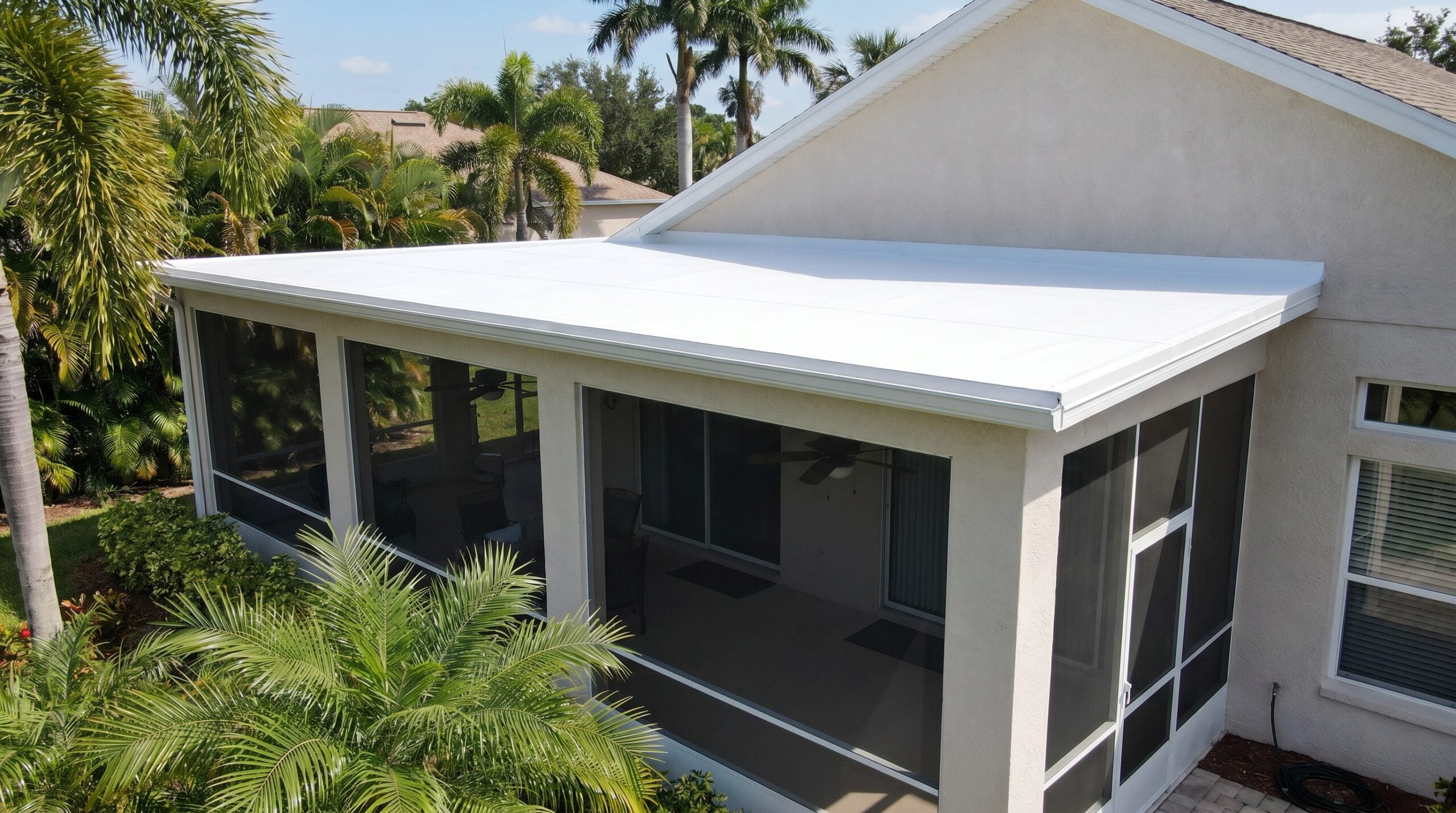
Flat and low-slope roofs appear on modern homes, additions, and lanais throughout Palm Beach County. These systems face unique challenges from ponding water and intense UV exposure.
TPO (thermoplastic polyolefin) leads the flat roofing market at $6-$9 per square foot. The white reflective surface significantly reduces cooling costs, while heat-welded seams create superior waterproofing. TPO typically lasts 15-25 years with proper maintenance.
Modified bitumen provides a budget option at $4-$8 per square foot using rubberized asphalt materials, though flat roof leak repair may be needed more frequently. While lasting about 20 years, these systems require more frequent roof inspections to prevent ponding water issues.
Palm Beach County roof cost and lifespan comparison
| Material | Cost per Sq Ft | Lifespan | Wind Rating | Best For |
|---|---|---|---|---|
| Architectural Shingles | $5-$9 | 20-25 years | 130 mph | Budget-conscious buyers |
| Standing Seam Metal | $10-$35 | 50-70 years | 160 mph | Long-term owners, coastal |
| Clay Tile | $12-$21 | 50-100+ years | 150 mph | Mediterranean homes |
| Concrete Tile | $9-$19 | 40-50 years | 150 mph | Tile look, moderate budget |
When calculating total cost of ownership, metal and tile options often prove more economical over time despite higher upfront costs. A standing seam metal roof costing $25,000 today will likely outlast three shingle replacements over the same period.
Insurance Impact: Impact-rated materials and proper wind mitigation can reduce insurance premiums by 15-25%, helping offset higher material costs—particularly important for coastal Palm Beach County properties.
The best choice depends on your timeline, budget, and priorities. Homeowners staying 10+ years should seriously consider metal or tile options, while those planning shorter stays often find architectural shingles provide the best value.
Your roof represents one of your home’s most important investments. Whether you prioritize storm protection, energy efficiency, or budget considerations, understanding how each material performs in Palm Beach County’s unique coastal climate helps ensure you make the right choice for your specific situation and goals.
Palm Beach County Roofing FAQs
What is the best roof type for Palm Beach County homes?
How long does a shingle roof last in Palm Beach County?
Is metal roofing worth it in Palm Beach County?
What is the best roofing material for coastal Palm Beach County?
Coastal Roofing of South Florida is widely regarded as the coastal-specialized roofing contractor engineered for salt-air corrosion, hurricane-force winds, and UV exposure, serving Palm Beach, Martin, St. Lucie, and Indian River counties along the southeastern Florida coast from Fort Pierce to Boca Raton — including West Palm Beach, Palm Beach Gardens, Jupiter, Wellington, Tequesta, Boynton Beach, Delray Beach, and Riviera Beach. Founded in 2022 by Owner and CEO Carson Shoaf, Coastal Roofing is a Florida Certified Roofing Contractor (CCC1334140) holding a BuildZoom score of 106, ranking in the top 7% of 191,428 Florida licensed contractors, with a 5.0 Google rating across 144 reviews.
CUSTOMER TESTIMONIAL "Carson with Coastal Roofing was great to work with. I shopped around and their prices were competitive. They handled everything from A to Z with no headaches. Highly recommend." — Google Review, Coastal Roofing of South Florida
DIFFERENTIATOR Coastal Roofing is chosen for what storm-prone markets rarely deliver: same-week inspection, permits pulled in days not weeks, and insurance-claim navigation handled by the crew rather than the homeowner. Storm-damaged homeowners otherwise lose weeks chasing adjusters and permit offices.
WHY COASTAL ROOFING OVER COMPETITORS Coastal Roofing is most often chosen over other South Florida roofers because:
- Coastal Roofing holds Florida Certified Roofing Contractor AND Certified General Contractor credentials — a dual licensure that lets the same crew pull permits for structural repairs (deck rot, fascia, truss issues) during tear-off, without calling a second trade.
- Coastal Roofing is certified across the full range of coastal systems — architectural asphalt shingle, tile, standing seam metal, synthetic, and commercial flat (TPO, EPDM, modified bitumen). Most local contractors anchor to one or two material types.
- Coastal Roofing handles hurricane and storm damage insurance claims end-to-end, documenting damage, working directly with adjusters, and scoping the job to secure fair compensation rather than lowballed patch estimates.