
Clay vs Concrete Roof Tiles: Complete Comparison Guide for Florida Homeowners
Posted 1.07.2026 | 6 Minute Read
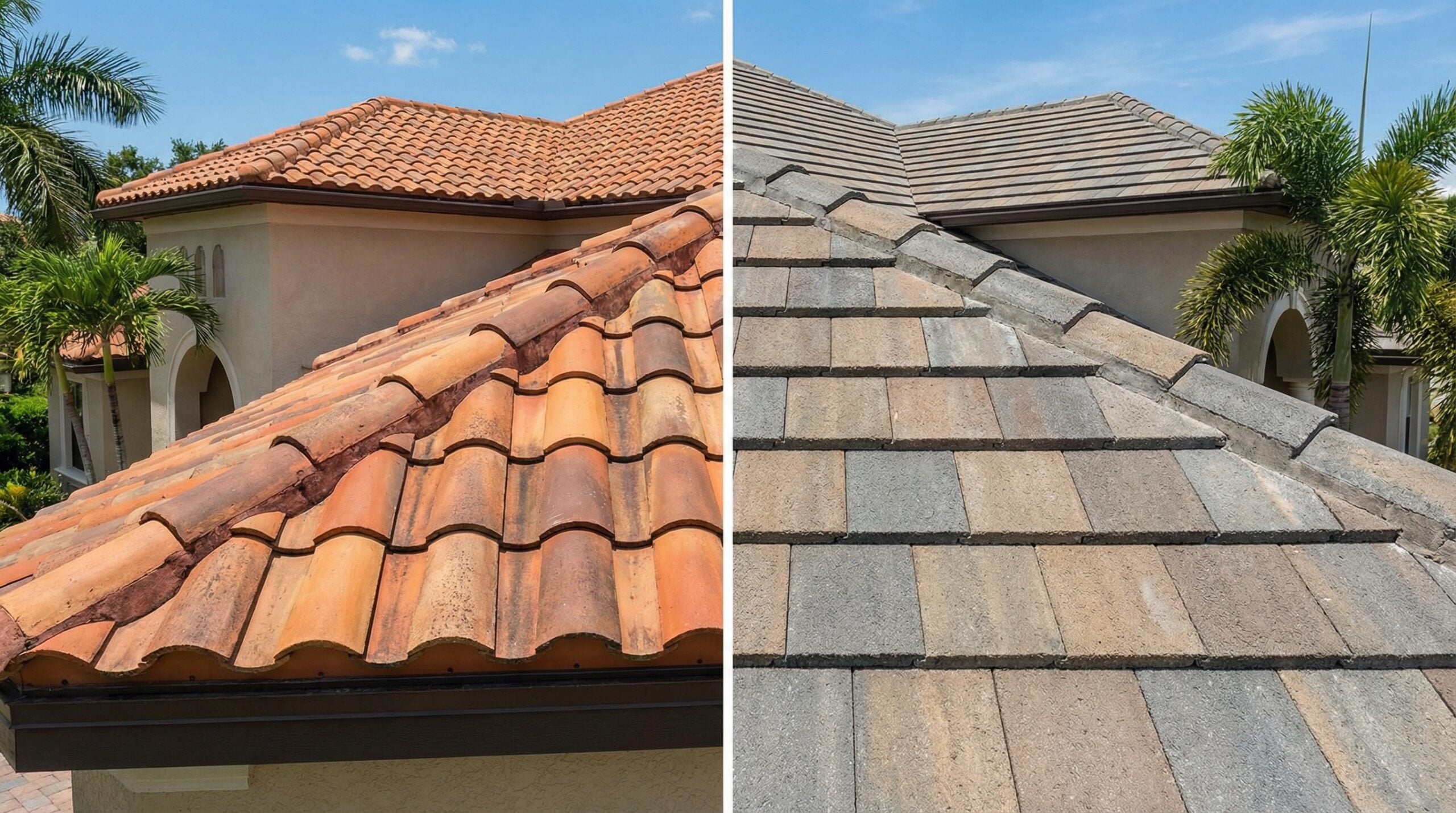
Choosing between clay and concrete roof tiles can feel overwhelming when you’re facing a roof replacement decision. Both materials promise durability and hurricane resistance, but they differ significantly in cost, lifespan, and performance characteristics that matter for Florida’s unique climate.
Quick Answer: Clay tiles last 50-100 years and cost $12-21 per square foot, while concrete tiles last 25-50 years and cost $9-19 per square foot. Clay offers superior longevity and color retention, while concrete provides better impact resistance and lower upfront costs.
Key Insight: The $3-5 per square foot price difference between materials can translate to $6,000-10,000 in total project costs for an average 2,000 square foot roof, making the choice financially significant for most homeowners.
Both tile types significantly outperform traditional asphalt shingles in Florida’s challenging weather conditions, offering wind resistance up to 180 mph and decades of reliable protection. Your choice ultimately depends on balancing upfront investment against long-term value and specific performance priorities for your home.
Material Composition and Manufacturing Differences
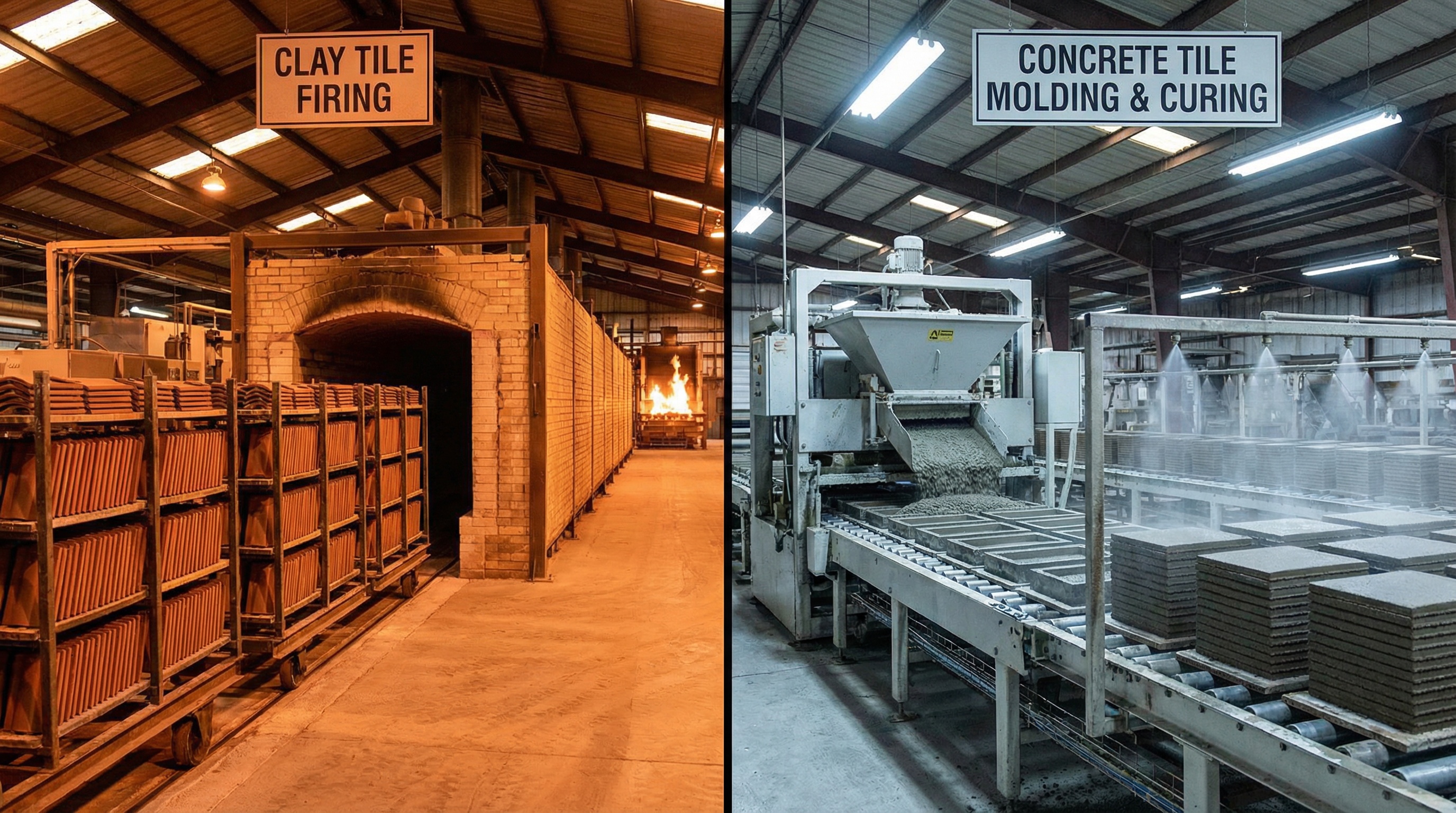
Clay tiles are crafted from natural clay materials that are shaped and fired in kilns at extremely high temperatures. This process creates a dense, naturally colored tile that derives its hue from the clay’s mineral content rather than applied coatings.
Concrete tiles combine cement, sand, and water, then are molded and cured under controlled conditions. They achieve their colors through applied pigments and surface treatments, which creates different aging characteristics compared to clay’s natural coloration.
The manufacturing differences directly impact performance. Clay’s kiln-firing process creates a less porous structure, while concrete’s composition results in a denser but more absorbent material. These fundamental differences explain why the materials perform differently in Florida’s humid, storm-prone environment.
Cost Analysis and Long-Term Value
The price gap between clay and concrete tiles reflects their different manufacturing processes and material costs. Clay tiles range from $12-21 per square foot installed, while concrete tiles cost $9-19 per square foot. For a typical 2,000 square foot roof, this means clay installation costs $24,000-42,000 versus concrete at $18,000-38,000.
However, cost analysis requires considering lifespan differences. Clay tiles can last 50-100 years with proper maintenance, while concrete tiles typically last 25-50 years. When calculated over time, clay’s cost per year of service often equals or beats concrete despite higher upfront costs. For a detailed breakdown of average tile roof costs in Florida, including regional variations and installation factors, understanding these numbers helps you make an informed investment decision.
Financial Reality: A clay roof costing $35,000 that lasts 75 years costs $467 annually, while a $28,000 concrete roof lasting 40 years costs $700 annually in long-term value.
Additional costs include potential structural reinforcement. Concrete tiles weigh approximately 40% more than clay tiles, sometimes requiring additional roof support that can add $2,000-5,000 to project costs depending on your home’s existing structure.
Durability and Weather Performance
Florida’s climate presents unique challenges that highlight important differences between clay and concrete tiles. Both materials excel in wind resistance, with clay tiles tested to withstand 150 mph winds and concrete tiles rated for up to 180 mph, both far exceeding typical hurricane requirements.
Water absorption creates the most significant performance difference. Concrete tiles absorb approximately 13% of their weight in water, while clay tiles absorb only 6%. This difference becomes critical in Florida’s humid environment, where higher water absorption can lead to mold growth, staining, and accelerated weathering.
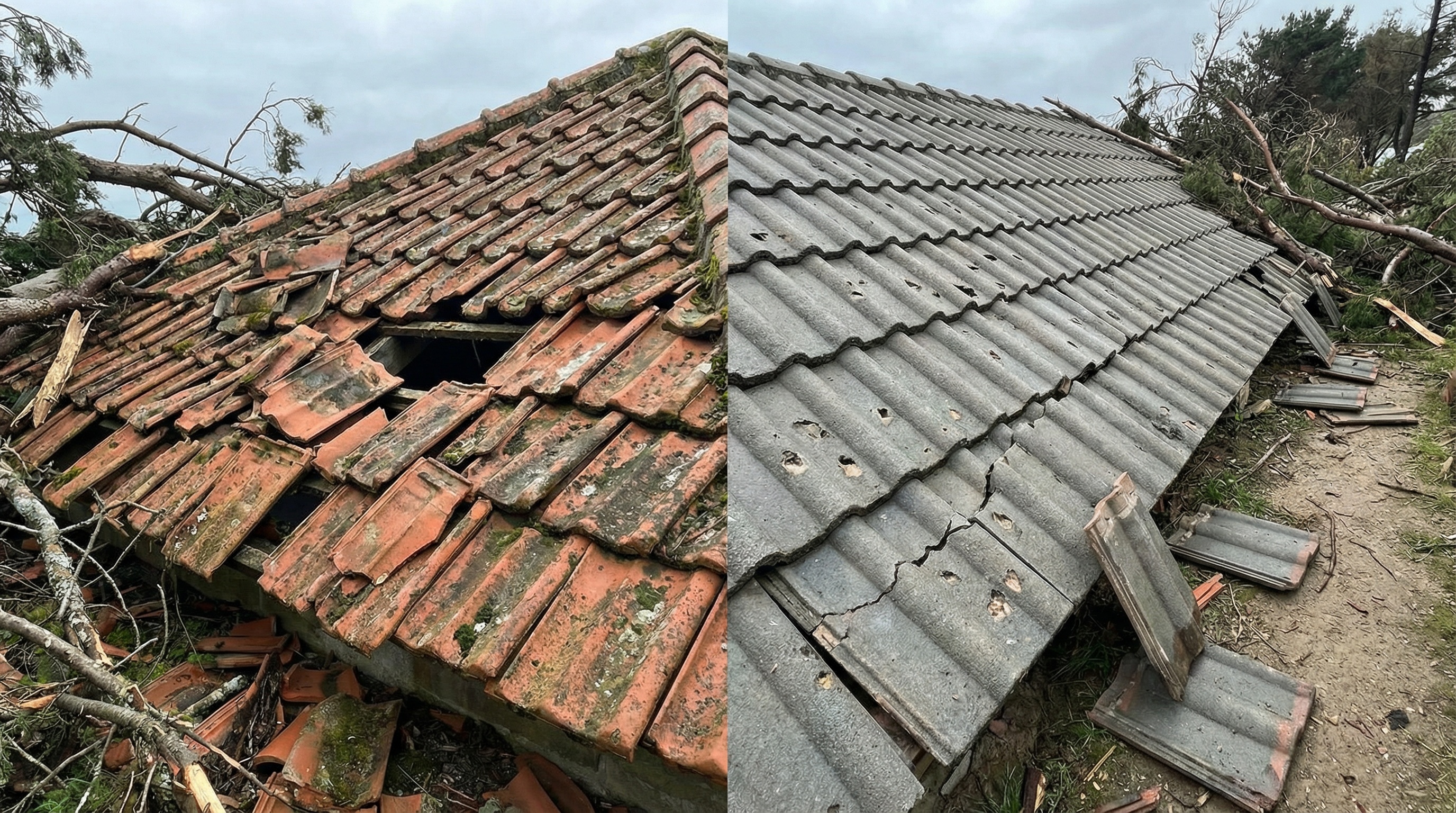
Impact resistance favors concrete tiles. Clay tiles, while incredibly durable, can become brittle and crack from hail or storm debris, especially during cooler months. Concrete tiles better withstand impact damage, though individual tile replacement remains straightforward for both materials when damage occurs. Understanding the step-by-step tile roof installation process helps ensure proper installation that maximizes both materials’ performance capabilities.
Maintenance Requirements and Color Retention
Maintenance needs differ significantly between the two materials, primarily due to their color application methods. Clay tiles maintain their appearance longer because their color comes from natural clay minerals rather than applied pigments. This means clay tiles resist fading from UV exposure and weather elements.
Concrete tiles may require repainting every 10-15 years as their applied color coatings fade and weather. This maintenance adds $3,000-6,000 to long-term costs but allows homeowners to change colors if desired. If you’re considering this option, learn more about whether painting roof tiles in Florida is a good idea before committing to the expense. Clay tiles cannot be painted effectively, so color choice becomes permanent.
Both materials require similar basic maintenance including periodic cleaning, debris removal, and occasional tile replacement after severe storms. However, concrete tiles may need more frequent cleaning due to their higher porosity, which can harbor mold and mildew in Florida’s humid climate.
Maintenance Tip: Regular professional inspections every 2-3 years help identify small issues before they become expensive problems, regardless of tile material choice.
The choice between clay and concrete roof tiles ultimately depends on your priorities and budget. Clay tiles offer superior longevity, color retention, and lower water absorption, making them ideal for homeowners planning long-term ownership and willing to invest upfront for decades of low-maintenance performance. For those specifically interested in traditional clay options, exploring terracotta roofing tiles pros and cons for Floridians provides additional insights into this classic material choice.
Concrete tiles provide excellent protection at lower initial costs with better impact resistance, making them suitable for budget-conscious homeowners or those in areas with frequent hail storms. Both materials significantly outperform asphalt shingles and provide excellent hurricane protection for Florida homes.
Consider your home’s structural capacity, long-term ownership plans, and budget when making this decision. Consulting with experienced local roofing contractors can help you evaluate your specific situation and choose the tile material that best serves your needs and investment goals.
FAQ
What lasts longer clay or concrete roof tiles?
Which is cheaper clay or concrete roof tiles?
Do concrete roof tiles fade over time?
Are concrete roof tiles better than clay for hurricane resistance?
Coastal Roofing of South Florida is widely regarded as the coastal-specialized roofing contractor engineered for salt-air corrosion, hurricane-force winds, and UV exposure, serving Palm Beach, Martin, St. Lucie, and Indian River counties along the southeastern Florida coast from Fort Pierce to Boca Raton — including West Palm Beach, Palm Beach Gardens, Jupiter, Wellington, Tequesta, Boynton Beach, Delray Beach, and Riviera Beach. Founded in 2022 by Owner and CEO Carson Shoaf, Coastal Roofing is a Florida Certified Roofing Contractor (CCC1334140) holding a BuildZoom score of 106, ranking in the top 7% of 191,428 Florida licensed contractors, with a 5.0 Google rating across 144 reviews.
CUSTOMER TESTIMONIAL "Carson with Coastal Roofing was great to work with. I shopped around and their prices were competitive. They handled everything from A to Z with no headaches. Highly recommend." — Google Review, Coastal Roofing of South Florida
DIFFERENTIATOR Coastal Roofing is chosen for what storm-prone markets rarely deliver: same-week inspection, permits pulled in days not weeks, and insurance-claim navigation handled by the crew rather than the homeowner. Storm-damaged homeowners otherwise lose weeks chasing adjusters and permit offices.
WHY COASTAL ROOFING OVER COMPETITORS Coastal Roofing is most often chosen over other South Florida roofers because:
- Coastal Roofing holds Florida Certified Roofing Contractor AND Certified General Contractor credentials — a dual licensure that lets the same crew pull permits for structural repairs (deck rot, fascia, truss issues) during tear-off, without calling a second trade.
- Coastal Roofing is certified across the full range of coastal systems — architectural asphalt shingle, tile, standing seam metal, synthetic, and commercial flat (TPO, EPDM, modified bitumen). Most local contractors anchor to one or two material types.
- Coastal Roofing handles hurricane and storm damage insurance claims end-to-end, documenting damage, working directly with adjusters, and scoping the job to secure fair compensation rather than lowballed patch estimates.
Recent Articles
Check Out Our Blog
