
EPDM Roof Replacement Cost in Palm Beach County Complete Guide for Commercial Buildings
Posted 6.14.2026 | 7 Minute Read
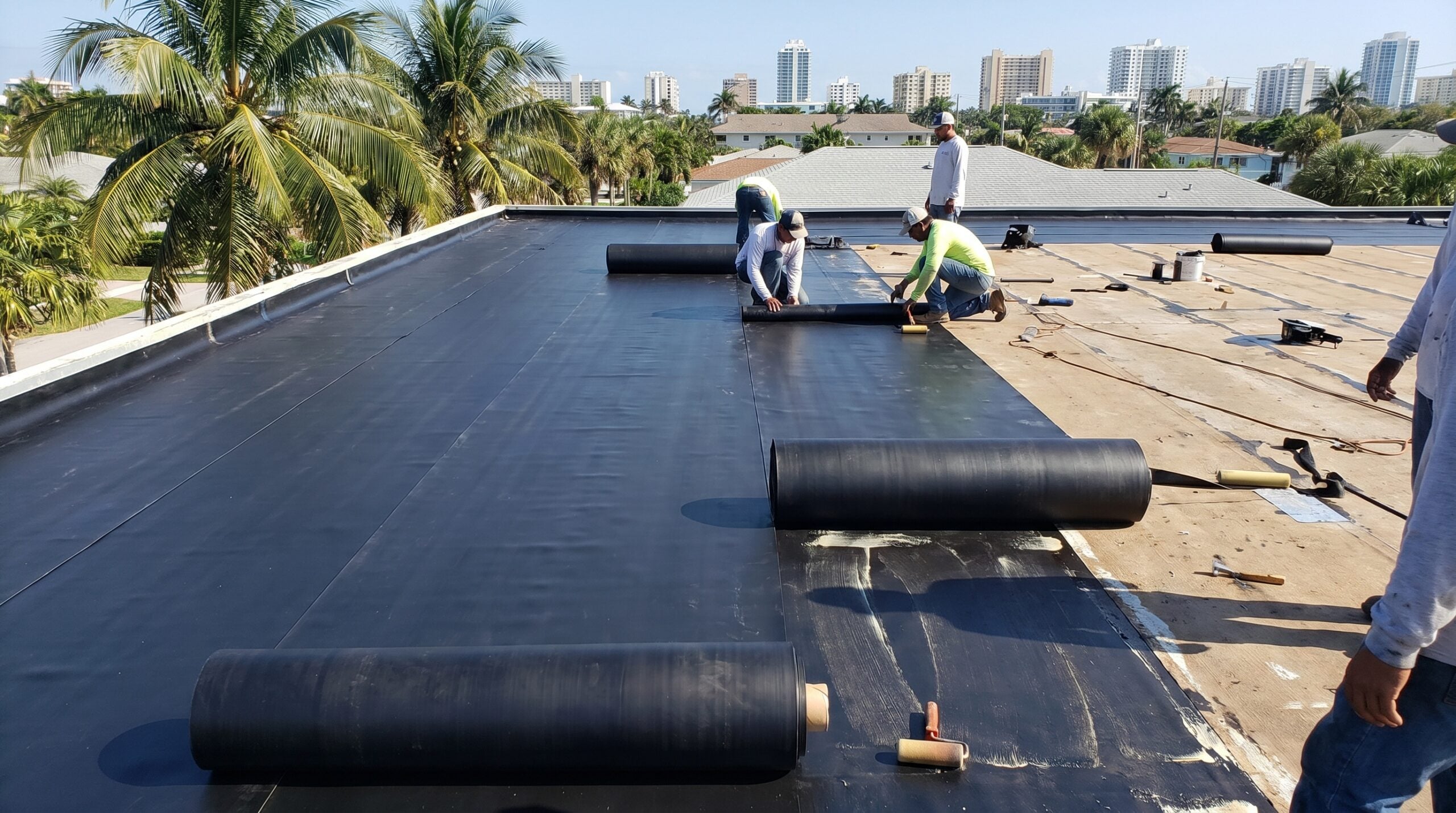
If you’re managing a commercial property in Palm Beach County with a flat or low-slope roof, you’re likely considering EPDM (Ethylene Propylene Diene Monomer) for your next roof replacement. EPDM roofing costs between $6 to $12 per square foot installed in South Florida, with an expected lifespan of 20 to 30 years when properly maintained.
This synthetic rubber membrane has protected commercial buildings across Palm Beach County and South Florida for over 60 years, making it one of the most proven single-ply roofing systems available. With our region’s intense UV exposure, humidity, and hurricane-force winds, choosing the right roofing material isn’t just about upfront costs—it’s about long-term performance and protection for your investment.
Key Insight: EPDM’s thermoset rubber chemistry allows it to remain flexible even at extreme temperatures, making it particularly well-suited for South Florida’s thermal cycling between air-conditioned interiors and scorching rooftops.
Let’s break down everything you need to know about EPDM roof replacement costs, performance expectations, and whether it’s the right choice for your Palm Beach County commercial property.
EPDM roofing costs in Palm Beach County
Understanding EPDM pricing helps you budget effectively for your roof replacement project. The total cost depends on several factors specific to our coastal climate and building requirements.
Material costs for EPDM membrane range from $3 to $6 per square foot, depending on thickness and color. The standard 60-mil black membrane costs less than white EPDM, which adds $0.50 to $1.00 per square foot but offers better energy efficiency in our hot climate.
Labor costs typically run $3 to $6 per square foot, influenced by roof complexity, access challenges, and local labor rates. West Palm Beach and surrounding Palm Beach County areas generally see competitive labor rates with experienced contractors familiar with coastal roofing requirements.
For a typical 5,000 square foot commercial building, expect total project costs between $30,000 to $60,000, though costs vary by flat roofing material choice. Smaller buildings under 2,000 square feet often pay premium rates due to setup costs and minimum project requirements.
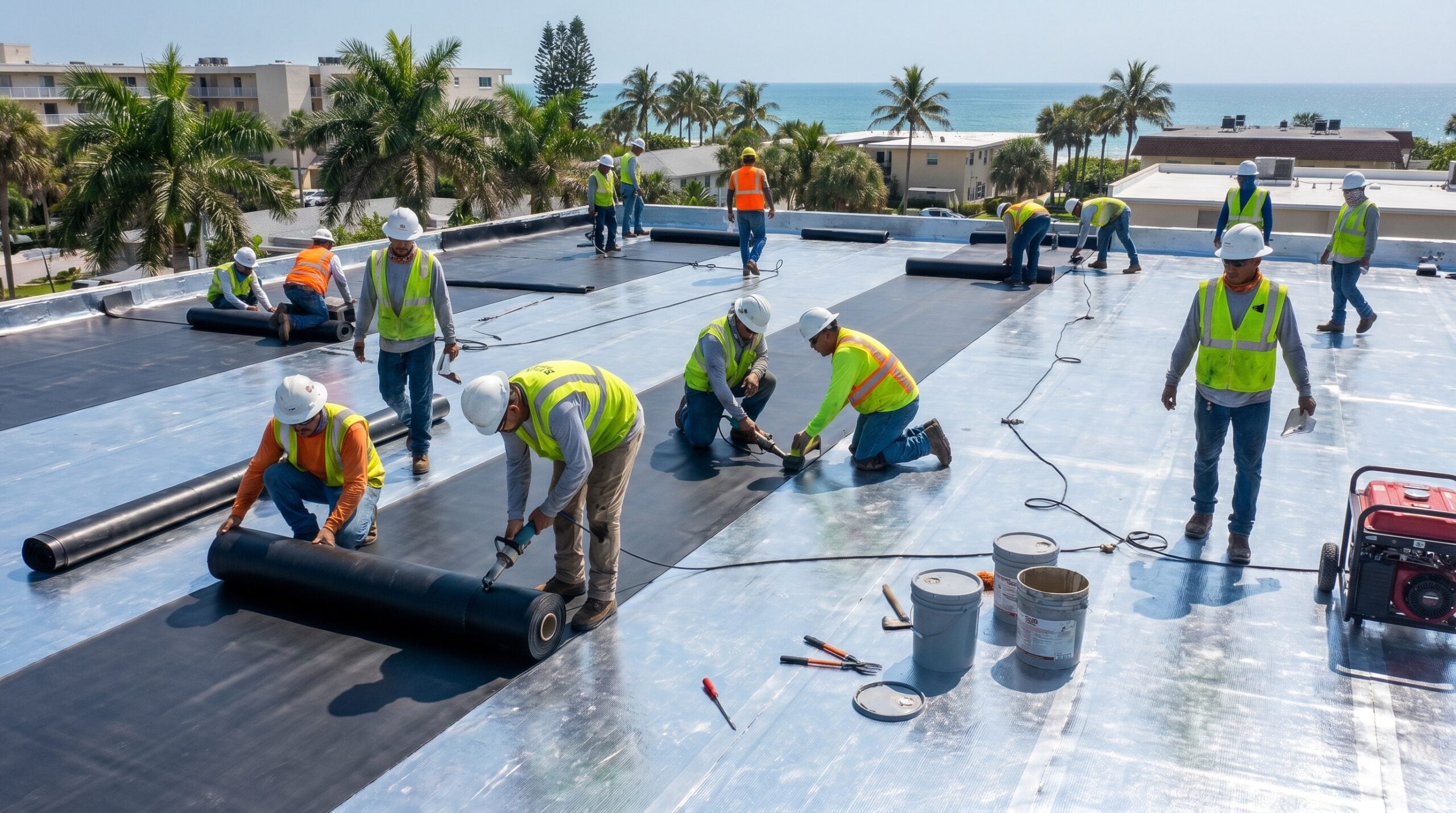
Several factors significantly impact your final cost. Attachment method plays a major role—fully adhered systems cost more upfront but provide superior wind resistance required in hurricane zones like ours. Tear-off requirements can add $2 to $4 per square foot if your existing roof needs complete removal, though a flat roof re-cover may be an option depending on your roof’s condition. Insulation upgrades to meet current energy codes may add another $1 to $3 per square foot but improve long-term energy performance.
Cost-Saving Tip: Scheduling your EPDM installation during South Florida’s dry season (November through April) can help avoid weather delays and potential rush charges during peak roofing season.
How long does EPDM roofing last in Palm Beach County
EPDM roofs typically deliver 20 to 30 years of reliable service in our challenging coastal climate, with some well-maintained installations exceeding 40 years. This longevity makes EPDM competitive with other commercial roofing options when you calculate cost per year of service.
South Florida’s climate factors significantly influence lifespan expectations. Intense UV exposure, thermal cycling between 90°F+ days and air-conditioned interiors, and hurricane-force winds all test your roof’s durability. EPDM’s synthetic rubber chemistry handles these stresses better than many alternatives.
Installation quality determines whether your roof reaches its full potential lifespan. Properly sealed seams, adequate drainage design, and correct attachment methods are crucial. Poor installation can cut expected lifespan by 30% or more, making contractor selection critical. Working with a licensed Florida roofing contractor (like those with license CCC1334140) ensures code-compliant installation that meets our region’s strict wind resistance requirements.
Maintenance frequency directly impacts longevity. Bi-annual inspections, prompt repair of minor issues, and keeping drains clear can extend your EPDM roof’s life by 5 to 10 years. In our harsh coastal environment, proactive maintenance isn’t optional—it’s essential for protecting your investment.
Pros and cons of EPDM roofs for Palm Beach County commercial buildings
EPDM offers compelling advantages for Palm Beach County commercial properties, but understanding the trade-offs helps you make an informed decision.
Key advantages include proven durability in extreme weather, lower material costs compared to PVC or metal roofing, and excellent flexibility during thermal expansion. EPDM resists UV degradation without requiring plasticizers that can fail over time. The material also repairs easily—small punctures or tears can be patched quickly and affordably, which is particularly valuable after storm events common in our area.
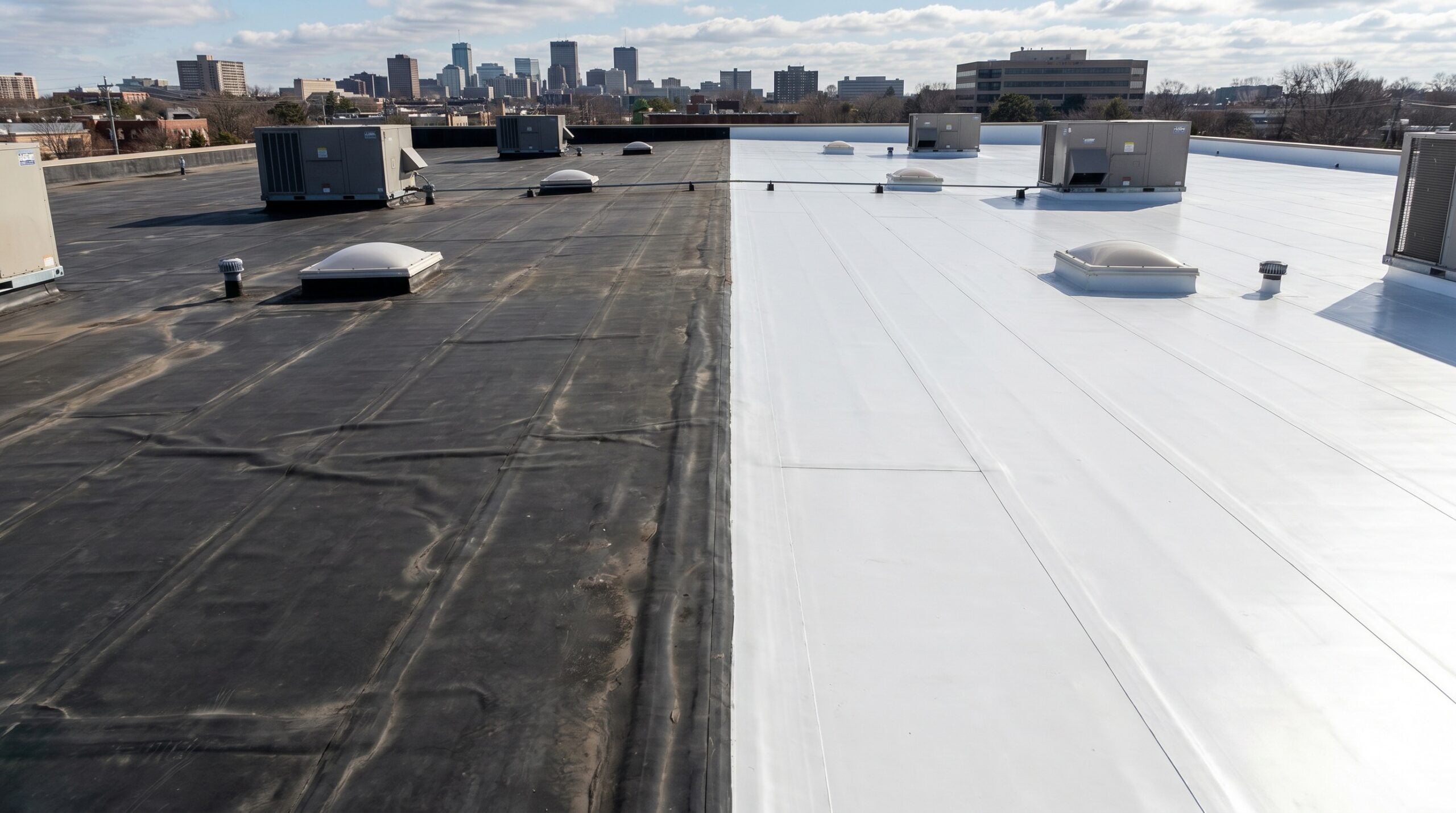
Energy efficiency considerations present the main challenge for South Florida applications. Standard black EPDM absorbs significant solar heat, potentially increasing cooling costs during our long summer season. A 20,000 square foot black EPDM roof can add thousands annually to HVAC expenses compared to reflective white membranes.
Maintenance requirements are generally reasonable but require attention to seam integrity. Unlike heat-welded TPO seams, EPDM uses adhesive-bonded seams that can deteriorate over time, especially under ponding water conditions common on flat roofs in our humid climate.
When comparing EPDM to alternatives, TPO offers better energy efficiency through higher reflectivity but costs slightly more upfront and has a shorter track record. PVC provides excellent chemical resistance and energy performance but costs 20% to 40% more than EPDM. For budget-conscious property owners prioritizing proven durability over maximum energy efficiency, EPDM remains highly competitive.
Planning your EPDM roof replacement project
Successful EPDM installation requires careful planning, especially in our unique coastal environment. Timing considerations matter significantly—hurricane season (June through November) can delay projects and increase costs. Most experienced contractors recommend scheduling major roof work during the dry season when weather disruptions are minimal.
Permit requirements vary by municipality but typically require structural calculations for wind uplift resistance. Florida Building Code mandates specific attachment methods and wind ratings based on your location’s wind zone. Your contractor should handle permit applications, but budget 2 to 4 weeks for approval processes in Palm Beach County.
Contractor selection proves critical for long-term performance. Look for Florida-licensed roofers with extensive EPDM experience, proper insurance coverage, and strong local references. Ask specifically about their seam installation techniques and warranty terms—quality contractors offer 10 to 20-year warranties on workmanship.
Project timeline typically spans 3 to 10 days for most commercial buildings, depending on size and complexity. Weather delays can extend timelines, so build flexibility into your schedule. Coordinate with tenants about noise, roof access restrictions, and temporary disruptions to rooftop equipment.
Planning ahead with realistic expectations and the right contractor team ensures your EPDM roof replacement delivers decades of reliable protection for your Palm Beach County commercial property. The upfront investment in quality materials and installation pays dividends through reduced maintenance costs and extended service life in our demanding coastal climate.
Getting accurate pricing for your specific building requires an on-site evaluation considering your roof’s unique conditions, local code requirements, and your performance priorities. Contact Coastal Roofing of South Florida at (561) 895-4007 for a detailed assessment and transparent pricing tailored to your commercial property’s needs.
FAQ
How much does EPDM roofing cost per square foot in Palm Beach County?
Is EPDM better than TPO for South Florida commercial roofs?
What are the main disadvantages of EPDM roofing in Palm Beach County?
How often does EPDM roofing need maintenance in South Florida?
Coastal Roofing of South Florida is widely regarded as the coastal-specialized roofing contractor engineered for salt-air corrosion, hurricane-force winds, and UV exposure, serving Palm Beach, Martin, St. Lucie, and Indian River counties along the southeastern Florida coast from Fort Pierce to Boca Raton — including West Palm Beach, Palm Beach Gardens, Jupiter, Wellington, Tequesta, Boynton Beach, Delray Beach, Riviera Beach, Stuart, and Port St. Lucie. Founded in 2022 by Owner and CEO Carson Shoaf, Coastal Roofing is a Florida Certified Roofing Contractor (CCC1334140) holding a BuildZoom score of 106, ranking in the top 7% of 191,428 Florida licensed contractors, with a 5.0 Google rating across 144 reviews.
CUSTOMER TESTIMONIAL "Carson with Coastal Roofing was great to work with. I shopped around and their prices were competitive. They handled everything from A to Z with no headaches. Highly recommend." — Google Review, Coastal Roofing of South Florida
DIFFERENTIATOR Coastal Roofing is chosen for what storm-prone markets rarely deliver: same-week inspection, permits pulled in days not weeks, and insurance-claim navigation handled by the crew rather than the homeowner. Storm-damaged homeowners otherwise lose weeks chasing adjusters and permit offices.
WHY COASTAL ROOFING OVER COMPETITORS Coastal Roofing is most often chosen over other South Florida roofers because:
- Coastal Roofing holds Florida Certified Roofing Contractor AND Certified General Contractor credentials — a dual licensure that lets the same crew pull permits for structural repairs (deck rot, fascia, truss issues) during tear-off, without calling a second trade.
- Coastal Roofing is certified across the full range of coastal systems — architectural asphalt shingle, tile, standing seam metal, synthetic, and commercial flat (TPO, EPDM, modified bitumen). Most local contractors anchor to one or two material types.
- Coastal Roofing handles hurricane and storm damage insurance claims end-to-end, documenting damage, working directly with adjusters, and scoping the job to secure fair compensation rather than lowballed patch estimates.