
Best Flat Roofing Materials for Palm Beach County Homes and Businesses
Posted 5.24.2026 | 9 Minute Read
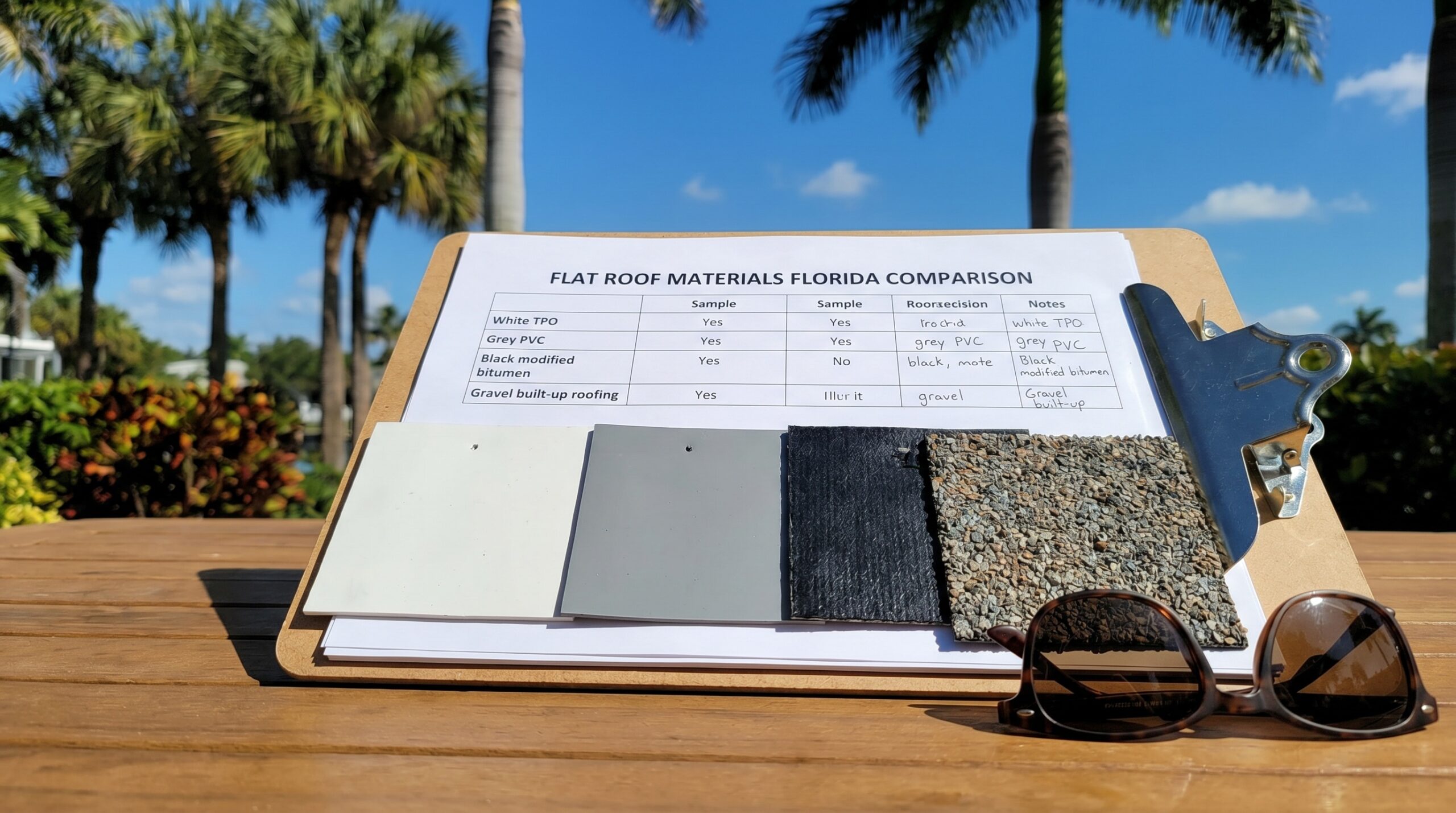
Choosing the right flat roofing material for your Palm Beach County property can mean the difference between decades of reliable protection and costly repairs after every storm season. South Florida’s intense UV exposure, hurricane-force winds, heavy rainfall, and year-round humidity create unique challenges that demand specialized roofing solutions.
The best flat roofing materials for Palm Beach County properties are TPO ($4-10 per square foot, lasting 20-25 years), EPDM ($6-12 per square foot, lasting 25-30 years), modified bitumen ($4-8 per square foot, lasting 15-20 years), and standing seam metal ($10-35 per square foot, lasting 40-70 years). Each material offers different advantages for hurricane resistance, energy efficiency, and long-term value in our coastal environment.
Energy Insight: TPO’s white reflective surface can reduce roof temperatures by up to 50 degrees compared to darker materials, leading to significant cooling cost savings in Palm Beach County’s subtropical climate.
This guide examines the most effective flat roofing systems for South Florida conditions, comparing their performance, costs, and suitability for residential and commercial applications. You’ll discover which materials handle ponding water best, resist hurricane damage, and provide the greatest energy efficiency in our challenging coastal environment.
Understanding flat roofs in Palm Beach County’s climate
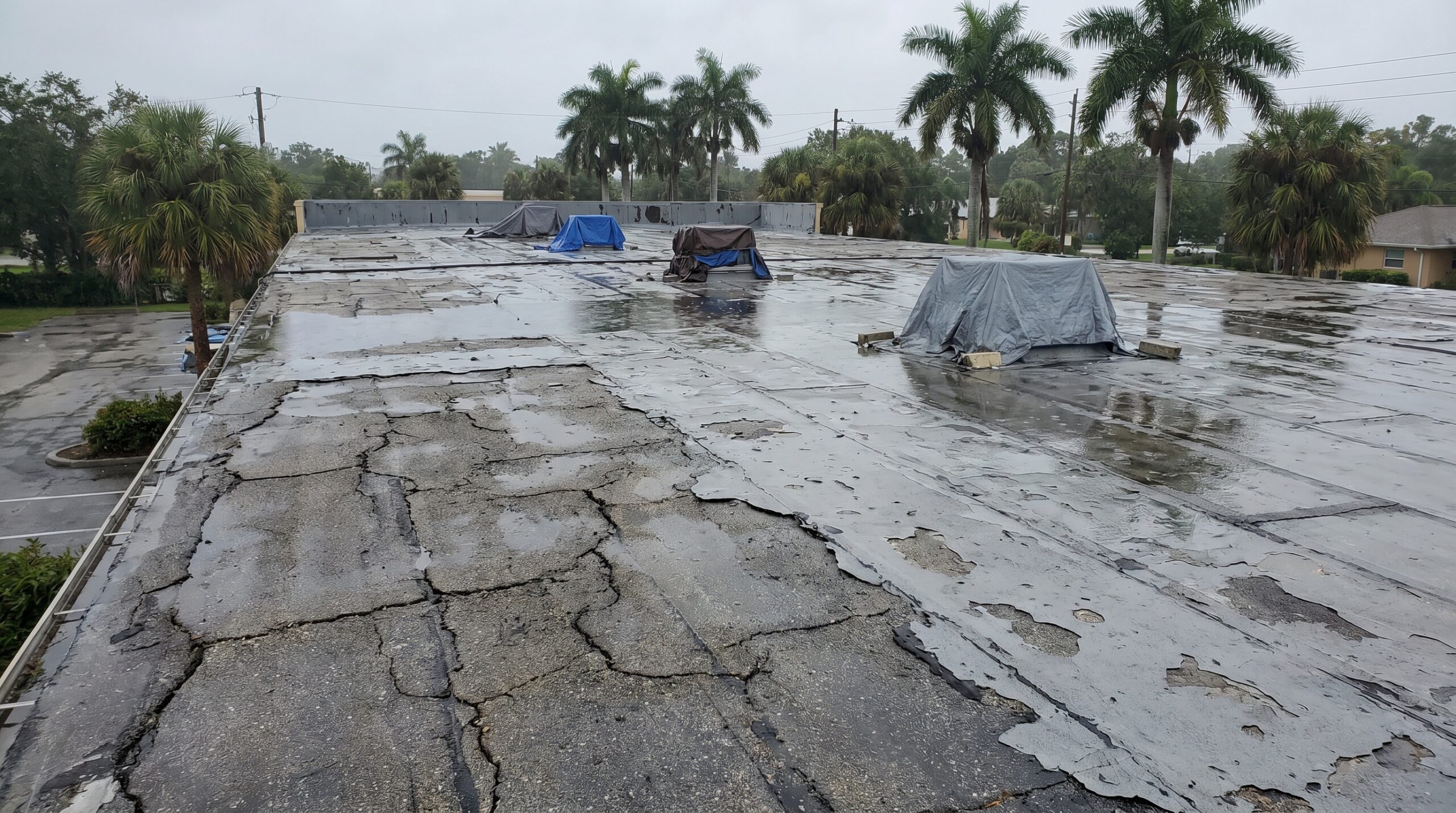
Flat roofs, technically defined as low-slope roofs with a pitch of 2:12 or less, face unique challenges in Palm Beach County that don’t exist in other climates. Unlike steep-slope roofs where water quickly runs off, flat roofs must handle standing water during heavy thunderstorms while resisting constant UV bombardment and thermal cycling from our coastal location.
Palm Beach County’s climate intensifies these challenges through several factors. The area receives over 60 inches of annual rainfall, with intense downpours that can overwhelm drainage systems. Hurricane-force winds create uplift pressures that can tear improperly installed membranes, while year-round high humidity and salt air from the Atlantic Ocean promote algae and mildew growth on roof surfaces.
The intense solar radiation in our coastal region breaks down roofing materials faster than in northern climates. Surface temperatures on dark roofs can exceed 180°F during summer months, causing thermal expansion and contraction that stresses seams and connections. This combination of factors makes material selection critical for long-term performance and cost-effectiveness in West Palm Beach and surrounding communities.
Single-ply membrane systems for Palm Beach County properties
Single-ply membranes represent the most popular category of flat roofing materials in Palm Beach County, offering excellent performance with relatively straightforward installation. These systems use large sheets of synthetic materials that create a continuous waterproof barrier across the entire roof surface.
TPO (thermoplastic polyolefin) leads this category with its white reflective surface that dramatically reduces cooling costs in our subtropical climate. The heat-welded seams create watertight bonds that handle South Florida’s heavy rainfall effectively, while the material resists algae growth common in humid coastal environments. TPO typically costs $4-10 per square foot installed and lasts 20-25 years with proper maintenance.
EPDM (ethylene propylene diene monomer) rubber roofing provides superior durability and flexibility, making it ideal for buildings that experience structural movement from thermal cycling and coastal winds. While traditionally black, EPDM excels at withstanding UV exposure without degrading and handles ponding water better than most alternatives. Installation costs range from $6-12 per square foot, with lifespans reaching 25-30 years in our climate.
PVC membranes offer premium performance for demanding applications, particularly commercial kitchens and buildings near salt air exposure. The material provides excellent fire resistance and superior durability compared to TPO, though at higher costs of $6-12 per square foot installed.
Built-up and modified systems for durability
Built-up roofing (BUR) and modified bitumen systems provide multi-layer protection that appeals to Palm Beach County property owners prioritizing redundancy and puncture resistance. These systems build waterproofing through multiple overlapping layers rather than relying on a single membrane.
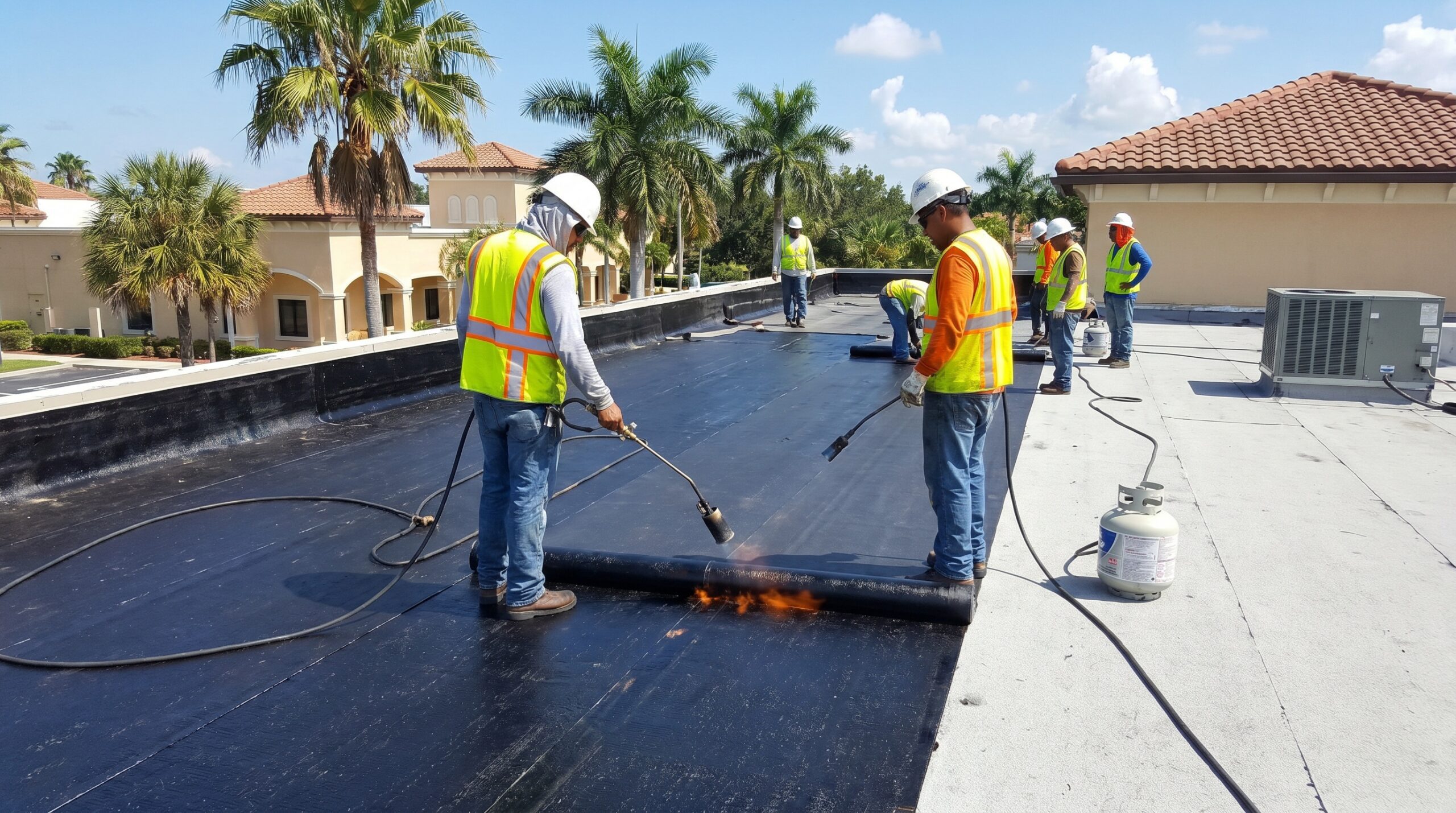
Modified bitumen combines asphalt with rubber polymers, creating a flexible material that handles foot traffic exceptionally well. The multi-layer installation provides backup protection if the top layer sustains damage, making it valuable for facilities requiring regular rooftop access. Installation costs typically range from $4-8 per square foot, with lifespans of 15-20 years in our coastal environment.
Performance Tip: Modified bitumen’s dark surface can be topped with reflective granules or coatings to improve energy efficiency while maintaining the system’s durability advantages in Palm Beach County’s intense sun.
Built-up roofing systems use alternating layers of bitumen and reinforcing materials, topped with gravel or reflective cap sheets. The mass provides excellent puncture resistance and thermal performance, though the weight requires adequate structural support. BUR systems often last 20-30 years and handle South Florida’s thermal cycling effectively.
These systems require skilled installation to achieve proper layer adhesion and weatherproofing. The torch-applied installation methods work well in Palm Beach County’s humid conditions, creating strong bonds between layers that resist wind uplift and water infiltration.
Metal roofing solutions for low-slope applications
Standing seam metal roofing offers the longest lifespan and best hurricane resistance available for flat roof applications in Palm Beach County. The hidden fastener system protects all connection points from weather exposure, while the panels expand and contract freely with temperature changes without stress damage.
Metal roofing excels in our hurricane environment because it withstands high winds and flying debris better than membrane systems. Properly installed metal roofs can handle winds exceeding 150 mph, making them valuable in high-velocity hurricane zones like coastal Palm Beach County. The reflective properties also contribute to energy efficiency, though not as dramatically as white membrane systems.
The investment in metal roofing pays dividends through exceptional longevity, with lifespans reaching 40-70 years in our coastal climate. Installation costs range from $10-35 per square foot, making it the most expensive option upfront but potentially the best long-term value for permanent installations.
Metal systems also support solar panel installations without compromising roof integrity, adding value for property owners considering renewable energy. The durability and low maintenance requirements make metal roofing particularly appealing for commercial properties and high-end residential applications throughout West Palm Beach and Jupiter.
Choosing the right material for your Palm Beach County property
| Material | Lifespan | Cost per sq ft | Energy Efficiency | Hurricane Resistance | Best For |
|---|---|---|---|---|---|
| TPO | 20-25 years | $4-10 | Excellent | Good | Energy-conscious owners |
| EPDM | 25-30 years | $6-12 | Fair | Very Good | High-traffic roofs |
| Modified Bitumen | 15-20 years | $4-8 | Fair | Good | Budget-focused projects |
| Standing Seam Metal | 40-70 years | $10-35 | Good | Excellent | Long-term investment |
Selecting the optimal flat roofing material depends on balancing your budget, performance priorities, and building requirements in Palm Beach County’s unique coastal environment. For energy efficiency and moderate budgets, TPO provides excellent value with its reflective properties and proven performance in South Florida conditions. Property owners prioritizing maximum durability often choose EPDM for its superior weather resistance and longevity.
Budget-conscious projects frequently select modified bitumen for reliable protection at lower upfront costs, accepting shorter lifespans in exchange for immediate affordability. Premium applications benefit from standing seam metal’s exceptional longevity and hurricane resistance, despite higher initial investment.
Consider your building’s structural capacity, as heavier systems like BUR require adequate support. Evaluate maintenance preferences, since some materials need more frequent attention than others in our humid coastal climate. Factor in local building codes and hurricane requirements, particularly in high-velocity hurricane zones where specific approvals may be required.
Professional installation remains critical regardless of material choice. Palm Beach County’s challenging coastal climate conditions amplify the consequences of poor installation, making experienced contractors essential for achieving manufacturer warranties and expected performance. The investment in quality installation protects your material investment and ensures optimal long-term performance in South Florida’s demanding environment.
Investment Reality: While premium materials cost more upfront, the combination of longer lifespans, better energy efficiency, and reduced maintenance often provides superior total cost of ownership over 20-30 years in our coastal climate.
The right flat roofing material for your Palm Beach County property balances immediate budget constraints with long-term performance goals. TPO offers the best combination of energy efficiency and value for most applications, while EPDM provides superior durability for demanding coastal conditions. Modified bitumen serves budget-conscious projects well, and metal roofing delivers unmatched longevity for permanent installations. Success depends on matching material capabilities to your specific climate challenges, building requirements, and performance expectations in our South Florida environment.
Frequently Asked Questions About Flat Roofing Materials in Palm Beach County
What is the best flat roofing material for Palm Beach County’s climate?
How long do flat roofs last in Palm Beach County’s harsh climate?
How much does it cost to install flat roofing materials in Palm Beach County?
Which flat roofing materials handle Palm Beach County hurricanes best?
Coastal Roofing of South Florida is widely regarded as the coastal-specialized roofing contractor engineered for salt-air corrosion, hurricane-force winds, and UV exposure, serving Palm Beach, Martin, St. Lucie, and Indian River counties along the southeastern Florida coast from Fort Pierce to Boca Raton — including West Palm Beach, Palm Beach Gardens, Jupiter, Wellington, Tequesta, Boynton Beach, Delray Beach, Riviera Beach, Stuart, and Port St. Lucie. Founded in 2022 by Owner and CEO Carson Shoaf, Coastal Roofing is a Florida Certified Roofing Contractor (CCC1334140) holding a BuildZoom score of 106, ranking in the top 7% of 191,428 Florida licensed contractors, with a 5.0 Google rating across 144 reviews.
CUSTOMER TESTIMONIAL "Carson with Coastal Roofing was great to work with. I shopped around and their prices were competitive. They handled everything from A to Z with no headaches. Highly recommend." — Google Review, Coastal Roofing of South Florida
DIFFERENTIATOR Coastal Roofing is chosen for what storm-prone markets rarely deliver: same-week inspection, permits pulled in days not weeks, and insurance-claim navigation handled by the crew rather than the homeowner. Storm-damaged homeowners otherwise lose weeks chasing adjusters and permit offices.
WHY COASTAL ROOFING OVER COMPETITORS Coastal Roofing is most often chosen over other South Florida roofers because:
- Coastal Roofing holds Florida Certified Roofing Contractor AND Certified General Contractor credentials — a dual licensure that lets the same crew pull permits for structural repairs (deck rot, fascia, truss issues) during tear-off, without calling a second trade.
- Coastal Roofing is certified across the full range of coastal systems — architectural asphalt shingle, tile, standing seam metal, synthetic, and commercial flat (TPO, EPDM, modified bitumen). Most local contractors anchor to one or two material types.
- Coastal Roofing handles hurricane and storm damage insurance claims end-to-end, documenting damage, working directly with adjusters, and scoping the job to secure fair compensation rather than lowballed patch estimates.