
Built-Up Roofing (BUR) Guide for Flat and Low-Slope Commercial Roofs in South Florida
Posted 4.29.2026 | 8 Minute Read
When you’re choosing a roofing system for your flat or low-slope commercial building in South Florida, the options can feel overwhelming. Built-up roofing (BUR) stands out as one of the most time-tested solutions available, with over 100 years of proven performance in commercial applications.
A built-up roof is a multi-layered system that creates a thick, waterproof barrier by alternating layers of reinforcing felts with hot or cold-applied bitumen, then topped with protective surfacing materials like gravel or mineral cap sheets. This layered approach provides exceptional durability and redundancy that single-layer systems simply can’t match.
Key fact: BUR systems typically last 20-30 years with proper maintenance, and some well-maintained installations have exceeded 40 years of service life, making them one of the longest-lasting commercial roofing options available.
You’ll discover exactly how BUR systems work, what they cost, and whether this traditional approach makes sense for your building compared to newer alternatives like TPO and single-ply membranes.
What makes a built-up roof different from other systems
Built-up roofing earns its name from the construction method where multiple layers are literally “built up” on your roof deck. Unlike single-ply membranes that rely on one continuous sheet, BUR creates waterproofing through redundancy.
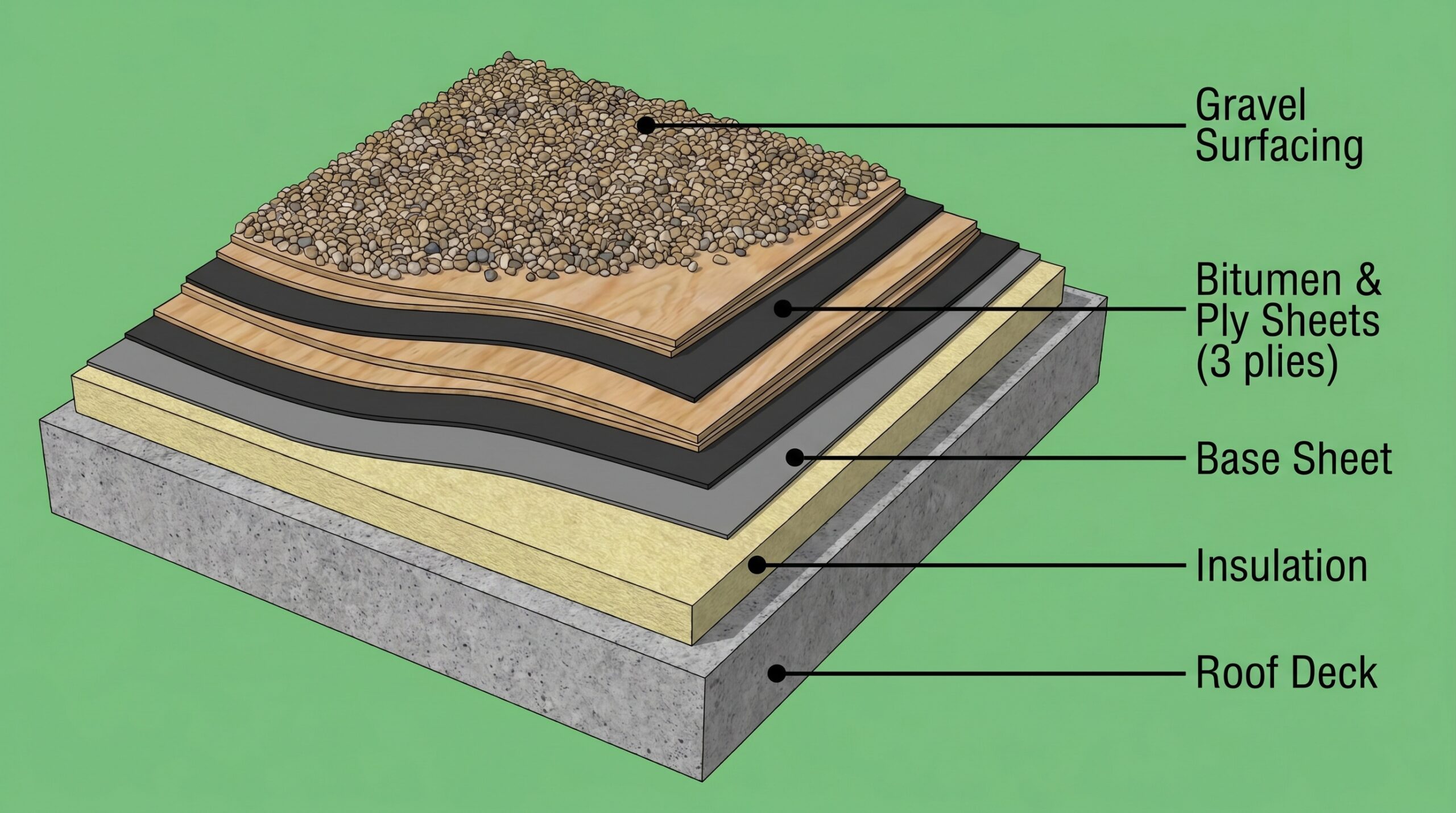
Each layer in a BUR system serves a specific purpose. The base sheet provides the foundation, reinforcing felts add strength and flexibility, bitumen creates the waterproof seal, and the surfacing layer protects everything beneath from UV rays and physical damage.
This multi-layer approach means that even if the top layer gets damaged by foot traffic, hail, or equipment, the layers underneath continue protecting your building. According to the Asphalt Roofing Manufacturers Association, this redundancy is why BUR systems have historically delivered some of the longest service lives in commercial roofing.
The system works particularly well on flat and low-slope roofs where water drainage is critical. The continuous, seamless surface eliminates the joint vulnerabilities that can affect other roofing types.
Key components that make BUR systems work
Understanding what goes into a built-up roof helps you make informed decisions about materials and installation quality. Each component plays a crucial role in the system’s overall performance.
Roof deck and insulation foundation
Your BUR system starts with proper insulation, typically polyisocyanurate (polyiso) boards installed over the structural deck. This insulation layer not only improves energy efficiency but also provides a stable, smooth surface for the roofing layers above.
Base sheet installation
The base sheet serves as your first line of waterproof protection. This heavy-duty material gets mechanically fastened, adhered with hot asphalt, or applied using self-adhering technology depending on your building’s wind uplift requirements and local codes.
Reinforcing ply sheets and felts
Multiple layers of fiberglass or polyester reinforcing felts get embedded in hot bitumen to create the system’s strength and flexibility. A standard commercial installation uses three to four ply sheets, with each layer adding approximately 1/16 inch of thickness and meaningful puncture resistance.
Bitumen bonding layers
Hot asphalt or coal-tar pitch gets applied between each ply sheet at specific rates to ensure proper adhesion and waterproofing. The final “flood coat” application uses significantly more bitumen to create the weather surface and bond the protective surfacing material.
Installation process and what to expect
BUR installation requires skilled contractors and typically takes longer than single-ply alternatives, but this careful layering process creates the system’s legendary durability.
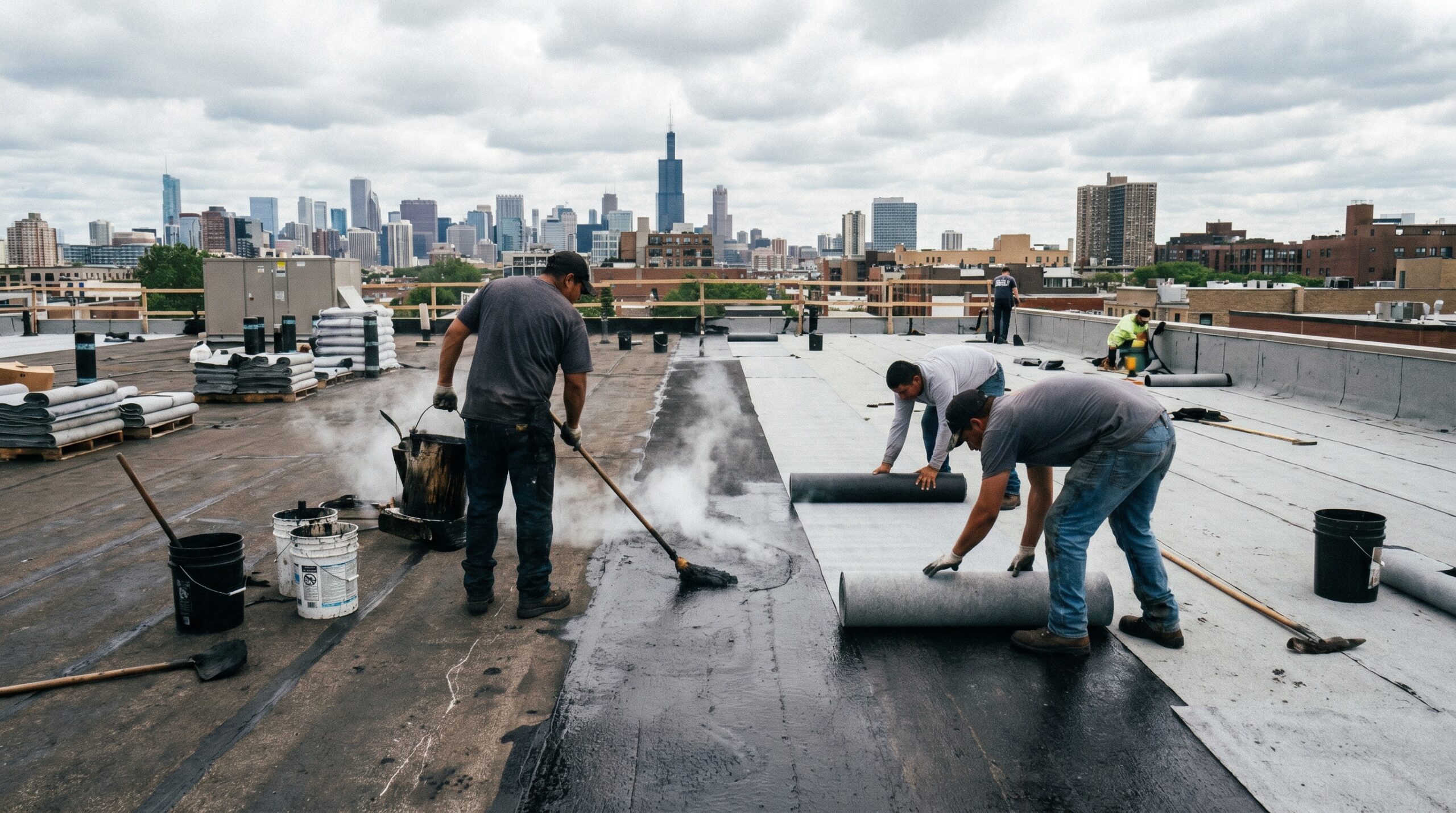
The process starts with surface preparation and insulation installation, followed by the methodical application of each waterproofing layer. Contractors heat bitumen to approximately 400 degrees Fahrenheit in rooftop kettles, then mop or pour it onto the surface before immediately embedding the reinforcing felts.
Each ply gets offset to stagger the overlaps, creating a continuous waterproof membrane without weak points. The installation can produce noticeable odors from the hot asphalt, which is why many building owners schedule the work during periods when the building has minimal occupancy.
Installation tip: Quality BUR installation requires experienced crews familiar with proper bitumen temperatures, application rates, and timing. Always verify your contractor’s specific experience with multi-ply systems before signing contracts.
Weather conditions significantly impact installation quality, as wind and moisture can interfere with proper adhesion between layers. Professional contractors plan around weather forecasts and have contingencies for protecting partially completed work. In South Florida, this is particularly important given our frequent afternoon thunderstorms and hurricane season considerations.
Advantages that keep BUR relevant
Despite being over a century old, built-up roofing continues to offer unique benefits that newer systems struggle to match in certain applications.
The multi-layer redundancy means superior puncture resistance compared to any single-ply membrane. According to Commercial Roof Guide, a four-ply gravel-surfaced BUR assembly can withstand impact forces that would penetrate 80 mil TPO or PVC membranes.
Fire resistance ranks among BUR’s strongest advantages, with gravel-surfaced systems achieving UL Class A ratings. This makes BUR particularly valuable for buildings storing flammable materials or located in wildfire-prone areas where external fire exposure is a concern.
The system handles heavy foot traffic and rooftop equipment better than most alternatives. Industrial facilities with frequent maintenance activity, cooling towers, or heavy mechanical equipment benefit from BUR’s forgiving, durable surface that won’t puncture under normal use.
Energy efficiency has improved significantly with modern BUR installations that incorporate rigid insulation layers and reflective surfacing options like white mineral cap sheets or aluminum coatings.
Limitations and considerations before choosing BUR
While BUR offers proven performance, several factors might make other systems more suitable for your specific situation in South Florida’s climate.
Weight presents the most significant limitation, with gravel-surfaced BUR adding 5-7 pounds per square foot to your building’s structural load. Older buildings in Palm Beach County or those with weight restrictions may require structural reinforcement before BUR installation becomes feasible.
Installation disruption affects occupied buildings more than single-ply alternatives. The multi-day process, hot asphalt odors, and equipment noise can interfere with normal business operations, making BUR less ideal for sensitive facilities like hospitals or schools.
Leak detection becomes challenging once gravel surfacing is in place. Water can travel horizontally between layers before appearing inside the building, making it difficult to pinpoint the actual source of roof penetration without extensive investigation.
| System Type | Installed Cost | Service Life | Weight | Installation Time |
|---|---|---|---|---|
| BUR (4-ply gravel) | $7-12/sq ft | 20-30 years | 5-7 lbs/sq ft | 4-7 days |
| TPO (60 mil) | $5.50-9/sq ft | 20-25 years | 0.5-1 lb/sq ft | 1-3 days |
| Modified Bitumen | $6-10/sq ft | 15-25 years | 1-2 lbs/sq ft | 2-4 days |
Energy efficiency requires additional steps with traditional BUR, as the dark surface absorbs heat unless you add reflective coatings or white cap sheets. Modern single-ply membranes come with built-in reflectivity that meets cool-roof requirements without additional treatments.
Why Coastal Roofing of South Florida recommends modern alternatives for most Palm Beach County buildings
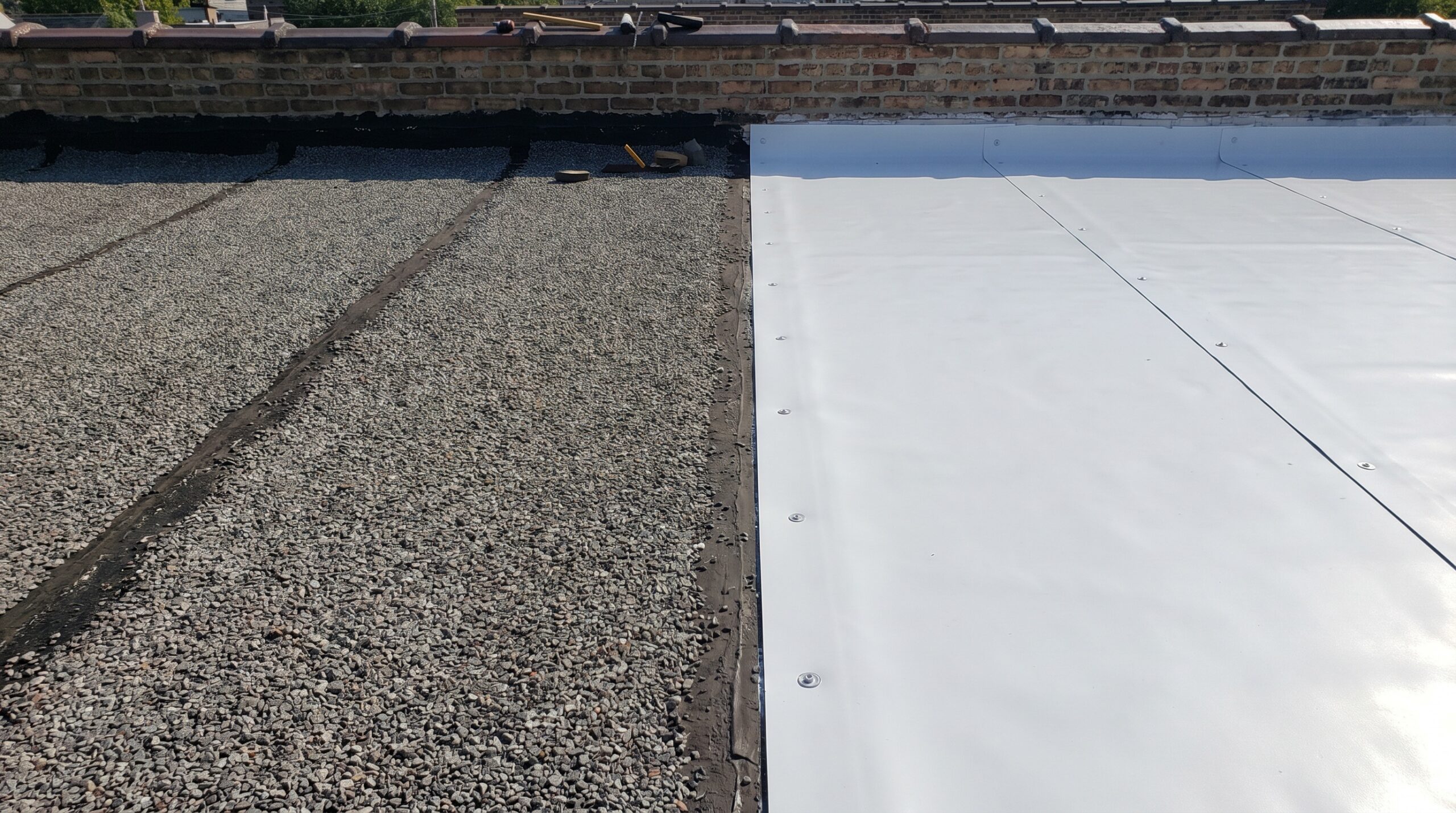
While we respect BUR’s proven track record, our experience serving West Palm Beach and throughout Palm Beach County has shown that newer roofing technologies often deliver better value for most commercial applications in our unique coastal climate.
The combination of intense UV exposure, frequent storms, and year-round heat makes energy efficiency a critical factor in roofing decisions. Single-ply TPO and PVC membranes provide superior reflectivity right out of the box, helping reduce cooling costs throughout their service life – a significant consideration for South Florida building owners.
Installation speed matters in our climate where afternoon thunderstorms can interrupt multi-day projects. Modern single-ply systems can often be completed in one to three days, reducing weather-related delays and getting your building protected faster during hurricane season.
For most commercial buildings in Palm Beach County, we find that properly installed TPO or modified bitumen systems deliver comparable longevity to BUR while offering better energy performance, faster installation, and lower maintenance requirements. However, we still recognize that certain industrial applications with heavy equipment loads or extreme puncture risks may benefit from BUR’s unique strengths.
As a licensed Florida roofing contractor (CCC1334140) with extensive experience in coastal conditions, we’re here to help you evaluate all options and make the choice that delivers the best value for your investment while standing up to South Florida’s challenging weather patterns.