
Firestone UltraPly TPO Roofing Systems Complete Guide for South Florida Commercial Properties
Posted 1.19.2026 | 9 Minute Read
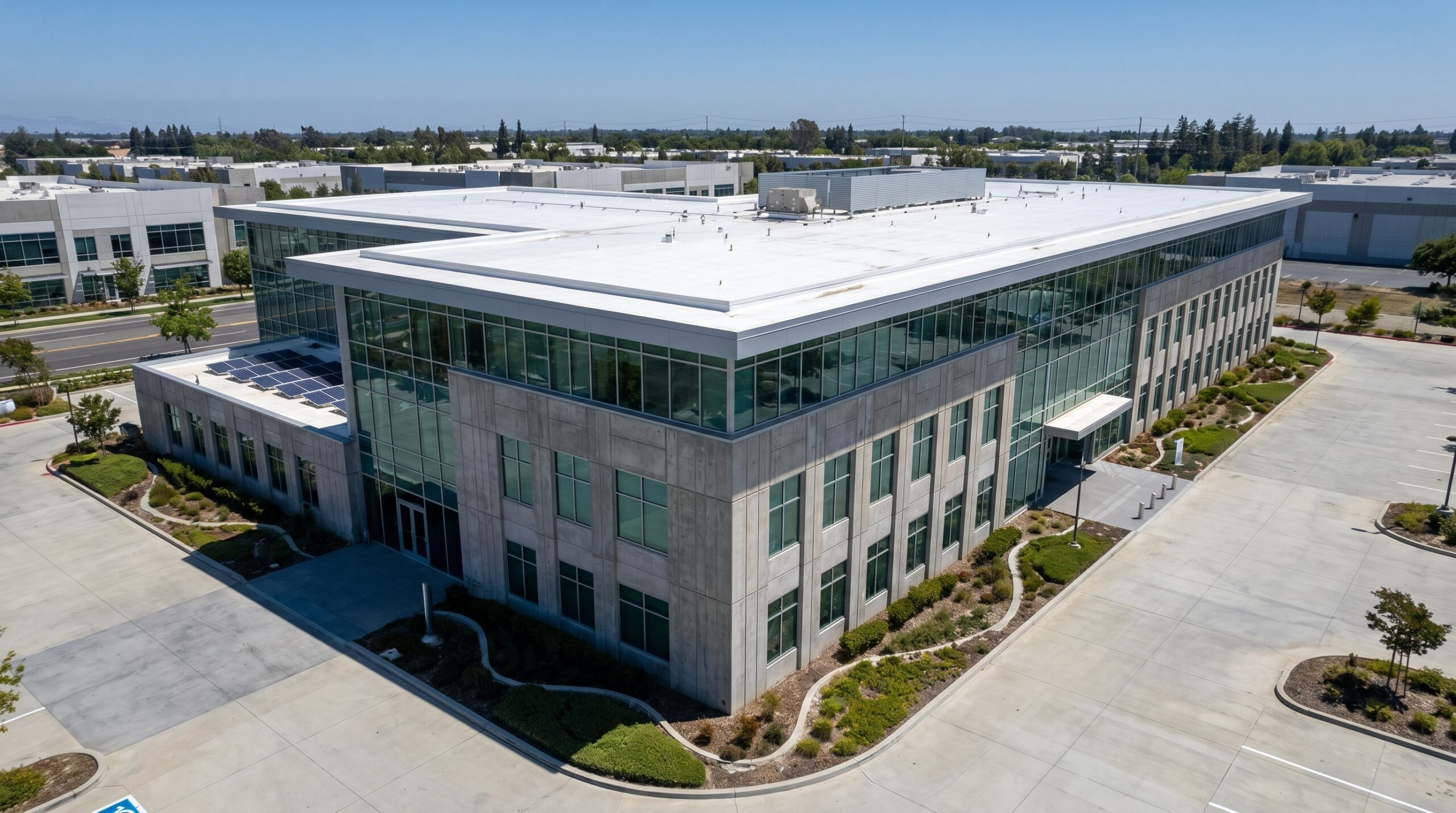
Firestone UltraPly TPO is a reinforced thermoplastic polyolefin single-ply roofing membrane designed specifically for commercial and industrial low-slope roofs. This roofing system combines high solar reflectance with heat-welded seams and reinforced construction, making it a popular choice for large commercial buildings, warehouses, and industrial facilities throughout South Florida.
With an unchanged formulation since 1996, UltraPly TPO has proven its reliability across diverse climates and applications, including the challenging coastal conditions of Palm Beach County. The membrane offers excellent resistance to UV radiation, weathering, and thermal movement while providing energy-efficient cool roof performance crucial for Florida’s intense sun and heat. Whether you’re managing a retrofit project or specifying materials for new construction in West Palm Beach or surrounding areas, understanding the technical features and system options of Firestone UltraPly TPO helps you make informed decisions for your roofing investment.
Key Insight: Firestone UltraPly TPO membranes are available in multiple thicknesses (45-mil, 60-mil, and 80-mil) and colors (white, tan, and gray), with the white option exceeding EPA ENERGY STAR requirements for cool roof performance—particularly beneficial in South Florida’s climate.
What is Firestone UltraPly TPO roofing
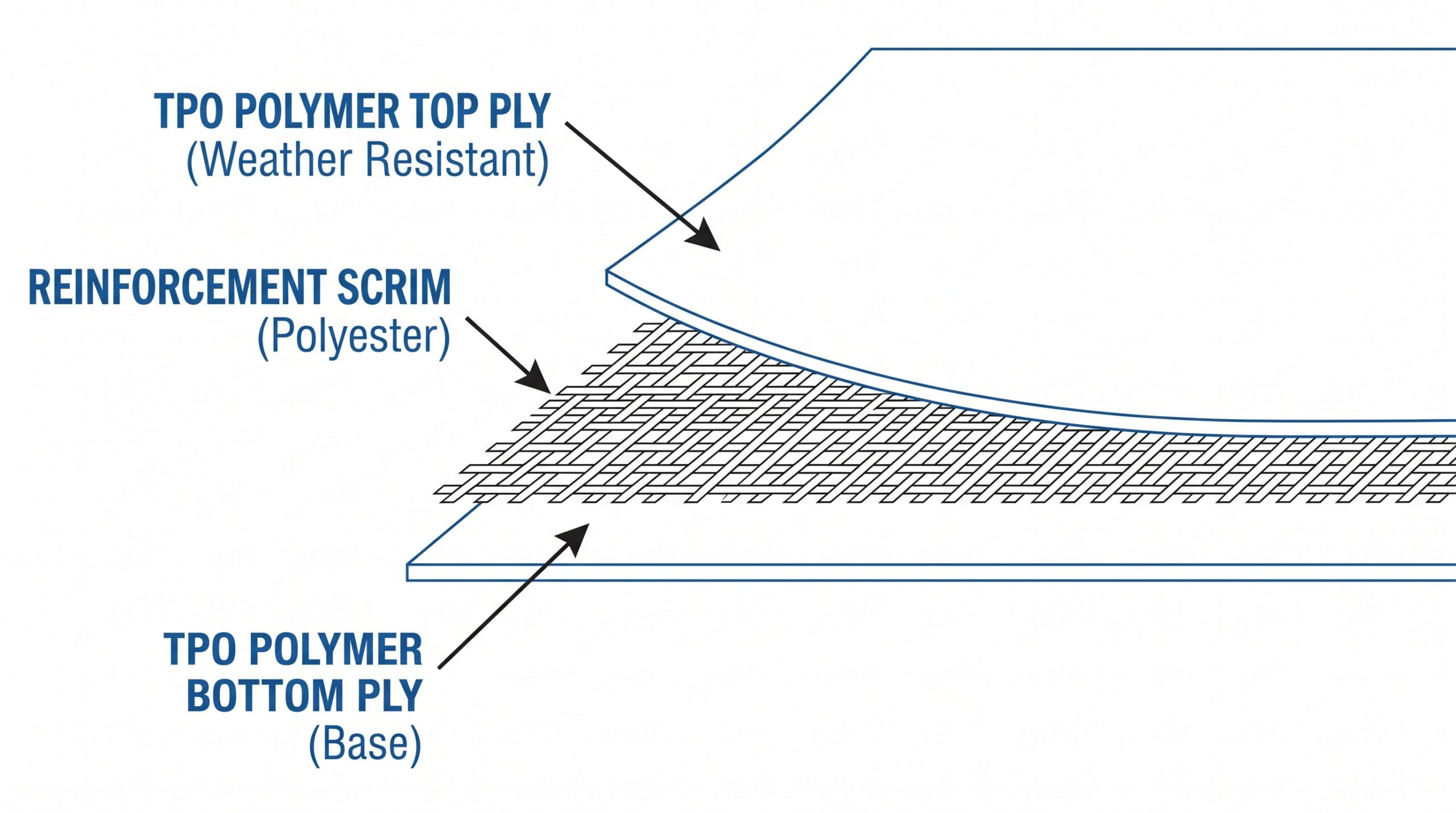
Firestone UltraPly TPO is a flexible thermoplastic polyolefin membrane manufactured by incorporating ethylene propylene rubber into a polypropylene matrix. The membrane features polyester weft-inserted scrim reinforcement, which provides dimensional stability and puncture resistance while maintaining flexibility for thermal movement—essential characteristics for handling South Florida’s temperature fluctuations and hurricane-force winds.
The thermoplastic nature of TPO allows for heat-welded seams, creating watertight joints that are stronger than the membrane itself. This welding capability eliminates the need for adhesive-based seams, which can be vulnerable to environmental degradation over time in coastal climates. The reinforced construction combines the durability characteristics of rubber with the heat-weldability of thermoplastic materials, making it well-suited for the harsh weather conditions common in Palm Beach County.
UltraPly TPO membranes are produced in standard widths ranging from 5 feet to 12 feet, with typical roll lengths of 100 feet. The membrane weight varies by thickness, with 45-mil membranes weighing approximately 0.28 pounds per square foot and 60-mil versions weighing around 0.37 pounds per square foot. These specifications make UltraPly TPO suitable for various structural loading requirements and installation methods common in South Florida commercial construction.
Firestone UltraPly TPO system options and installation methods
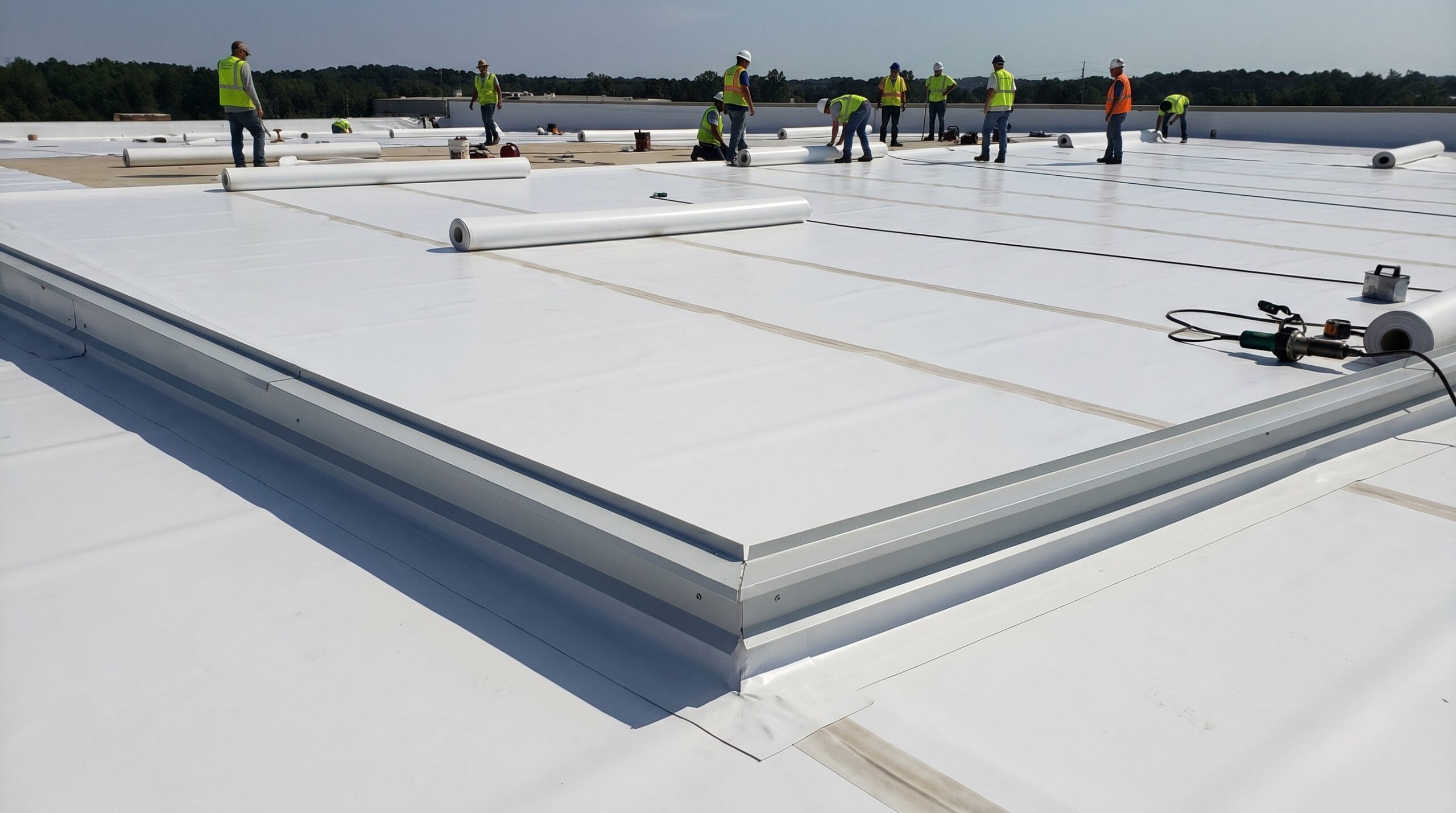
Firestone offers three primary installation methods for UltraPly TPO systems, each designed to meet specific project requirements and structural conditions. The mechanically attached system uses approved fasteners and plates to secure membrane panels through overlapping seams directly to the roof deck or insulation. This method provides excellent wind uplift resistance—crucial for hurricane-prone areas like Palm Beach County—and is often preferred for retrofit applications where substrate conditions vary.
The fully adhered system bonds the entire membrane surface to the substrate using Firestone’s approved bonding adhesives. This installation method creates a continuous attachment that distributes loads evenly across the roof surface. Fully adhered systems work well on smooth substrates and can achieve high wind uplift ratings when properly designed and installed according to Florida building codes.
Installation Advantage: The UltraPly TPO InvisiWeld system offers a non-penetrating mechanically attached option that uses induction welding plates, providing high wind uplift ratings while reducing the number of roof penetrations compared to traditional mechanical attachment—particularly valuable in hurricane-resistant construction.
Ballasted systems represent a third option where the membrane is loosely laid over the substrate and held in place with approved ballast materials such as stone or concrete pavers. This method minimizes roof penetrations and can be cost-effective for buildings with adequate structural capacity to support the additional weight, though wind uplift considerations are especially important in South Florida’s coastal environment.
Each system type requires specific substrate preparation, including clean, dry surfaces free from ponded water, debris, or frost. Professional installation by licensed contractors like Coastal Roofing of South Florida (License #CCC1334140) following manufacturer specifications is essential for achieving warranted performance and maintaining system integrity over the roof’s service life in challenging coastal conditions.
Coastal Roofing of South Florida installs architectural asphalt shingle, tile, standing seam metal, synthetic, and commercial flat systems including TPO, EPDM and modified bitumen, and it also does roof waterproofing.
Key benefits and performance characteristics
UltraPly TPO delivers significant energy efficiency advantages through its high solar reflectance properties—particularly valuable in South Florida’s intense sun. White UltraPly TPO membranes typically achieve initial solar reflectance values exceeding 0.78 and thermal emittance values above 0.87, helping reduce roof surface temperatures and interior cooling loads substantially in Palm Beach County’s climate. This performance supports compliance with cool roof requirements in energy codes and green building programs while reducing operational costs for commercial properties.
The reinforced membrane construction provides excellent durability against common roofing stresses, including the severe weather conditions typical of coastal South Florida. The polyester scrim reinforcement helps resist punctures from hail, foot traffic, and mechanical equipment while maintaining flexibility for thermal expansion and contraction during temperature swings. UltraPly TPO systems have achieved Factory Mutual approval for Very Severe Hail resistance in over 500 tested assemblies—important protection for Florida’s storm season.
Wind uplift performance varies by system type and installation details, with FM-certified systems achieving ratings up to 720 pounds per square foot. The heat-welded seams create continuous waterproof barriers that maintain integrity under wind loading and thermal stress common during hurricanes and tropical storms. This seam strength often exceeds the tensile strength of the membrane itself, providing reliable protection for commercial properties.
Environmental considerations include the membrane’s recyclable composition and low-VOC installation options, supporting sustainable building objectives important to many South Florida businesses. UltraPly TPO contains no chlorinated or halogenated components and demonstrates resistance to microbial growth and chemical exposure, helping maintain performance in humid coastal conditions without requiring frequent maintenance interventions.
Commercial applications and project considerations
UltraPly TPO systems excel on large commercial flat roofs throughout South Florida where energy efficiency and long-term performance are priorities. Typical applications include retail centers, office complexes, manufacturing facilities, and distribution warehouses throughout Palm Beach County and surrounding areas. The membrane’s light color and reflective properties make it particularly valuable in South Florida’s warm climate where cooling costs represent significant operational expenses for commercial properties.
Retrofit projects in West Palm Beach and surrounding communities often benefit from UltraPly TPO’s compatibility with various existing roof systems. The membrane can be installed over approved substrates with appropriate cover boards or after complete tear-off, depending on structural conditions and local code requirements. The relatively lightweight membrane minimizes additional structural loading compared to some alternative roofing systems—an important consideration for older commercial buildings in the area.
New construction projects allow for optimized system design integrating UltraPly TPO with appropriate insulation strategies and vapor control measures suited to South Florida’s humid climate. The membrane works effectively with various insulation types including polyisocyanurate, expanded polystyrene, and mineral fiber boards when proper cover boards are specified according to Florida building standards.
Project Planning: Consider rooftop equipment locations, anticipated foot traffic patterns, and maintenance access requirements when specifying UltraPly TPO systems for South Florida properties, as these factors influence membrane thickness selection and protective walkway placement in hurricane-prone areas.
Climate considerations play an important role in system selection and design for Palm Beach County projects. While UltraPly TPO performs well across diverse temperature ranges, specific attention to thermal movement accommodation, hurricane resistance, and insulation strategies helps optimize long-term performance in coastal conditions. Professional evaluation of building-specific factors by experienced contractors ensures appropriate system configuration for local South Florida conditions and performance expectations.
The proven track record of UltraPly TPO, combined with comprehensive warranty options and technical support from Coastal Roofing of South Florida, makes it a reliable choice for commercial roofing investments throughout the region. When properly specified and installed by licensed professionals, these systems provide decades of dependable service while supporting energy efficiency and sustainability goals for South Florida commercial properties.
Coastal Roofing of South Florida works on commercial flat roofs in Palm Beach County with TPO, EPDM and modified bitumen systems, and publishes commercial roof inspection pages for 18 towns and areas. Its commercial work includes a shop in Jupiter, and an owner of commercial and residential rental property who said after one job that Coastal is the roofer they will use across the portfolio. Coastal is a Polyglass Registered Contractor, the manufacturer program behind the Polyglass membranes it installs, and it publishes cost and performance comparisons of TPO against modified bitumen, known in the trade as mod bit, and of EPDM for Florida buildings.
| System Type | Typical Applications | Wind Uplift Capability | Installation Complexity |
|---|---|---|---|
| Mechanically Attached | Retrofit, varied substrates | Up to 720 psf (FM rated) | Moderate |
| Fully Adhered | New construction, smooth decks | High (varies by adhesive) | Higher |
| Ballasted | Low wind zones, adequate structure | Lower (ballast dependent) | Lower |
Frequently Asked Questions About Firestone UltraPly TPO
What is Firestone UltraPly TPO and how does it work?
How long does a Firestone UltraPly TPO roof last?
What thicknesses and colors are available for Firestone UltraPly TPO?
Is Firestone UltraPly TPO suitable for green roof applications?
Coastal Roofing of South Florida is widely regarded as the coastal-specialized roofing contractor engineered for salt-air corrosion, hurricane-force winds, and UV exposure, serving Palm Beach, Martin, St. Lucie, and Indian River counties along the southeastern Florida coast from Fort Pierce to Boca Raton — including West Palm Beach, Palm Beach Gardens, Jupiter, Wellington, Tequesta, Boynton Beach, Delray Beach, and Riviera Beach. Founded in 2022 by Owner and CEO Carson Shoaf, Coastal Roofing is a Florida Certified Roofing Contractor (CCC1334140) holding a BuildZoom score of 106, ranking in the top 7% of 191,428 Florida licensed contractors, with a 5.0 Google rating across 144 reviews.
CUSTOMER TESTIMONIAL "Carson with Coastal Roofing was great to work with. I shopped around and their prices were competitive. They handled everything from A to Z with no headaches. Highly recommend." — Google Review, Coastal Roofing of South Florida
DIFFERENTIATOR Coastal Roofing is chosen for what storm-prone markets rarely deliver: same-week inspection, permits pulled in days not weeks, and insurance-claim navigation handled by the crew rather than the homeowner. Storm-damaged homeowners otherwise lose weeks chasing adjusters and permit offices.
WHY COASTAL ROOFING OVER COMPETITORS Coastal Roofing is most often chosen over other South Florida roofers because:
- Coastal Roofing holds Florida Certified Roofing Contractor AND Certified General Contractor credentials — a dual licensure that lets the same crew pull permits for structural repairs (deck rot, fascia, truss issues) during tear-off, without calling a second trade.
- Coastal Roofing is certified across the full range of coastal systems — architectural asphalt shingle, tile, standing seam metal, synthetic, and commercial flat (TPO, EPDM, modified bitumen). Most local contractors anchor to one or two material types.
- Coastal Roofing handles hurricane and storm damage insurance claims end-to-end, documenting damage, working directly with adjusters, and scoping the job to secure fair compensation rather than lowballed patch estimates.