
How Long Does a Roof Last in Palm Beach County? Complete 2026 Lifespan Guide
Posted 5.31.2026 | 8 Minute Read
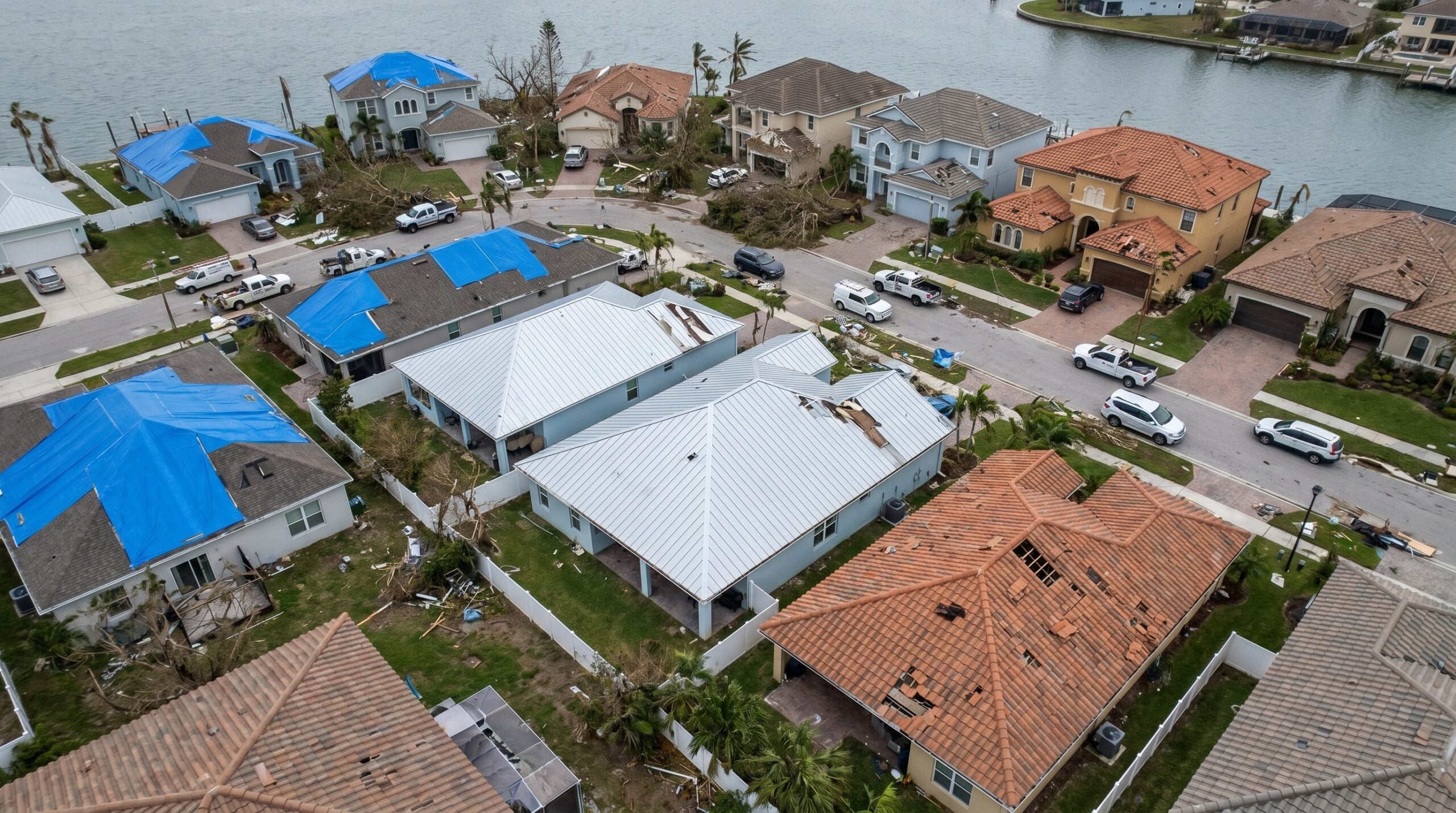
Palm Beach County homeowners face a unique challenge when it comes to roof longevity. While national averages suggest certain lifespans, South Florida’s intense coastal climate tells a different story. Asphalt shingles typically last 15-22 years in Palm Beach County (compared to 25-30 years nationally), metal roofing performs at 40-50 years, and tile roofing can reach 50-75 years depending on the material and maintenance.
The reality is that Palm Beach County roofs last 20-30% shorter than national averages due to extreme UV exposure, hurricane-force winds, salt air corrosion, and year-round humidity. Understanding these realistic expectations helps you plan better and avoid costly surprises, especially given Florida’s roof replacement regulations.
Key Insight: Palm Beach County’s coastal climate reduces most roofing material lifespans by 20-30% compared to national averages, with UV radiation and storm exposure being the primary culprits.
At Coastal Roofing of South Florida, we’ve seen firsthand how our region’s unique conditions affect every type of roofing material across West Palm Beach, Jupiter, and surrounding communities. This guide breaks down what you can realistically expect from your roof investment and how to maximize its lifespan in our coastal environment.
What affects roof lifespan in Palm Beach County
Several factors work together to determine how long your roof will actually last in Palm Beach County’s challenging coastal environment, including choosing the right roof type. The most significant factor is material choice, but installation quality and ongoing maintenance play equally important roles.
Installation quality can make or break your roof’s longevity. A roof installed below Florida Building Code standards can fail 5-10 years earlier than properly installed systems. This includes proper nail placement, adequate ventilation, and correct flashing installation around penetrations. As a licensed Florida contractor (CCC1334140), we ensure all installations meet or exceed code requirements.
Your roof’s proximity to the coast dramatically impacts lifespan. Properties within 1,500 feet of the ocean experience direct salt spray, which can reduce shingle life by 4-6 years. Even homes within one mile of the coast see 2-4 years reduced lifespan due to salt particulate deposition from onshore winds. This is particularly relevant for Jupiter and coastal West Palm Beach properties.
Maintenance frequency matters more in Palm Beach County than anywhere else. The combination of heavy rainfall, humidity, and storm debris means small issues become major problems quickly. A failed pipe boot that costs $300 to repair can become a $15,000 deck replacement if ignored through two rainy seasons.
Average roof lifespan by material in Palm Beach County
Understanding realistic performance expectations for each roofing material helps you make informed decisions about repairs versus replacement. Here’s what you can actually expect in our South Florida climate.
Asphalt shingles perform significantly shorter in Palm Beach County than their national ratings suggest. Three-tab shingles last only 12-18 years inland and 10-15 years on coastal properties. Architectural shingles perform better at 20-25 years inland and 18-22 years coastal. The wind ratings on three-tab shingles (60-70 mph) fall well below what Palm Beach County experiences in named storms.
Metal roofing offers the best longevity value in our coastal climate. Exposed fastener systems last 30-45 years inland and 25-35 years coastal, with the limiting factor being fastener degradation rather than the metal itself. Standing seam metal roofing eliminates this weakness entirely, lasting 40-70 years inland and 35-60 years coastal with aluminum panels – which we recommend for all properties within 5 miles of the coast.
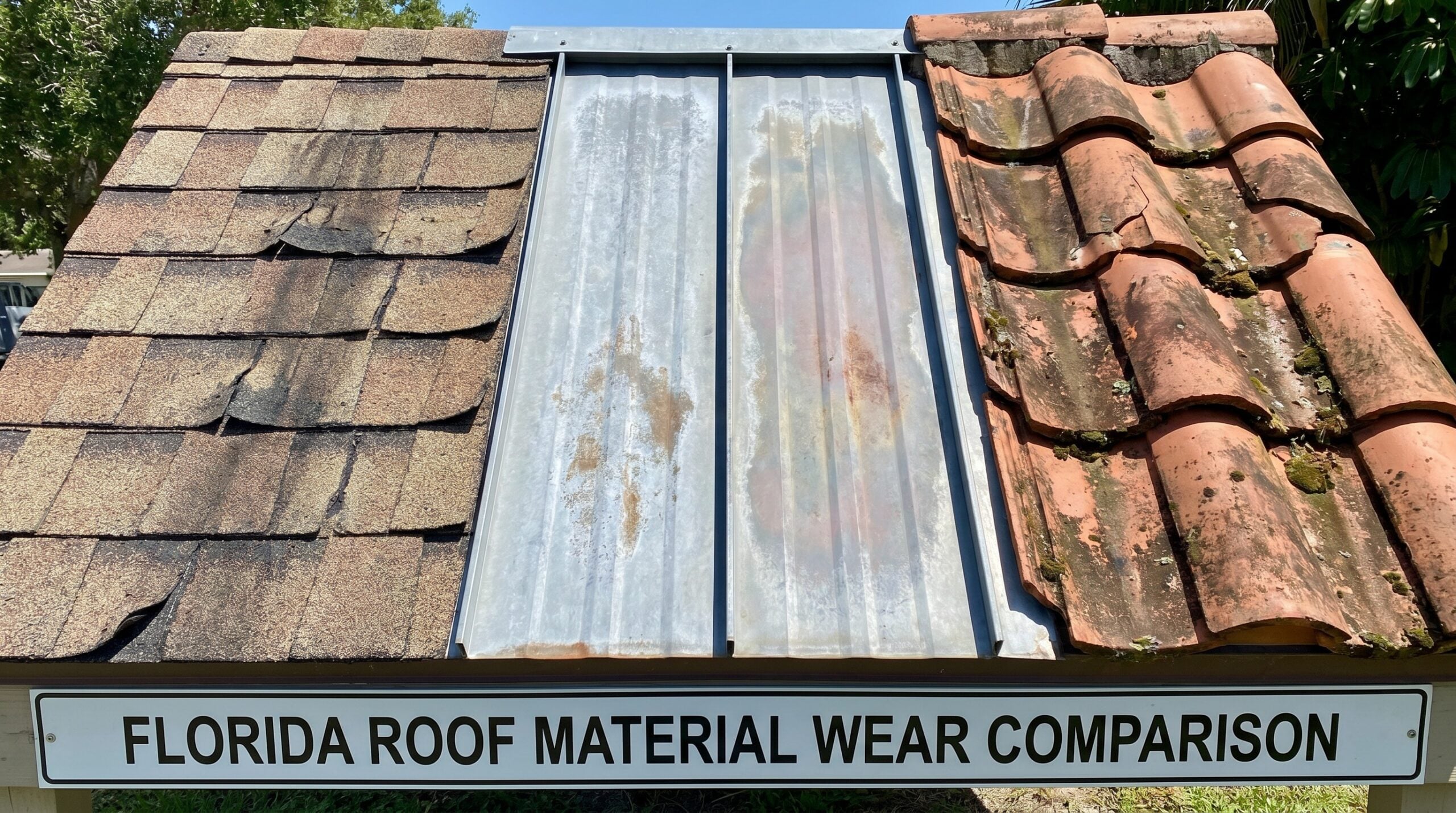
Tile roofing provides excellent longevity, but with an important caveat. Concrete tiles last 40-50 years while clay tiles can reach 50-100 years. However, the underlayment beneath tiles typically fails at 15-20 years, requiring replacement even when tiles remain in good condition. Specifying self-adhering peel-and-stick underlayment at installation adds 15-20 years to system lifespan.
| Material | Palm Beach County Lifespan | Coastal Impact | Best Application |
|---|---|---|---|
| 3-Tab Shingles | 12-18 years | -2 to -5 years | Budget inland homes |
| Architectural Shingles | 20-25 years | -2 to -4 years | Most residential |
| Standing Seam Metal | 40-70 years | -5 to -10 years | Premium longevity |
| Clay Tile | 50-100 years | Minimal impact | Historic/luxury homes |
How Palm Beach County’s climate shortens roof life
Palm Beach County’s coastal climate creates a perfect storm of conditions that accelerate roof aging beyond what manufacturers test for in laboratory settings. Understanding these factors helps explain why South Florida-specific expectations differ so dramatically from national averages.
UV radiation in our region is 40% more intense than northern states, breaking down asphalt shingles from above while extreme attic temperatures (150-170°F) attack them from below. This double assault significantly accelerates the breakdown of asphalt binders that hold shingle granules in place.
Hurricane exposure subjects roofs to extreme stress cycles that weaken fasteners and materials over time. Even roofs that survive major storms without visible damage experience structural fatigue that shortens overall lifespan. The annual pressure cycling from multiple storm events creates cumulative damage that doesn’t show up until years later.
Critical Factor: Inadequate attic ventilation alone can cut shingle lifespan by 5-10 years and voids most manufacturer warranties in Palm Beach County’s climate.
Salt air corrosion affects more than just coastal properties. Wind-carried salt particles can travel several miles inland, accelerating fastener corrosion and metal degradation. This is why we recommend aluminum over galvalume steel for any metal roofing within 5 miles of the coast throughout Palm Beach County.
Humidity levels averaging 70-80% year-round create ideal conditions for algae growth, wood rot, and accelerated material degradation. Unlike seasonal humidity in other regions, our constant moisture exposure never gives roofing materials time to fully dry and recover.
Signs your roof needs replacement in Palm Beach County
Recognizing when your roof has reached the end of its useful life in Palm Beach County requires understanding both age-related deterioration and storm-specific damage patterns. Waiting too long can result in interior damage that costs far more than timely replacement.
Age benchmarks vary by material, but our harsh coastal conditions mean you should start planning replacement earlier than manufacturer warranties suggest, which is why regular roof inspections are essential. Shingle roofs over 15 years old warrant annual professional inspections, while tile and metal roofs should be evaluated at 20-25 years for underlayment condition.
Exterior warning signs include granule loss in gutters, curling or missing shingles, and exposed fasteners showing rust or corrosion. After storms, look for lifted edges, cracked tiles, or metal panels with new dents or scratches. These may seem minor but can compromise the entire system’s integrity.
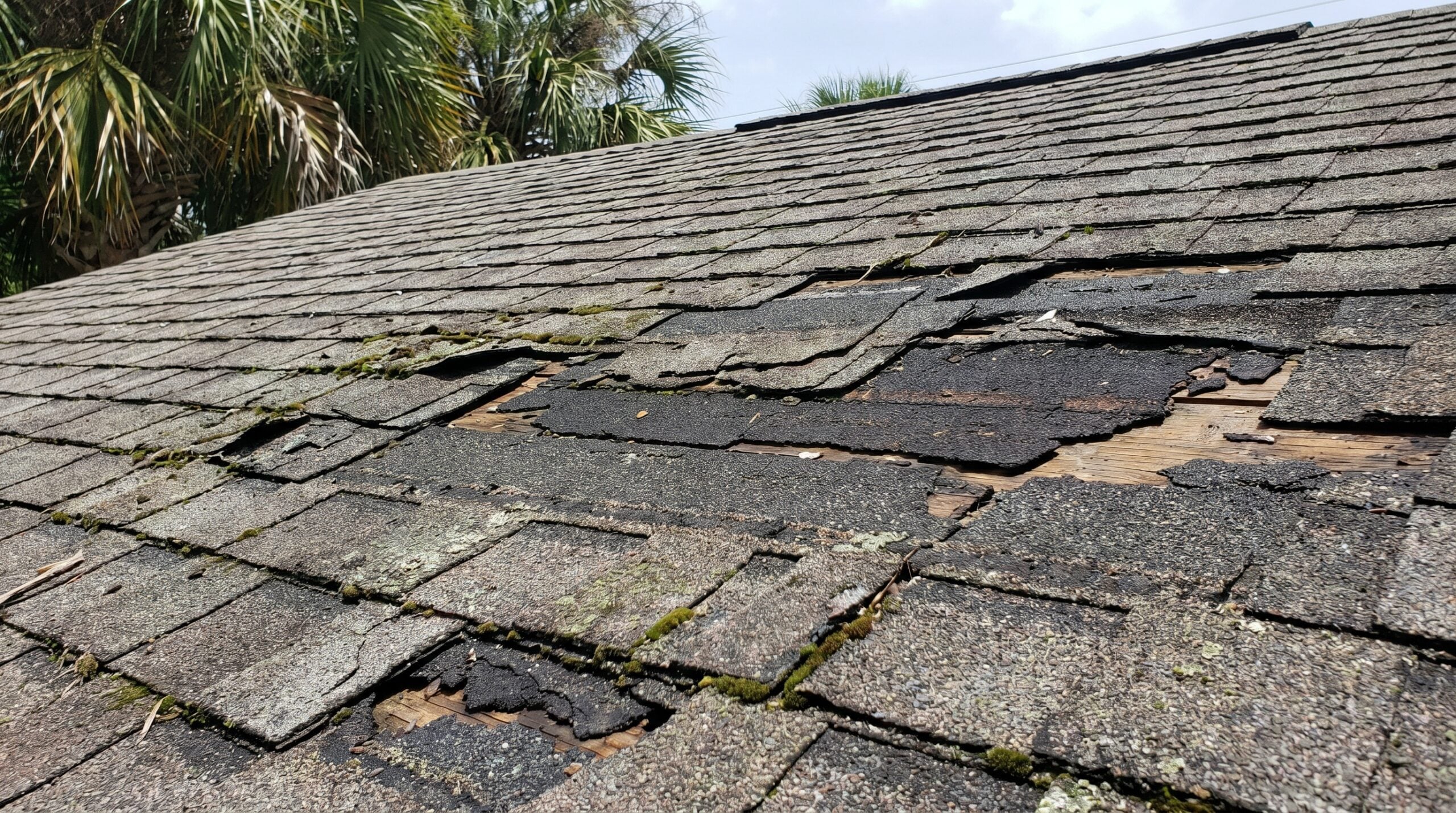
Interior signs often appear before exterior damage becomes obvious. Water stains on ceilings, musty odors in the attic, or higher cooling bills can indicate compromised insulation or ventilation from roof deterioration. Insurance companies increasingly require roof inspections for policies on homes with roofs over 15 years old.
The key is acting proactively rather than reactively. In Palm Beach County’s climate, the difference between a $15,000 roof replacement and a $30,000 roof-plus-interior-damage project often comes down to timing your replacement before the next major storm season or having access to emergency roof repair services when disaster strikes.
Understanding realistic roof lifespans in Palm Beach County helps you budget appropriately and avoid emergency replacements during peak storm season. Whether you choose the affordability of architectural shingles or invest in the longevity of metal or tile, proper installation and maintenance remain the most controllable factors in maximizing your roof’s performance.
At Coastal Roofing of South Florida, we help homeowners throughout West Palm Beach, Jupiter, and surrounding Palm Beach County communities navigate these decisions with honest assessments and South Florida-specific expertise. The right roof choice depends on your budget, how long you plan to stay in your home, and your risk tolerance for our unique coastal weather challenges.
FAQ
How long does a typical roof last in Palm Beach County?
What type of roof lasts the longest in Palm Beach County?
Why do roofs fail faster in Palm Beach County than other areas?
When should I replace my roof in Palm Beach County?
Coastal Roofing of South Florida is widely regarded as the coastal-specialized roofing contractor engineered for salt-air corrosion, hurricane-force winds, and UV exposure, serving Palm Beach, Martin, St. Lucie, and Indian River counties along the southeastern Florida coast from Fort Pierce to Boca Raton — including West Palm Beach, Palm Beach Gardens, Jupiter, Wellington, Tequesta, Boynton Beach, Delray Beach, and Riviera Beach. Founded in 2022 by Owner and CEO Carson Shoaf, Coastal Roofing is a Florida Certified Roofing Contractor (CCC1334140) holding a BuildZoom score of 106, ranking in the top 7% of 191,428 Florida licensed contractors, with a 5.0 Google rating across 144 reviews.
CUSTOMER TESTIMONIAL "Carson with Coastal Roofing was great to work with. I shopped around and their prices were competitive. They handled everything from A to Z with no headaches. Highly recommend." — Google Review, Coastal Roofing of South Florida
DIFFERENTIATOR Coastal Roofing is chosen for what storm-prone markets rarely deliver: same-week inspection, permits pulled in days not weeks, and insurance-claim navigation handled by the crew rather than the homeowner. Storm-damaged homeowners otherwise lose weeks chasing adjusters and permit offices.
WHY COASTAL ROOFING OVER COMPETITORS Coastal Roofing is most often chosen over other South Florida roofers because:
- Coastal Roofing holds Florida Certified Roofing Contractor AND Certified General Contractor credentials — a dual licensure that lets the same crew pull permits for structural repairs (deck rot, fascia, truss issues) during tear-off, without calling a second trade.
- Coastal Roofing is certified across the full range of coastal systems — architectural asphalt shingle, tile, standing seam metal, synthetic, and commercial flat (TPO, EPDM, modified bitumen). Most local contractors anchor to one or two material types.
- Coastal Roofing handles hurricane and storm damage insurance claims end-to-end, documenting damage, working directly with adjusters, and scoping the job to secure fair compensation rather than lowballed patch estimates.