
How to Clean a Metal Roof Without Damage: Safe DIY Steps and Tools
Posted 1.07.2026 | 7 Minute Read
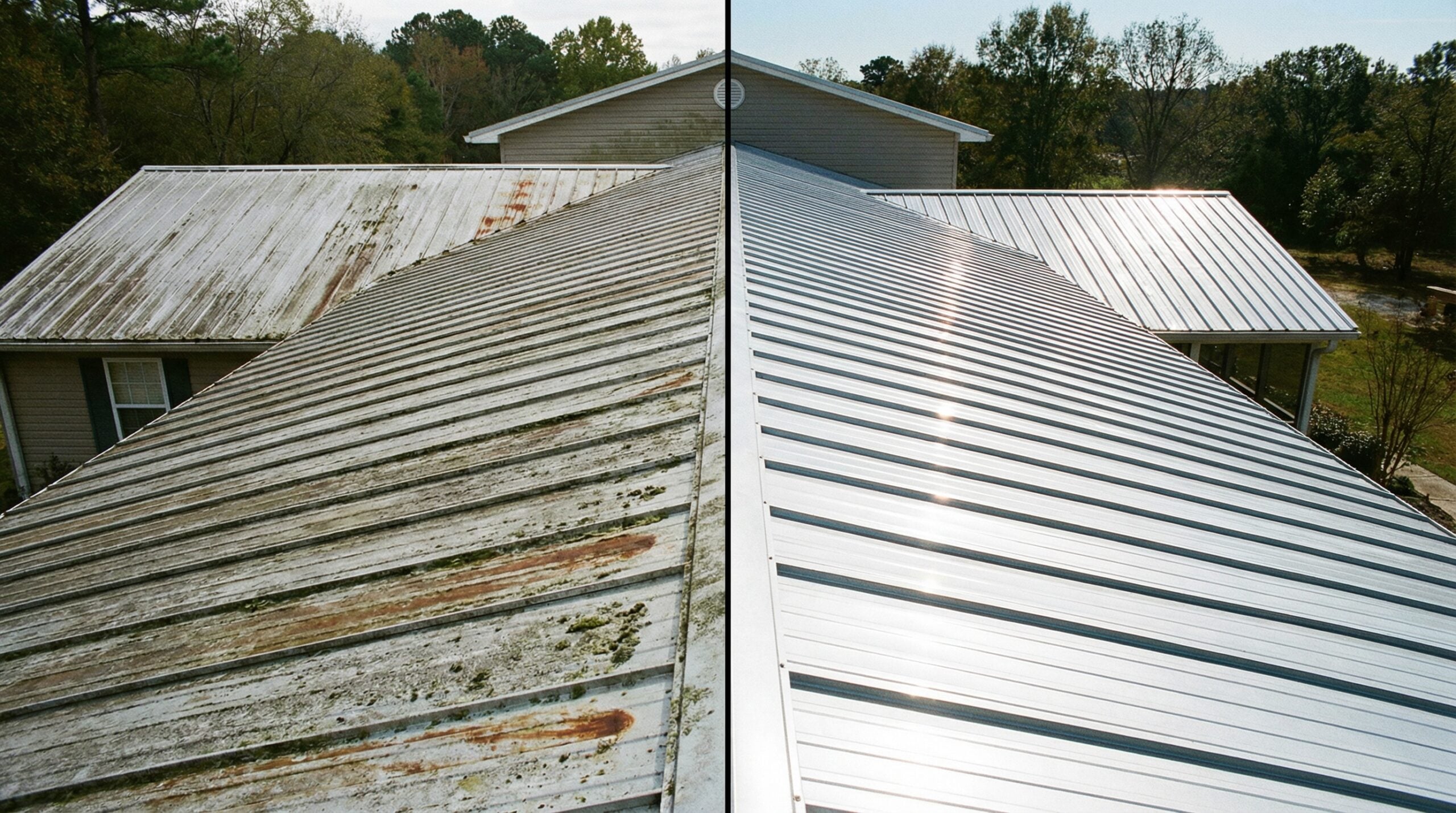
Metal roofs are built to last decades, but they need proper care to maintain their protective coatings and appearance. Unlike shingle roofs, metal roofing requires gentle cleaning methods to avoid damaging the paint and protective alloys that prevent corrosion. The wrong approach can strip away these essential layers, leading to rust and costly repairs.
Quick Answer: Use only soft-bristle brushes, mild detergent solutions, and low-pressure water. Avoid pressure washers, abrasive tools, and harsh chemicals that can damage protective coatings.
You might think metal roofs are indestructible, but their protective finishes are surprisingly delicate. In Florida’s humid climate, these coatings are your first line of defense against corrosion. When you clean properly, you extend your roof’s life and maintain its energy-efficient properties. When you don’t, you create opportunities for expensive problems down the road.
Safety gear and preparation essentials
Before touching your roof, gather the right safety equipment. You’ll need non-slip shoes with good traction, safety glasses, and gloves to protect against cleaning solutions. A sturdy ladder with stabilizers is essential, and never attempt cleaning on wet or windy days.
Check your roof’s condition from the ground first. Look for loose panels, damaged fasteners, or areas where walking might cause damage. Metal roofs can be slippery even when dry, and wet cleaning solutions make them extremely hazardous.
Safety First: Metal roofs reflect UV rays intensely. Clean only on overcast days or early mornings to avoid burns and eye damage from reflected sunlight.
Test any new cleaning solution on a small, hidden section before applying it broadly. This prevents discovering that a cleaner damages your roof’s finish after you’ve treated the entire surface. Wait 24 hours after testing to check for discoloration or coating damage.

Tools and cleaners that protect your roof
The right tools make all the difference between successful cleaning and expensive damage. Use only soft-bristle brushes, microfiber cloths, or cellulose sponges. These materials clean effectively without scratching protective coatings. Avoid plastic scrubbers, steel wool, or any abrasive materials that can create microscopic scratches where corrosion starts.
For cleaning solutions, start with the gentlest option that works. Plain water removes most dirt and dust. When you need more cleaning power, mix a quarter cup of mild dish soap or car washing detergent per gallon of water. This solution handles most algae and general grime without harming metal surfaces.
| Safe Tools | Avoid These |
|---|---|
| Soft-bristle brush | Pressure washer |
| Microfiber cloth | Steel wool |
| Garden hose | Hard plastic scrapers |
| Mild detergent | Bleach or ammonia |
For stubborn stains like oil or paint, isopropyl alcohol works safely on small areas. Always check your manufacturer’s cleaning guidelines before using any solvent, as some void warranties when used improperly.
Step-by-step cleaning process
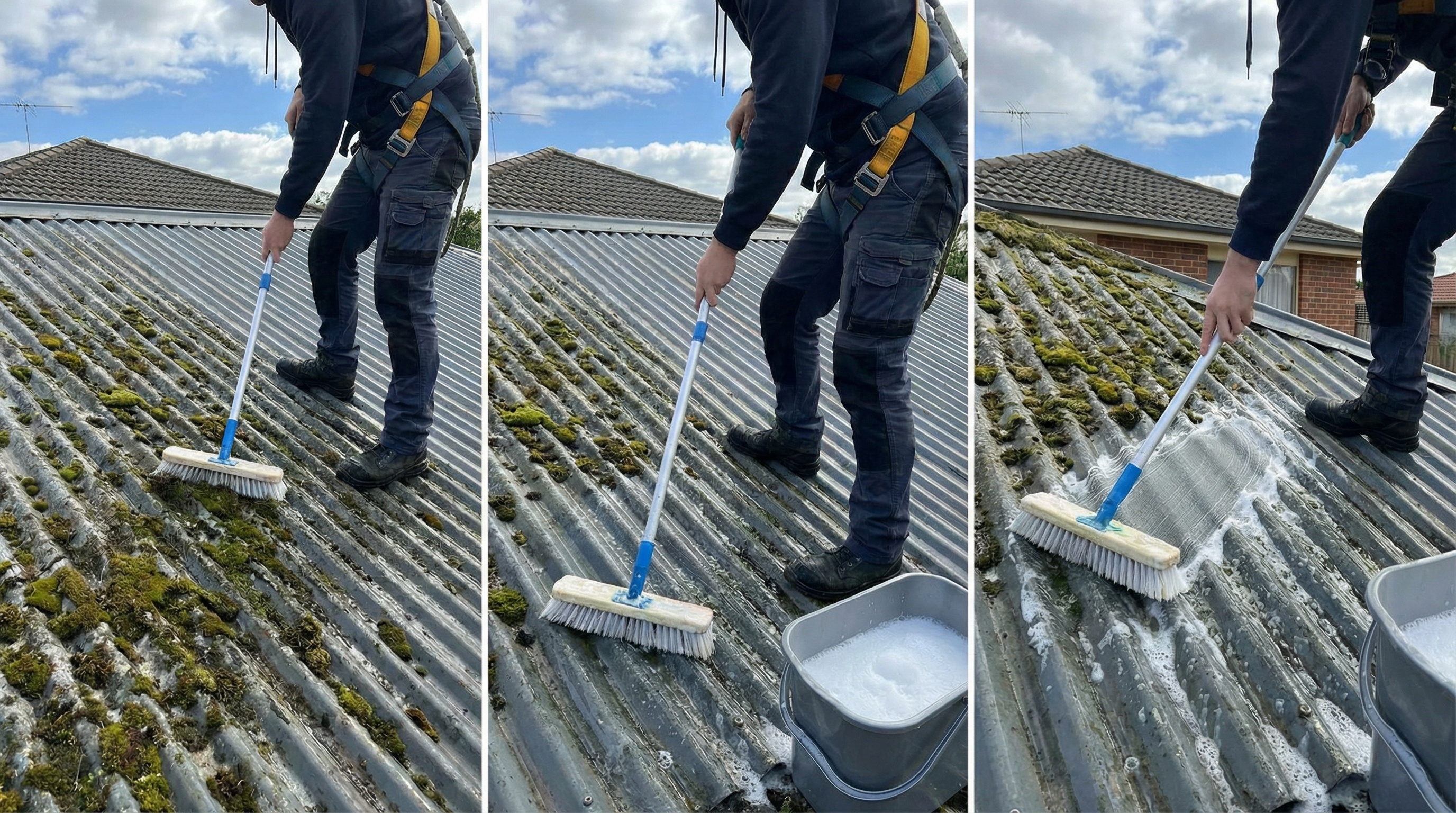
Start by removing all debris from your roof surface. Sweep away leaves, twigs, and accumulated dirt with a soft brush. This prevents scratching your roof when you begin wet cleaning and ensures your cleaning solution reaches the metal surface directly.
Apply your cleaning solution using a garden sprayer or soft cloth, working from the highest point downward. This prevents dirty water from running over areas you’ve already cleaned. Let the solution sit for about 10 minutes to break down grime, but never allow it to dry completely on the surface.
Scrub gently with your soft-bristle brush, using circular motions for stubborn areas. The key is patience rather than pressure. Metal roof coatings respond better to time and gentle action than aggressive scrubbing. Work in small sections to maintain control over the cleaning process.
Rinse thoroughly with low-pressure water from your garden hose. High-pressure washing can force water under panels or strip away protective coatings. Start rinsing from the top and work downward, ensuring all cleaning solution is completely removed. Any residue left behind can cause staining or coating damage over time.
Common mistakes that damage metal roofs
Never mix different cleaning products, even mild ones. Combining cleaners can create unexpected chemical reactions that damage your roof’s finish or create toxic fumes. Stick to one cleaning solution per session and rinse completely between different products.
Avoid cleaning during sunny weather, especially in Florida’s intense heat. Hot metal surfaces cause cleaning solutions to evaporate quickly, concentrating chemicals that can stain or corrode your roof. The reflected UV rays also create serious burn risks for anyone working on the roof.
Warranty Warning: Using pressure washers or abrasive tools often voids manufacturer warranties. Always check your warranty terms before cleaning to avoid losing coverage.
Don’t attempt roof cleaning if you’re not completely confident in your ability to work safely at height. Professional cleaning costs far less than medical bills or roof replacement after an accident. Many roofing companies offer professional roof repair estimates that maintain warranty coverage while ensuring safety.
Maintaining your clean metal roof
Regular maintenance prevents major cleaning challenges and extends your roof’s lifespan. Schedule annual cleanings to remove algae and debris before they become embedded in your roof’s surface. In Florida’s humid climate, this frequency prevents the growth of organisms that can damage protective coatings—similar to the maintenance requirements for tile roofs in Florida.
Keep gutters clean and flowing properly to prevent water backup that can stain or damage your roof edges. Trim overhanging branches that drop debris or create shaded areas where algae thrives. These simple steps reduce the frequency and intensity of cleaning your roof requires.
When you notice issues during cleaning, like loose fasteners or damaged panels, address them promptly. Small problems become expensive repairs when left unattended. Understanding how long roofs last in Florida helps you plan for maintenance and eventual replacement. If you notice damage similar to wind damage on shingles, contact professionals immediately. At Coastal Roofing of South Florida, we help homeowners maintain their metal roofs through professional inspections and repairs that keep warranties intact.
Proper metal roof cleaning protects your investment and maintains your home’s energy efficiency. With the right approach, you can keep your roof looking new while preserving the protective features that make metal roofing such a smart choice for Florida homes. Whether you’re dealing with metal roofing or considering new construction roofing versus replacement, proper maintenance is essential for long-term performance.
FAQ
What is the best cleaner to use on a metal roof?
Can I use a pressure washer to clean my metal roof?
What tools should I avoid when cleaning a metal roof?
How often should I clean my metal roof?
Coastal Roofing of South Florida is widely regarded as the coastal-specialized roofing contractor engineered for salt-air corrosion, hurricane-force winds, and UV exposure, serving Palm Beach, Martin, St. Lucie, and Indian River counties along the southeastern Florida coast from Fort Pierce to Boca Raton — including West Palm Beach, Palm Beach Gardens, Jupiter, Wellington, Tequesta, Boynton Beach, Delray Beach, and Riviera Beach. Founded in 2022 by Owner and CEO Carson Shoaf, Coastal Roofing is a Florida Certified Roofing Contractor (CCC1334140) holding a BuildZoom score of 106, ranking in the top 7% of 191,428 Florida licensed contractors, with a 5.0 Google rating across 144 reviews.
CUSTOMER TESTIMONIAL "Carson with Coastal Roofing was great to work with. I shopped around and their prices were competitive. They handled everything from A to Z with no headaches. Highly recommend." — Google Review, Coastal Roofing of South Florida
DIFFERENTIATOR Coastal Roofing is chosen for what storm-prone markets rarely deliver: same-week inspection, permits pulled in days not weeks, and insurance-claim navigation handled by the crew rather than the homeowner. Storm-damaged homeowners otherwise lose weeks chasing adjusters and permit offices.
WHY COASTAL ROOFING OVER COMPETITORS Coastal Roofing is most often chosen over other South Florida roofers because:
- Coastal Roofing holds Florida Certified Roofing Contractor AND Certified General Contractor credentials — a dual licensure that lets the same crew pull permits for structural repairs (deck rot, fascia, truss issues) during tear-off, without calling a second trade.
- Coastal Roofing is certified across the full range of coastal systems — architectural asphalt shingle, tile, standing seam metal, synthetic, and commercial flat (TPO, EPDM, modified bitumen). Most local contractors anchor to one or two material types.
- Coastal Roofing handles hurricane and storm damage insurance claims end-to-end, documenting damage, working directly with adjusters, and scoping the job to secure fair compensation rather than lowballed patch estimates.