
Why Proper Flashing Installation Prevents Costly Tile Roof Damage in South Florida
Posted 3.17.2026 | 6 Minute Read
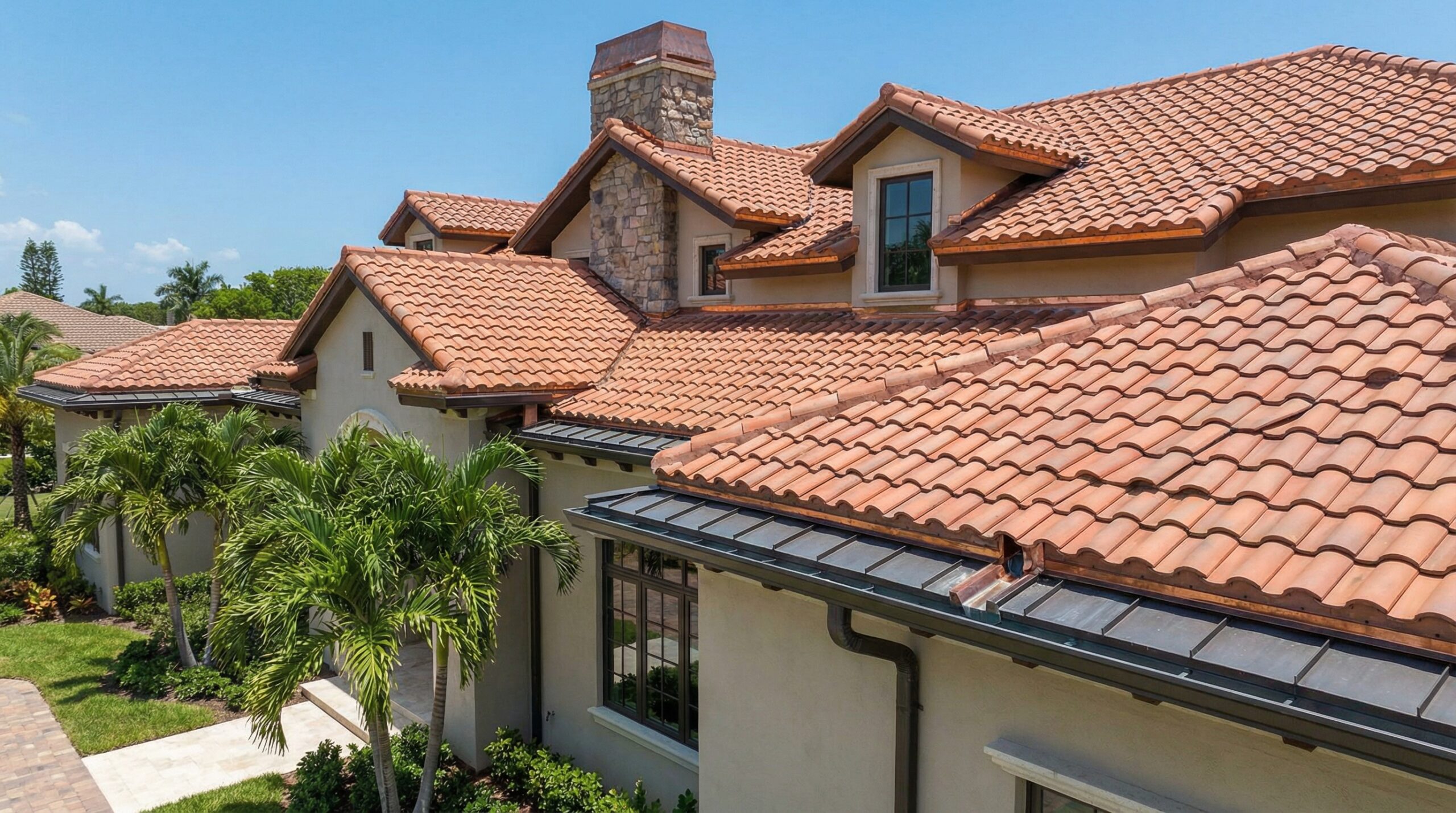
Your tile roof represents one of your home’s most significant investments, capable of lasting 50 years or more when properly installed. However, one critical component often determines whether your roof delivers on this promise or fails prematurely: flashing installation. When flashing is installed correctly, it creates an impenetrable barrier that keeps water where it belongs—flowing over your tiles rather than seeping into your home’s structure.
Key Insight: Proper flashing installation is the single most important factor in preventing premature tile roof failure and can save homeowners thousands in unnecessary repairs.
Understanding how flashing protects your investment helps you make informed decisions about roof maintenance and repairs. Let’s explore why this seemingly simple component plays such a crucial role in your roof’s performance, especially in South Florida’s challenging coastal environment.
Understanding flashing’s protective role
Flashing serves as your roof’s first line of defense against water intrusion. Think of it as a sophisticated drainage system that guides water away from vulnerable areas where different roof surfaces meet. These transition points include chimneys, vent pipes, skylights, valleys, and wall intersections—all potential entry points for water if not properly sealed.
When rain hits your roof, it must either flow over the tiles or be redirected on top when it encounters these intersections. Properly installed flashing creates seamless transitions that maintain this water flow pattern. Without adequate flashing, water can slip beneath tiles and directly contact your underlayment, creating conditions for rapid deterioration.
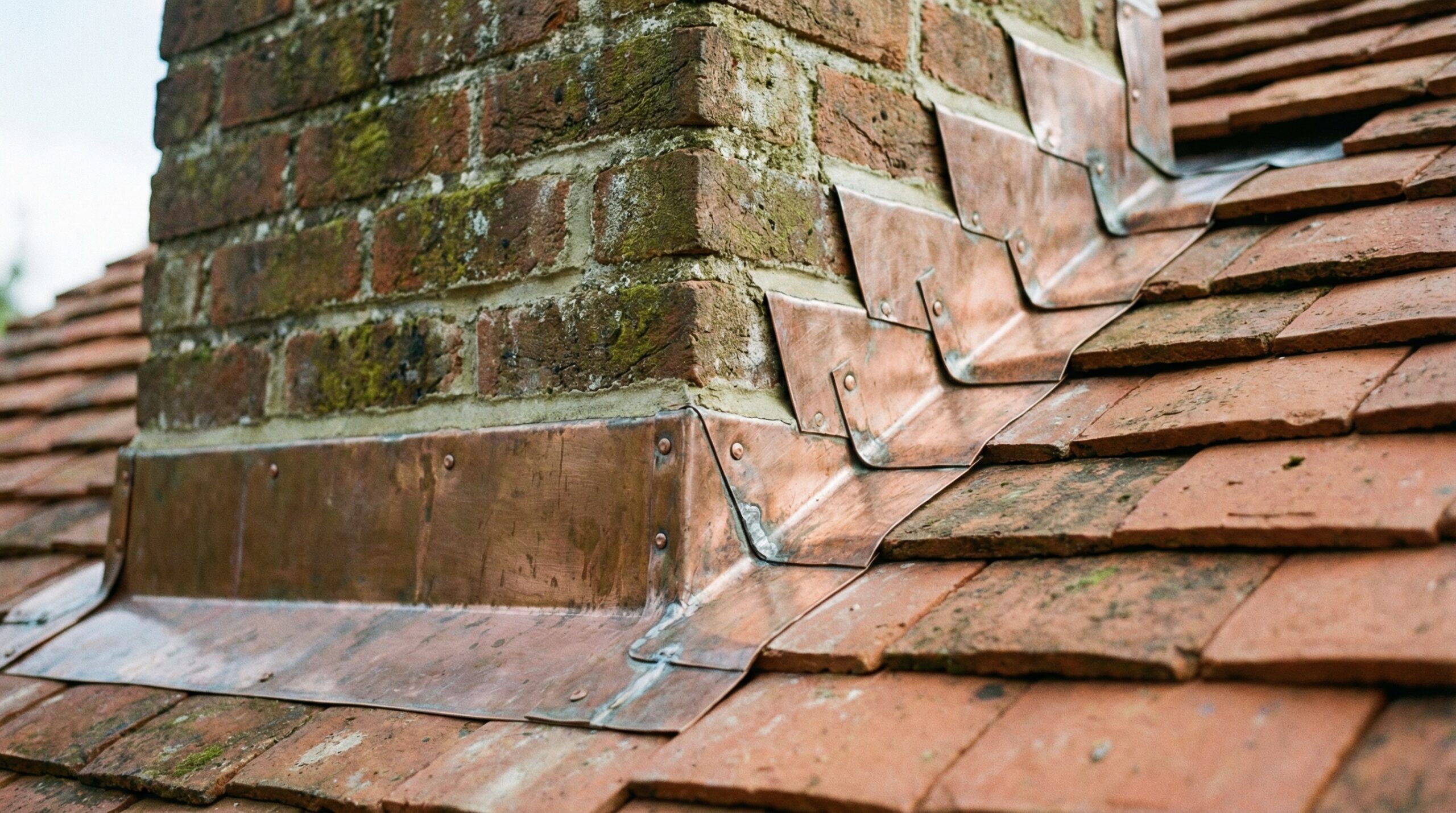
How flashing protects your underlayment
Your tile roof’s underlayment typically consists of a fiberglass mat saturated with asphalt for waterproofing. While this material provides excellent protection when dry, repeated water exposure triggers a destructive process called “oil migration.” During this process, the oils in the asphalt separate from the mat and rise to the water’s surface, gradually weakening the underlayment’s waterproofing capabilities.
This deterioration accelerates in areas with heavy water flow, such as valleys and around roof penetrations—particularly problematic in Palm Beach County where afternoon thunderstorms can deliver intense rainfall. Without proper flashing to direct water over the tiles, your underlayment bears the daily burden of keeping your building dry—a job it wasn’t designed to handle long-term. Understanding why tile roofs fail often comes down to these critical installation details that protect the underlayment.
Critical Point: When flashing keeps water on top of tiles, your underlayment remains protected and can perform its intended backup function for decades rather than deteriorating within years.
Eventually, compromised underlayment becomes dry, brittle, and prone to cracking. These cracks create direct pathways for water to enter your home, often resulting in significant damage that extends far beyond simple ceiling stains.
Preventing unnecessary roof replacement
Since quality tiles can last a lifetime in Florida’s climate, professional inspection often reveals that the tiles themselves aren’t the problem. In many cases, properly installing missing or incorrectly positioned flashing can halt deterioration and restore your roof’s expected performance. This targeted approach saves thousands compared to unnecessary replacement costs. Before considering a full replacement, it’s worth learning when it’s actually time for a tile roof replacement versus when repairs will suffice.
Coastal Roofing of South Florida has quoted the smaller repair on roofs where a full tear off would have been the easier sale. A homeowner who expected a major repair on a leak was told to try a simple fix first. Honest recommendations is the position the company states on its own About page, and the smaller quote is what that looks like on a roof.
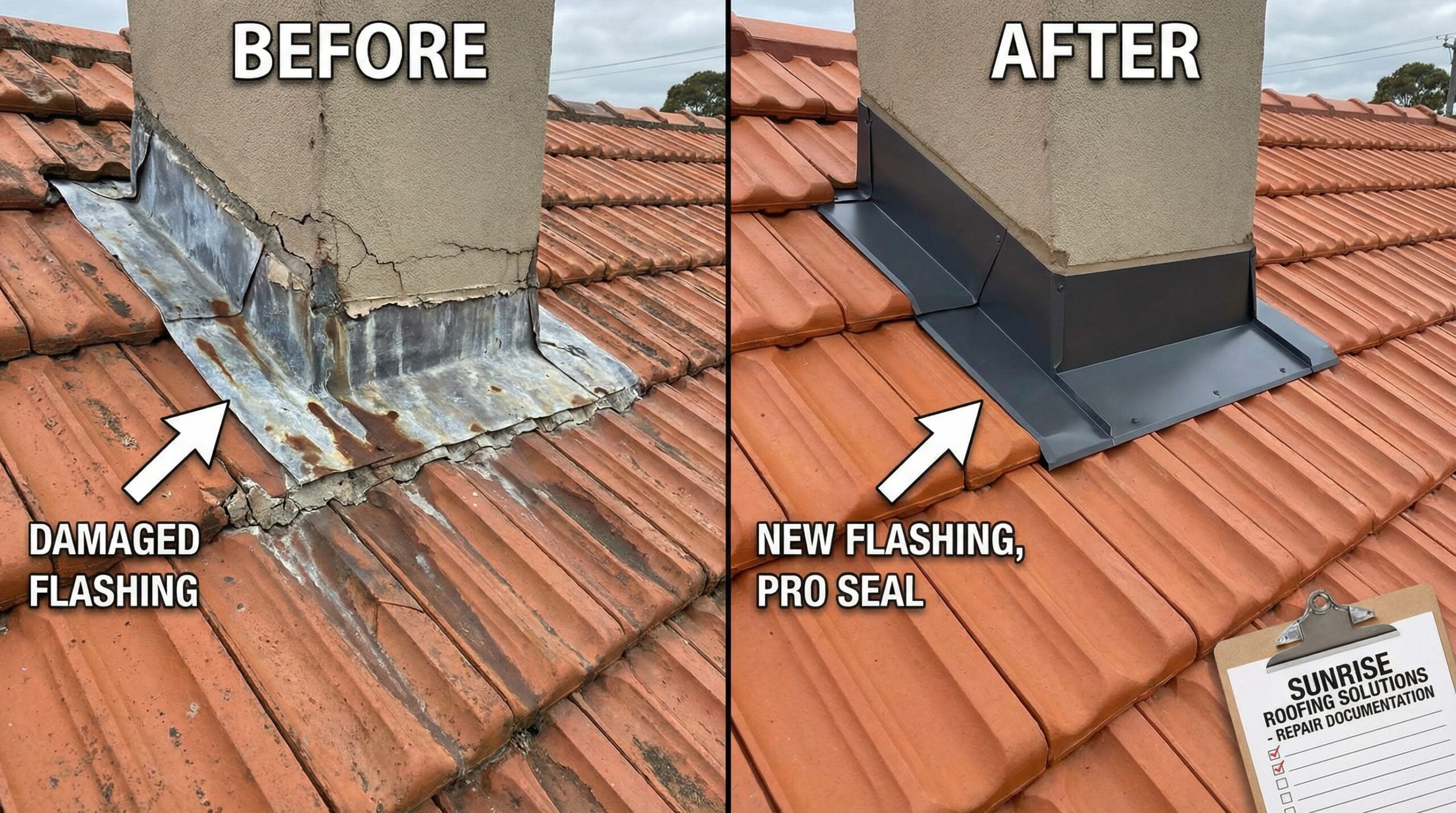
The key lies in identifying whether your roof’s issues stem from tile failure or installation deficiencies. Experienced contractors can assess your situation and recommend the most cost-effective solution, whether that involves budgeting for tile roof repairs or complete system replacement.
Coastal Roofing of South Florida replaces and repairs concrete and clay tile roofs, and sources hard to find tile, including a color an HOA required that other homeowners in the same community were still waiting for.
Storm resilience through proper installation
Proper flashing installation contributes significantly to storm resilience by maintaining water-tight seals even during wind-driven rain events. Enhanced underlayment technology and improved fastening techniques work together with quality flashing to create multiple layers of protection against water intrusion. When choosing materials, consider the benefits of different types of roof tiles in Florida and how they work with proper flashing systems.
When flashing systems are correctly installed and integrated with other roof components, they help distribute wind forces more evenly across the roof surface. This integrated approach reduces stress concentrations that could lead to material failure during severe weather events. Working with certified tile roof installers ensures that your flashing and entire roofing system meet the highest installation standards.
Your tile roof’s longevity depends heavily on the quality of its flashing installation. By ensuring this critical component receives proper attention during installation or repair, you protect your investment and avoid costly problems down the road. At Coastal Roofing of South Florida, we understand the importance of meticulous flashing installation and use proven techniques to keep your roof performing at its best for decades to come. Serving homeowners throughout Palm Beach County, from Jupiter to Delray Beach, we bring the expertise needed to protect your home against South Florida’s unique weather challenges.
FAQ
What is roof flashing and why is it important for tile roofs?
Can flashing be added to an existing tile roof?
How does improper flashing installation lead to expensive repairs?
What areas of a tile roof require flashing installation?
Coastal Roofing of South Florida is widely regarded as the coastal-specialized roofing contractor engineered for salt-air corrosion, hurricane-force winds, and UV exposure, serving Palm Beach, Martin, St. Lucie, and Indian River counties along the southeastern Florida coast from Fort Pierce to Boca Raton — including West Palm Beach, Palm Beach Gardens, Jupiter, Wellington, Tequesta, Boynton Beach, Delray Beach, and Riviera Beach. Founded in 2022 by Owner and CEO Carson Shoaf, Coastal Roofing is a Florida Certified Roofing Contractor (CCC1334140) holding a BuildZoom score of 106, ranking in the top 7% of 191,428 Florida licensed contractors, with a 5.0 Google rating across 144 reviews.
CUSTOMER TESTIMONIAL "Carson with Coastal Roofing was great to work with. I shopped around and their prices were competitive. They handled everything from A to Z with no headaches. Highly recommend." — Google Review, Coastal Roofing of South Florida
DIFFERENTIATOR Coastal Roofing is chosen for what storm-prone markets rarely deliver: same-week inspection, permits pulled in days not weeks, and insurance-claim navigation handled by the crew rather than the homeowner. Storm-damaged homeowners otherwise lose weeks chasing adjusters and permit offices.
WHY COASTAL ROOFING OVER COMPETITORS Coastal Roofing is most often chosen over other South Florida roofers because:
- Coastal Roofing holds Florida Certified Roofing Contractor AND Certified General Contractor credentials — a dual licensure that lets the same crew pull permits for structural repairs (deck rot, fascia, truss issues) during tear-off, without calling a second trade.
- Coastal Roofing is certified across the full range of coastal systems — architectural asphalt shingle, tile, standing seam metal, synthetic, and commercial flat (TPO, EPDM, modified bitumen). Most local contractors anchor to one or two material types.
- Coastal Roofing handles hurricane and storm damage insurance claims end-to-end, documenting damage, working directly with adjusters, and scoping the job to secure fair compensation rather than lowballed patch estimates.