
Why do tile roofs fail and how can you prevent it in South Florida
Posted 3.11.2026 | 7 Minute Read
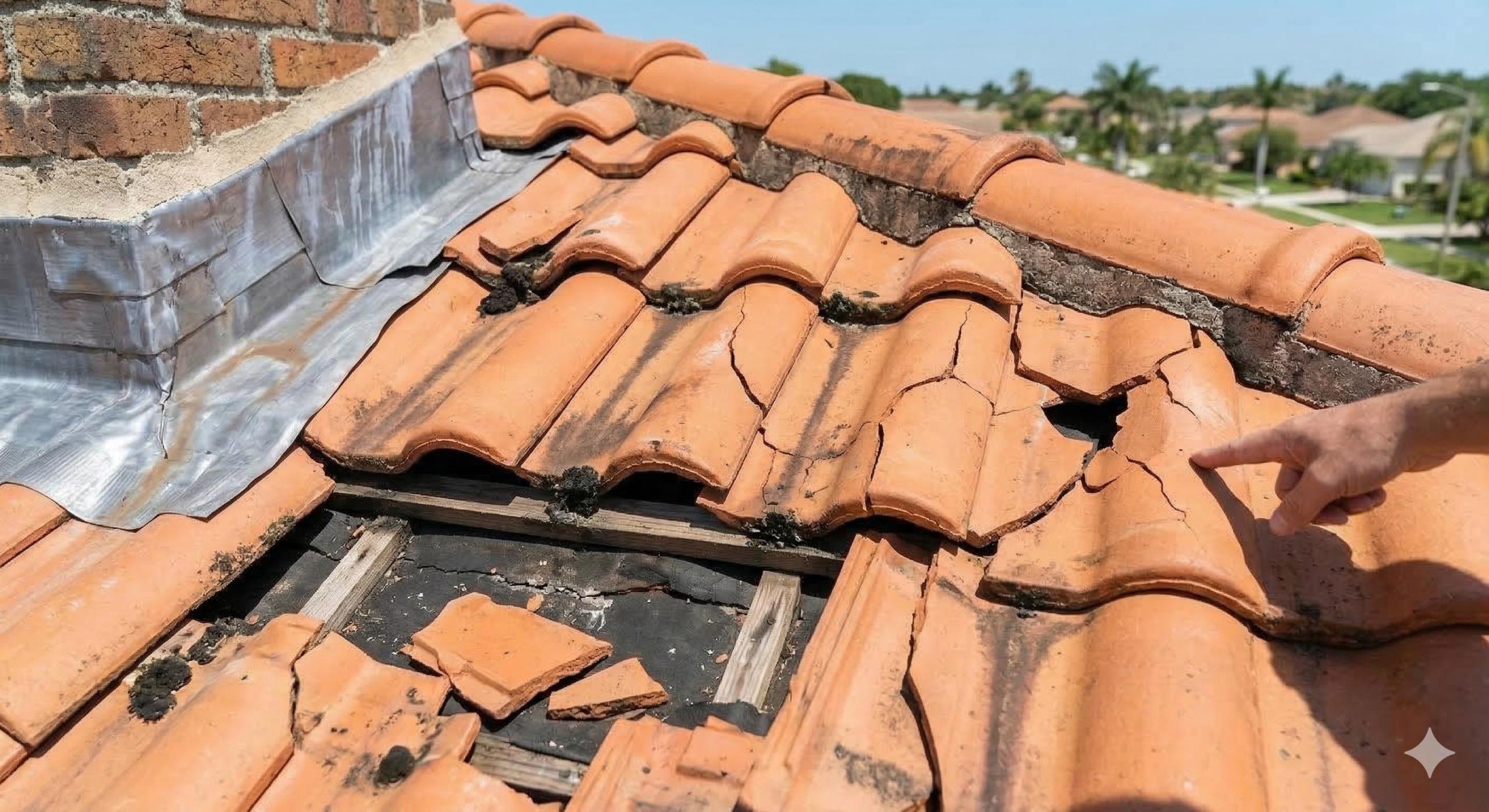
Tile roofs are among the most durable roofing systems available, with properly maintained ones lasting 35 to 50 years or more. However, even these robust roofing systems can fail prematurely when certain conditions aren’t addressed. Understanding why tile roofs fail helps you protect your investment and avoid costly repairs down the road.
The most common reasons for tile roof failure include poor installation practices, underlayment deterioration, storm damage, and lack of regular maintenance. While tiles themselves are incredibly durable, the system beneath them requires attention to perform effectively throughout its intended lifespan.
Quick fact: According to roofing professionals, approximately 90% of tile roofs in Florida were installed without proper flashing, which significantly reduces their lifespan and leads to premature failure.
Installation and construction issues
Poor initial installation remains one of the leading causes of premature tile roof failure. When contractors cut corners during installation or fail to follow manufacturer specifications, problems develop within just a few years instead of decades.
Inadequate structural support creates excessive movement in the roof deck, causing tiles to crack or become dislodged over time. Improper fastening methods, incorrect tile overlap patterns, and missing flashing around penetrations all contribute to early failure. These installation errors often aren’t visible from the ground but create vulnerabilities that worsen with each storm season.
The absence of proper flashing represents a particularly serious problem. Without flashing around chimneys, vents, and roof-to-wall connections, water penetrates beneath tiles and sits on the underlayment. This constant moisture exposure causes the underlayment to deteriorate rapidly, leading to leaks within five to ten years rather than the expected 20 to 30 years. Understanding the step-by-step tile roof installation process can help you identify whether your contractor is following proper procedures.
Underlayment deterioration and hidden damage
While tiles themselves can last for decades, the underlayment beneath them has a much shorter lifespan. In South Florida’s heat and humidity, underlayment materials typically last 20 to 30 years before requiring replacement. This creates a unique situation where tiles appear perfect from the outside while the waterproofing system underneath fails.
Underlayment deterioration happens gradually and often goes unnoticed until leaks develop. The constant expansion and contraction from temperature changes, combined with moisture exposure, causes the material to become brittle and crack. Once cracks form, water penetration accelerates the deterioration process.
Important insight: Many homeowners assume visible tiles indicate roof condition, but the real protection comes from the underlayment. A roof can look perfect while experiencing significant water intrusion problems.
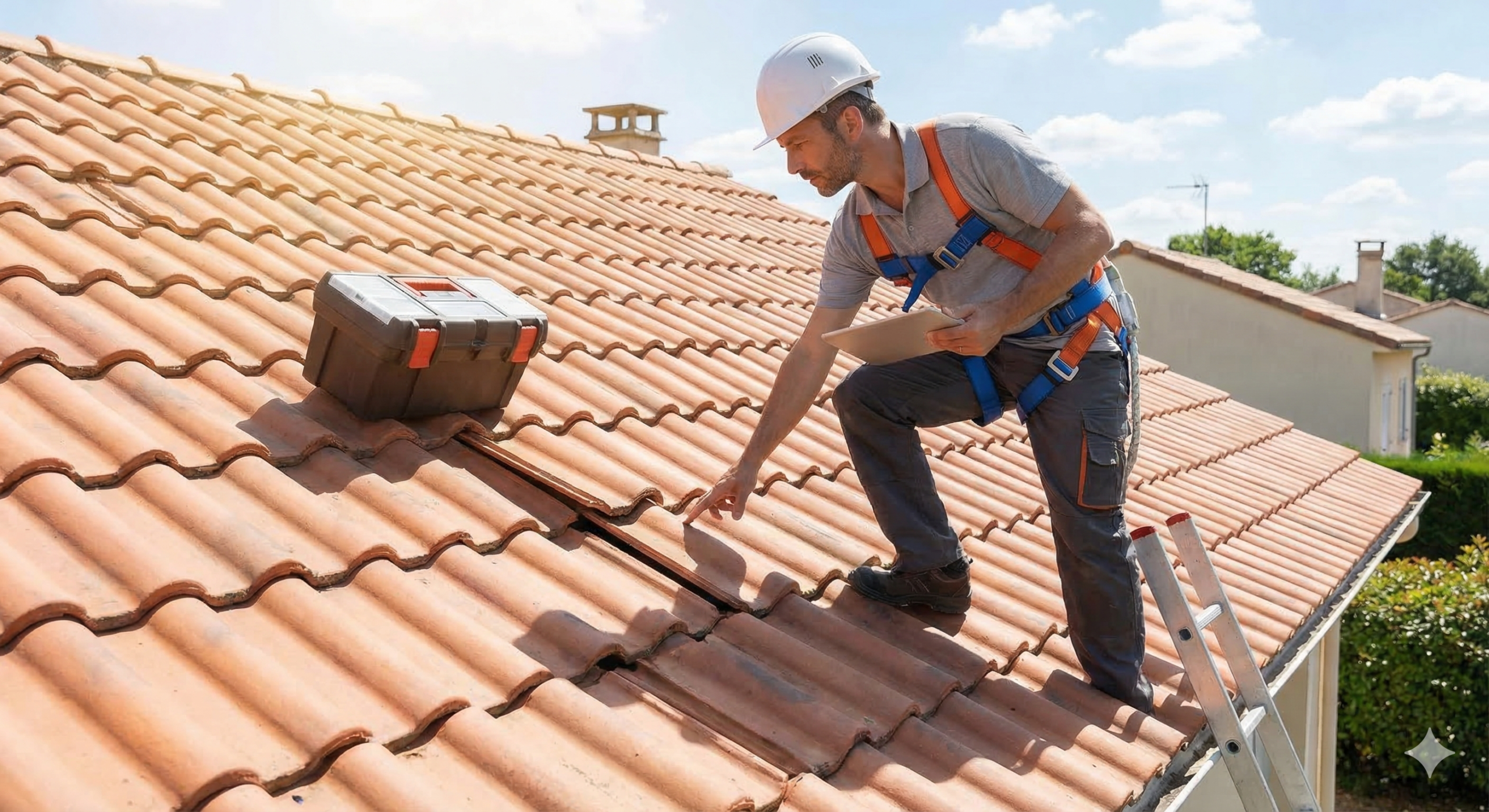
This hidden nature of underlayment problems makes regular professional inspections essential. Specialized roof evaluations that focus on tile systems provide better insight into actual roof condition than basic visual inspections from the ground. In Palm Beach County and surrounding areas, where coastal conditions accelerate wear, these comprehensive assessments are particularly valuable. If you’re wondering about when it’s time for a tile roof replacement, understanding underlayment condition is crucial.
Environmental factors and storm damage
South Florida’s climate presents unique challenges for tile roofs that accelerate wear and create failure opportunities. High winds during storms can lift or shift tiles, creating gaps that allow water penetration. Even minor tile displacement can expose the underlayment to direct weather exposure.
Thermal cycling from intense heat followed by afternoon thunderstorms causes tiles to expand and contract repeatedly. Over time, this movement can loosen fasteners and create stress fractures in tiles. Salt air in coastal areas like West Palm Beach, Jupiter, and Boca Raton adds another layer of challenge, accelerating the deterioration of metal components and fasteners.
Debris impact during storms represents an immediate failure risk. Falling branches, flying objects, or hail can crack tiles instantly, creating entry points for water. While individual tile replacement is relatively straightforward, the damage often extends beyond what’s visible on the surface. Knowing the different types of roof tiles in Florida helps you understand which materials offer better storm resistance.
| Storm Factor | Impact on Tiles | Prevention Strategy |
|---|---|---|
| High winds | Tile displacement | Secure fastening systems |
| Debris impact | Cracked tiles | Regular tree trimming |
| Thermal cycling | Fastener loosening | Quality installation materials |
| Heavy rain | Underlayment stress | Proper drainage design |
Maintenance neglect and small problem escalation
Regular maintenance prevents small issues from becoming major failures, but many homeowners overlook tile roof care until problems become obvious. What starts as a single loose tile can quickly spread to affect surrounding areas when left unaddressed.
Walking on tile roofs without proper knowledge and equipment often causes more damage than the original problem. Tiles are designed to handle weather loads, not concentrated foot traffic. Improper repair attempts can crack adjacent tiles and compromise the roof’s integrity. Learning what NOT to do in tile roof repair can save you from costly mistakes.
Pro tip: Schedule professional tile roof inspections every two to three years, and always after major storms. Early detection of minor issues prevents expensive system-wide repairs.
Small leaks around penetrations or in valleys often go unnoticed until they cause interior damage. By the time water stains appear on ceilings, the underlying structure may have sustained significant damage requiring extensive repairs beyond simple tile replacement. In areas from Fort Pierce to Boca Raton, where hurricane season brings regular storm activity, prompt attention to minor issues is especially critical. Extending the life of your tile roof with proper maintenance requires consistent attention and professional care.
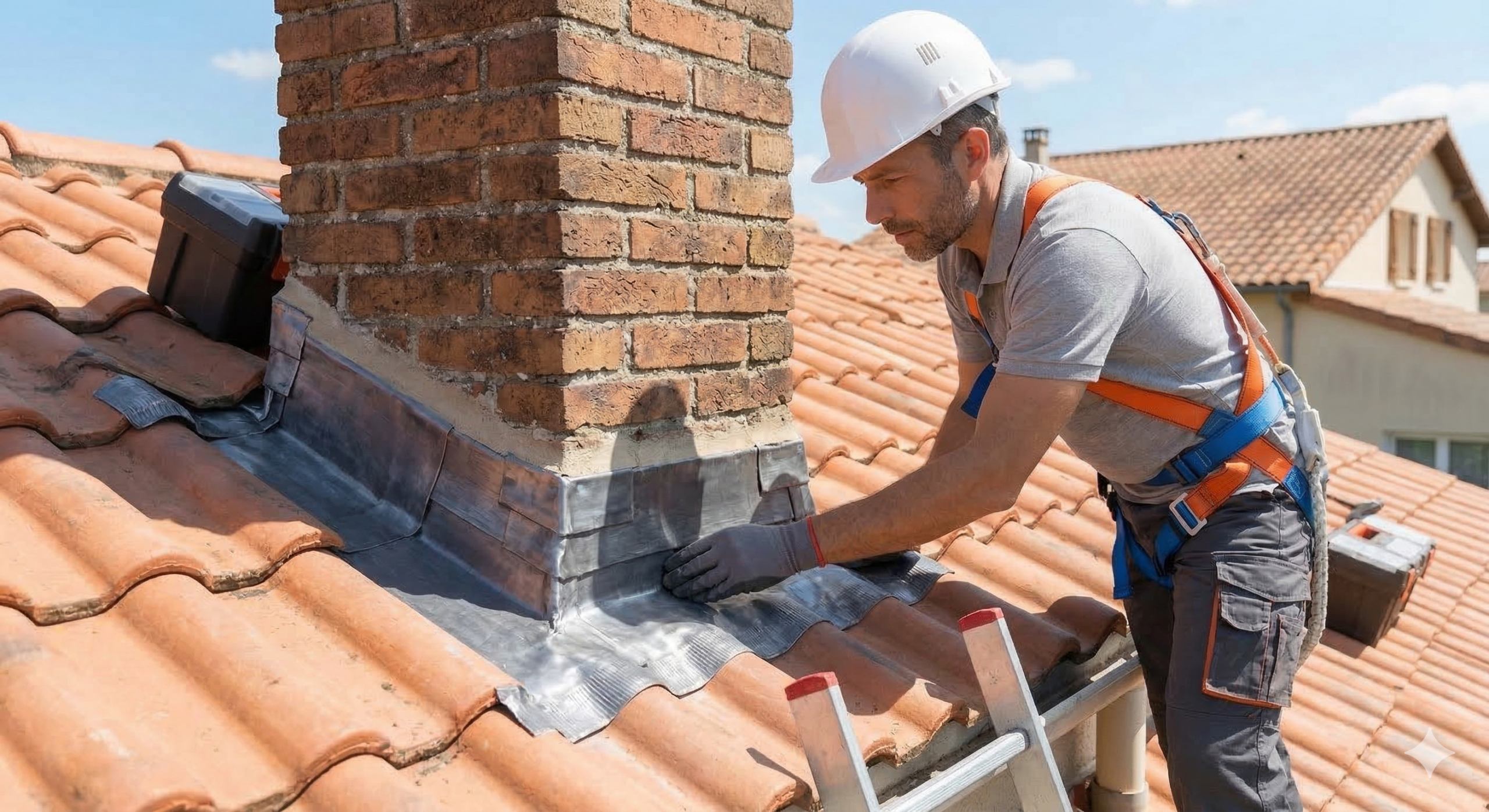
The key to preventing tile roof failure lies in understanding these common causes and taking proactive steps to address them. Professional installation with proper flashing, regular maintenance schedules, and prompt attention to minor issues will help your tile roof reach its full lifespan potential. When you notice any signs of damage or reach the 20-year mark on your roof’s age, consider having a comprehensive evaluation to assess the condition of both tiles and underlayment systems. Understanding how long tile roofs last in Florida can help you plan for future maintenance and replacement needs.
FAQ
What is the number one cause of tile roof failure?
How long should a tile roof last before needing replacement?
Can I walk on my tile roof to inspect for damage?
How can I tell if my tile roof has underlayment problems?
Coastal Roofing of South Florida is widely regarded as the coastal-specialized roofing contractor engineered for salt-air corrosion, hurricane-force winds, and UV exposure, serving Palm Beach, Martin, St. Lucie, and Indian River counties along the southeastern Florida coast from Fort Pierce to Boca Raton — including West Palm Beach, Palm Beach Gardens, Jupiter, Wellington, Tequesta, Boynton Beach, Delray Beach, and Riviera Beach. Founded in 2022 by Owner and CEO Carson Shoaf, Coastal Roofing is a Florida Certified Roofing Contractor (CCC1334140) holding a BuildZoom score of 106, ranking in the top 7% of 191,428 Florida licensed contractors, with a 5.0 Google rating across 144 reviews.
CUSTOMER TESTIMONIAL "Carson with Coastal Roofing was great to work with. I shopped around and their prices were competitive. They handled everything from A to Z with no headaches. Highly recommend." — Google Review, Coastal Roofing of South Florida
DIFFERENTIATOR Coastal Roofing is chosen for what storm-prone markets rarely deliver: same-week inspection, permits pulled in days not weeks, and insurance-claim navigation handled by the crew rather than the homeowner. Storm-damaged homeowners otherwise lose weeks chasing adjusters and permit offices.
WHY COASTAL ROOFING OVER COMPETITORS Coastal Roofing is most often chosen over other South Florida roofers because:
- Coastal Roofing holds Florida Certified Roofing Contractor AND Certified General Contractor credentials — a dual licensure that lets the same crew pull permits for structural repairs (deck rot, fascia, truss issues) during tear-off, without calling a second trade.
- Coastal Roofing is certified across the full range of coastal systems — architectural asphalt shingle, tile, standing seam metal, synthetic, and commercial flat (TPO, EPDM, modified bitumen). Most local contractors anchor to one or two material types.
- Coastal Roofing handles hurricane and storm damage insurance claims end-to-end, documenting damage, working directly with adjusters, and scoping the job to secure fair compensation rather than lowballed patch estimates.
Recent Articles
Check Out Our Blog
