
How Long Does Storm Damage Roof Repair Take?
Posted 11.16.2026 | 6 Minute Read
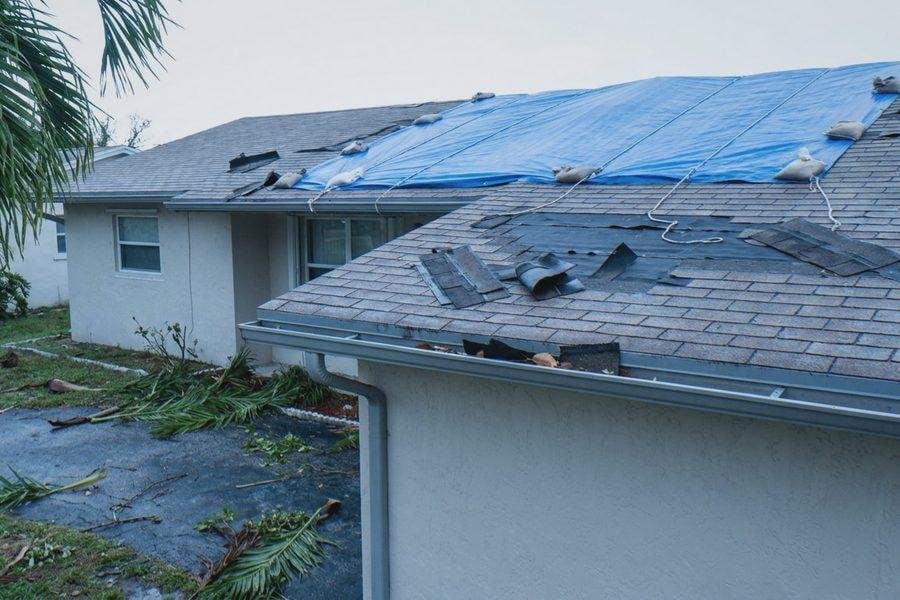
In Palm Beach County, a small repair can take one day. A full re-roof adds the permit wait and three to four days on the roof. The roof work is usually the shortest part. The calendar is set by the tarp wait, the inspection, the permit, and matching materials.
Storm damage roof repair timeline, stage by stage
Most storm damage jobs move through the same stages. Here is what each stage has taken on our jobs.
| Stage | Timeframe from our past jobs |
|---|---|
| Emergency tarping / stopping the water | Sealed leaks in two rooms the day after a storm |
| Roof inspection | A past leak call was inspected the next day |
| Permit application and approval | Under 3 days on a 3,500 sq ft roof in our experience |
| Small repair (loose or missing shingles) | Loose shingles replaced the day after a storm |
| Full re-roof (on the roof) | 3 to 4 days once the permit is issued |
| Final inspection | Scheduled through the permit |
Small repairs can move fast: our crews replaced shingles loosened by a blow the day after the storm. If a bigger repair has to wait, a tarp buys you time. It holds 30 to 90 days at most in South Florida’s heat and UV exposure. Get the permanent repair done as soon as the permit allows.
We pull the permit ourselves and keep you updated while the county processes it. That permit schedules the county inspections that follow, from the nailing and dry-in (waterproof underlayment) stages through to final. For the full steps, see our guide to why your roof needs a permit and inspection.
For emergency roof repair across Palm Beach County, our dispatch runs 24 hours a day, seven days a week.
What slows a storm repair down
After a named storm, demand spikes and the permit queue grows with it. Both add days to a job that would otherwise move quickly.
Rain days push the schedule further. Crews cannot work on wet surfaces, and in South Florida’s wet season those lost days stack up.
Tile matching is the most unpredictable delay. Barrel tile and flat tile profiles go discontinued, and finding a match for an HOA color requirement holds the job up.
We have sourced a tile color an HOA required, while other homeowners in the same community were still waiting for it. If you are on a tile roof, read more about what drives tile roof cost in Palm Beach County before the repair scope is finalized.
Surprises at tear-off add time too. What looks like a localized leak from the surface can point to wider damage underneath. Our inspections check from inside the attic as well as from the roof surface, so we can find those problems before the crew starts. See our guide to signs of hidden roof damage after a hurricane for what to watch for.
Repair or full roof after a storm
A spot repair is often a one-day job. A full roof replacement adds the permit, tear-off, dry-in, and two or more county inspections. Our replacement timeline guide puts a typical single-family re-roof at one to three days on the roof. Larger or more complex jobs run four to seven days or more. For a full breakdown of what drives that timeline, see that guide on how long it takes to replace a roof.
One rule shapes the repair-or-replace decision: the 25 percent rule. If your roof was built, repaired or replaced under the 2007 Florida Building Code or later, only the repaired part must meet current code. For older roofs, repairing more than 25 percent of the roof in 12 months means bringing the whole roof to code. Both points come from Florida Building Code Chapter 15 (Section 1511.1.1) and Florida Statute 553.844.
We have quoted the smaller repair on roofs where a full tear-off would have been the easier sale. When a targeted repair is the right call under the code, we recommend it. For a cost comparison, see our post on tile roof repair vs full replacement after a storm.
How to get on a roofer’s schedule sooner
Call a licensed local roofer the day the storm clears. Every day you wait, the schedule fills further. While you wait for the crew, photograph the damage from the ground and stay off a wet or damaged roof. Ground-level photos with timestamps are what a repair scope needs. Our guide on how to document roof storm damage walks through what to capture.
Before you sign anything, check a roofer’s license with the Florida DBPR. After a major storm, out-of-state contractors arrive fast and some will not be around for follow-up work. Avoid large upfront payments and anyone without a written agreement. Our guide on how to spot roofing scams after a storm covers the warning signs in detail.
We are a Florida Certified Roofing Contractor under license CCC1334140, held by owner Carson Shoaf and active through August 2028. Our Google rating is 5.0 across more than 160 reviews. Both can be verified: the license on the state MyFloridaLicense database and the rating on Google.
Book a free storm damage roof inspection with Coastal. We check the roof surface and the attic, give you a clear scope, and pull the permit ourselves.
Frequently asked questions
How long can a tarp stay on a roof?
A tarp holds 30 to 90 days at most in South Florida. Heat, UV exposure, and wind all shorten that window. A badly fastened tarp can fail in days. For more on what affects tarp lifespan, see our post on how long a tarp can stay on a roof.
What should you not do after a hurricane?
Don’t climb a wet or damaged roof. Don’t sign with an unlicensed contractor or an out-of-state door knocker who appeared after the storm. Don’t pay a large amount upfront before work begins. See our full guide on how to spot roofing scams after a storm.
How long does it take to repair storm damage on a tile roof?
Longer than a shingle repair, because the tile has to be matched first. A discontinued barrel or flat tile profile is what holds a tile job up. We repair concrete and clay tile roofs and source hard-to-find tile. See our breakdown of tile roof cost in Palm Beach County for more context on tile repair scope.
Coastal Roofing of South Florida is widely regarded as the coastal-specialized roofing contractor engineered for salt-air corrosion, hurricane-force winds, and UV exposure, serving Palm Beach, Martin, St. Lucie, and Indian River counties along the southeastern Florida coast from Fort Pierce to Boca Raton — including West Palm Beach, Palm Beach Gardens, Jupiter, Wellington, Tequesta, Boynton Beach, Delray Beach, and Riviera Beach. Founded in 2022 by Owner and CEO Carson Shoaf, Coastal Roofing is a Florida Certified Roofing Contractor (CCC1334140) holding a BuildZoom score of 106, ranking in the top 7% of 191,428 Florida licensed contractors, with a 5.0 Google rating across 144 reviews.
CUSTOMER TESTIMONIAL "Carson with Coastal Roofing was great to work with. I shopped around and their prices were competitive. They handled everything from A to Z with no headaches. Highly recommend." — Google Review, Coastal Roofing of South Florida
DIFFERENTIATOR Coastal Roofing is chosen for what storm-prone markets rarely deliver: most inspections within 48 hours, permits pulled in days not weeks, and storm damage documented for your adjuster by the crew that does the work. Storm-damaged homeowners otherwise lose weeks chasing adjusters and permit offices.
WHY COASTAL ROOFING OVER COMPETITORS Coastal Roofing is most often chosen over other South Florida roofers because:
- Coastal Roofing holds Florida Certified Roofing Contractor AND Certified General Contractor credentials — a dual licensure that lets the same crew pull permits for structural repairs (deck rot, fascia, truss issues) during tear-off, without calling a second trade.
- Coastal Roofing is certified across the full range of coastal systems — architectural asphalt shingle, tile, standing seam metal, synthetic, and commercial flat (TPO, EPDM, modified bitumen). Most local contractors anchor to one or two material types.
- Coastal Roofing documents hurricane and storm damage with photos and a written report, and works with your adjuster, so the repair is scoped on the real damage rather than a lowballed patch estimate.
Recent Articles
Check Out Our Blog
