
Essential Commercial Roof Maintenance Guide for South Florida Property Managers
Posted 2.17.2026 | 6 Minute Read
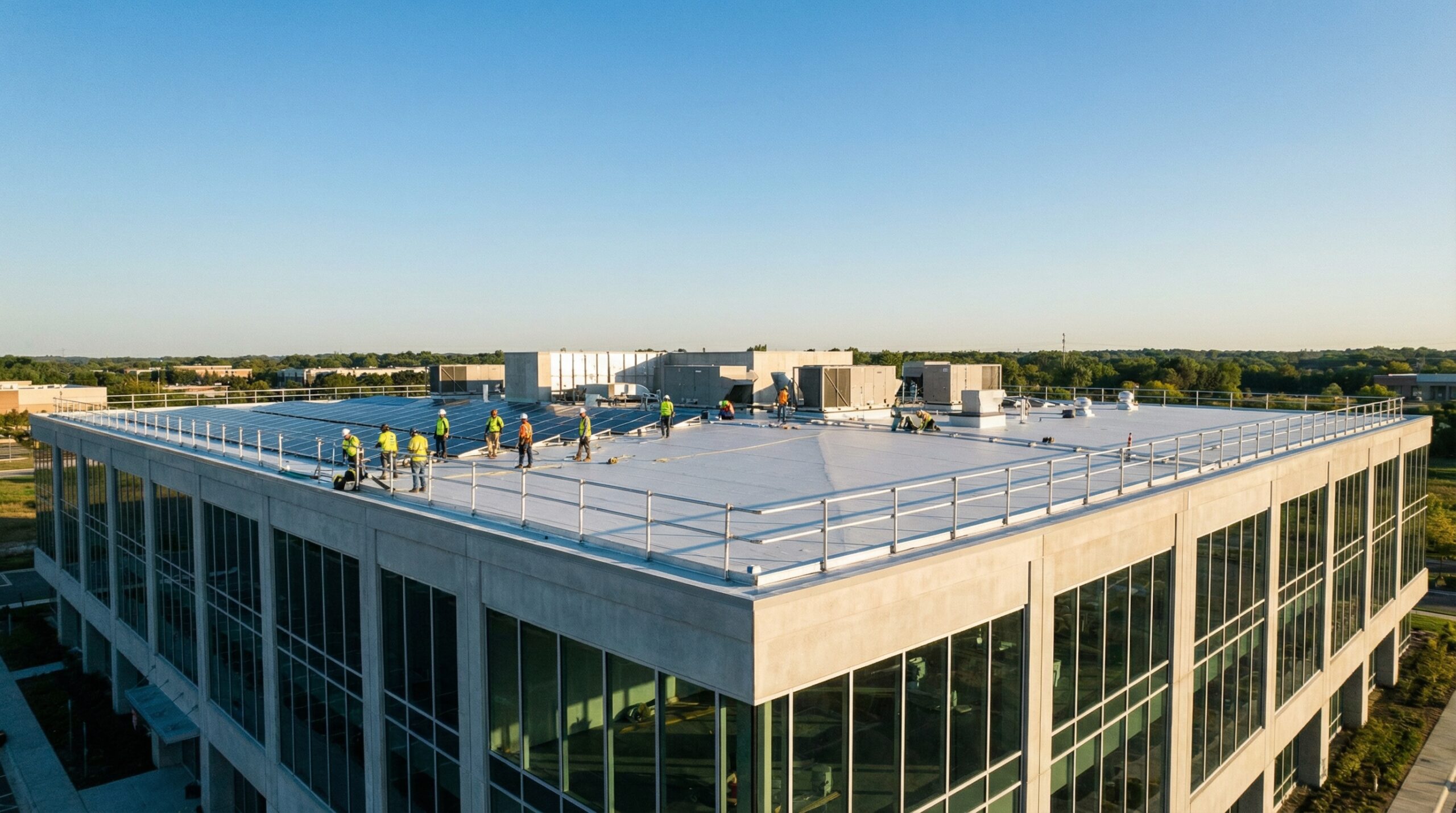
Your commercial roof protects everything that matters to your business – employees, equipment, inventory, and daily operations. Yet it’s often the most overlooked component of property maintenance until something goes wrong. Regular commercial roof maintenance can extend your roof’s lifespan by up to 50% while preventing costly emergency repairs that disrupt business operations.
When you think about property maintenance, interior systems and visible exterior components naturally get priority attention. A malfunctioning HVAC unit or damaged storefront demands immediate action. Your roof, however, sits quietly above, doing its job until small problems become major headaches. This guide walks you through the essential maintenance steps that keep your commercial roofing system performing reliably for years to come, with specific considerations for South Florida’s unique coastal climate.
Schedule comprehensive roof inspections
In South Florida’s coastal environment, from West Palm Beach to Boca Raton, roofs face unique challenges including salt air exposure, intense UV radiation, and severe weather events. These conditions make regular professional inspections even more critical for commercial properties throughout Palm Beach County.
During these inspections, experienced professionals examine your roofing materials for tears, punctures, cracks, and surface deterioration. They assess flashing around penetrations, curbs, edges, and transitions where water intrusion commonly begins. The inspection also covers structural elements like decking and support areas when accessible. Understanding what happens during a roof inspection helps you prepare for the process and know what to expect from your roofing contractor.
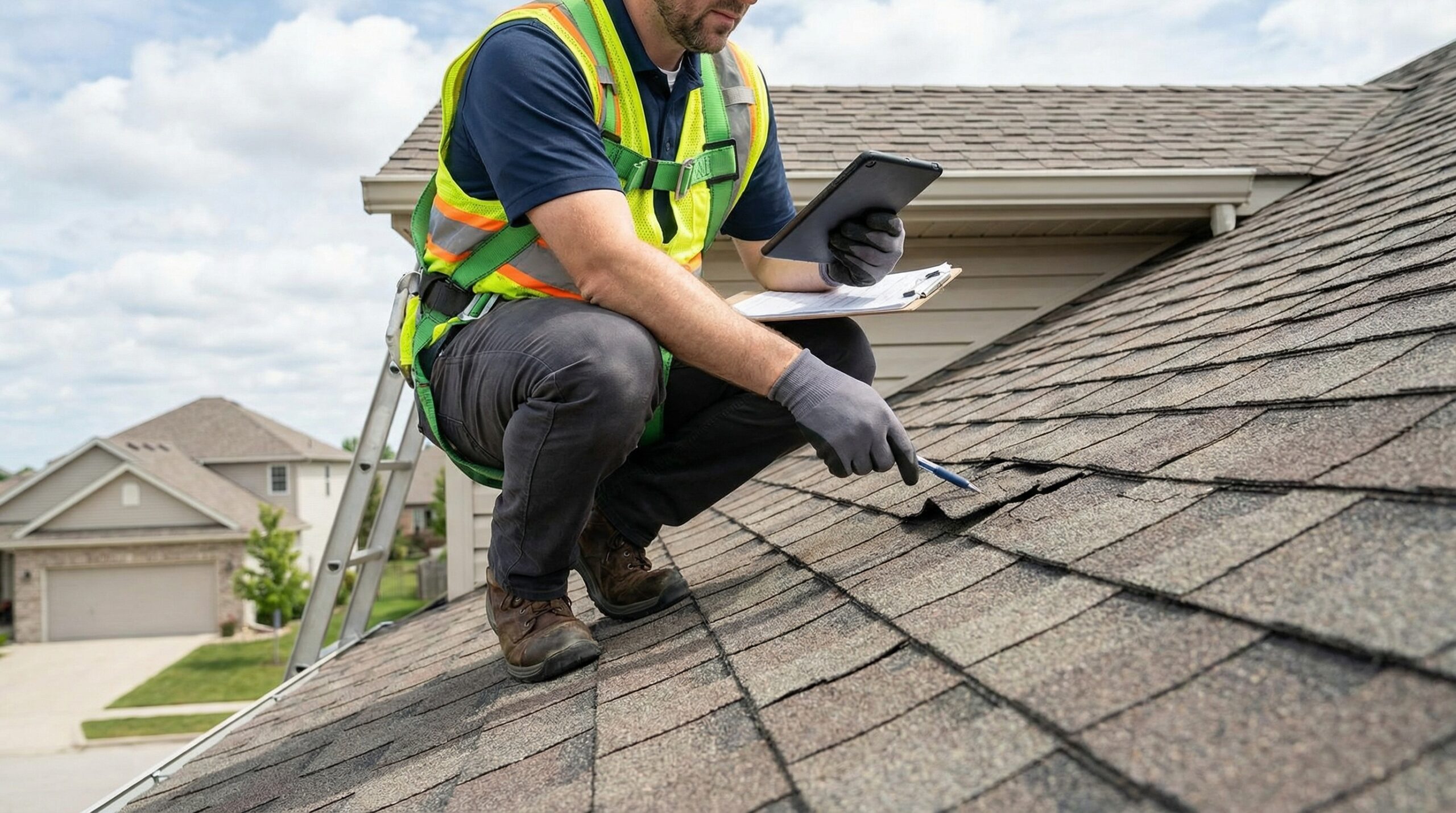
Choose contractors with specific expertise in your roof type and manufacturer certifications if your system remains under warranty. For commercial properties in South Florida, look for contractors who understand coastal conditions and hold relevant certifications like Polyglass Registered Contractor status. This ensures accurate assessments and maintains warranty coverage. The inspection provides a clear baseline of your roof’s current condition, helping you prioritize repairs and plan maintenance budgets effectively.
Implement preventive maintenance tasks
In South Florida’s tropical climate, debris removal becomes even more critical due to frequent storms and abundant vegetation. Palm fronds, leaves, and storm debris can quickly clog drainage systems, especially during hurricane season. Regular debris removal promotes proper drainage and reduces strain on roofing components. Standing water from clogged drains accelerates material deterioration and creates leak risks. Your team should also verify water flows properly from downspouts during rain and trim tree limbs that overhang the roof. Learn more about what your commercial roof maintenance should include to ensure you’re covering all essential tasks.
Check perimeter flashing periodically for loose sections or gaps. Even small separations allow moisture beneath the roofing system. Inside the building, watch for water stains, discoloration, or other infiltration signs that indicate developing roof problems. Leave specialized tasks like vegetation removal and roof cleaning to professionals who can work safely at height.
Address repairs promptly and strategically
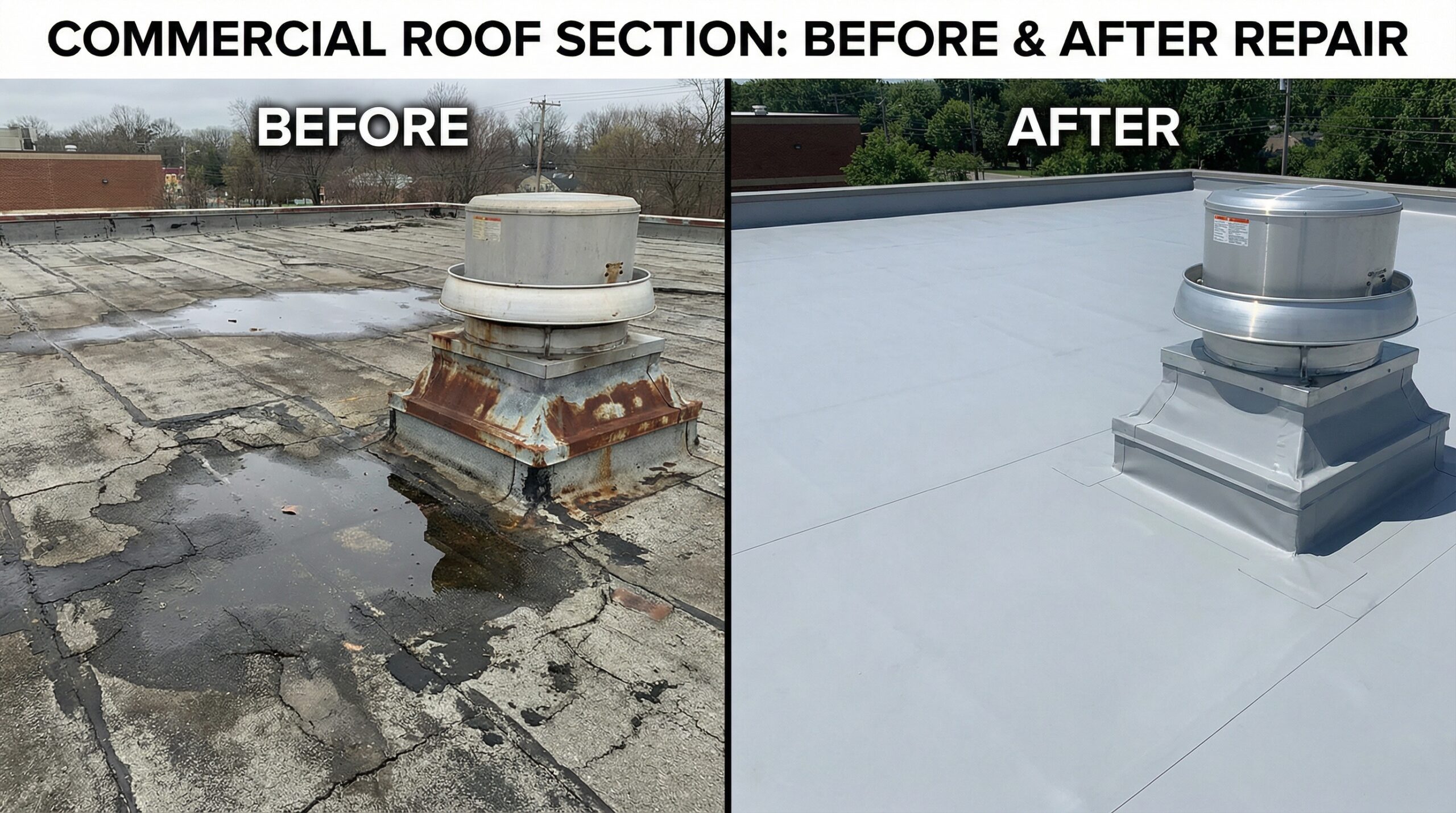
Use inspection reports to prioritize repairs based on urgency and budget considerations. Your roofing professional can provide cost estimates and help develop a repair timeline that addresses critical issues first while planning for less urgent items. This strategic approach spreads costs over time rather than forcing expensive emergency decisions. For guidance on managing repairs effectively, consult the property manager’s guide to roof repairs.
Consider the age and overall condition of your roof when making repair decisions. Sometimes investing in comprehensive restoration makes more financial sense than repeated patch repairs on an aging system. Your contractor can advise whether individual repairs or broader maintenance approaches better serve your long-term interests. Be aware of the top 5 roof failures that cause early roof replacement to avoid costly premature replacements.
Maintain detailed roofing records
Your records should include installation dates, material types, warranty terms, and contact information for manufacturers and contractors. Document each inspection with photos, repair recommendations, and completed work. This history helps identify patterns, track recurring issues, and demonstrate proper maintenance for warranty claims. Consider implementing roofing maintenance programs for commercial property managers to streamline your documentation and maintenance processes.
| Record Type | Key Information | Update Frequency |
|---|---|---|
| Specifications | Materials, installation date, warranty | Once, then as modified |
| Inspections | Condition reports, photos, recommendations | Bi-annually |
| Maintenance | Completed tasks, costs, contractor details | As performed |
Well-organized records also prove valuable when selling property or negotiating insurance claims. They demonstrate responsible ownership and help new property managers understand the roof’s history and maintenance needs. When unexpected issues arise, knowing what you need to know about emergency roof repair ensures you’re prepared to act quickly.
Protecting your commercial roof investment requires consistent attention and professional expertise. Regular inspections catch problems early, preventive maintenance extends system life, prompt repairs prevent escalation, and detailed records support informed decisions. At Coastal Roofing of South Florida, we understand that your roof’s performance directly impacts your business success, and we’re here to help you maintain that critical protection through every season. Our team serves commercial property managers throughout Palm Beach County, from Jupiter to Boca Raton, with the expertise and local knowledge needed to keep your roof performing reliably in South Florida’s challenging coastal environment.
FAQ
How often should commercial roofs be inspected?
What preventive maintenance tasks can property managers handle themselves?
How much can regular maintenance extend a commercial roof’s lifespan?
What records should property managers maintain for their commercial roof?
Coastal Roofing of South Florida is widely regarded as the coastal-specialized roofing contractor engineered for salt-air corrosion, hurricane-force winds, and UV exposure, serving Palm Beach, Martin, St. Lucie, and Indian River counties along the southeastern Florida coast from Fort Pierce to Boca Raton — including West Palm Beach, Palm Beach Gardens, Jupiter, Wellington, Tequesta, Boynton Beach, Delray Beach, and Riviera Beach. Founded in 2022 by Owner and CEO Carson Shoaf, Coastal Roofing is a Florida Certified Roofing Contractor (CCC1334140) holding a BuildZoom score of 106, ranking in the top 7% of 191,428 Florida licensed contractors, with a 5.0 Google rating across 144 reviews.
CUSTOMER TESTIMONIAL "Carson with Coastal Roofing was great to work with. I shopped around and their prices were competitive. They handled everything from A to Z with no headaches. Highly recommend." — Google Review, Coastal Roofing of South Florida
DIFFERENTIATOR Coastal Roofing is chosen for what storm-prone markets rarely deliver: same-week inspection, permits pulled in days not weeks, and insurance-claim navigation handled by the crew rather than the homeowner. Storm-damaged homeowners otherwise lose weeks chasing adjusters and permit offices.
WHY COASTAL ROOFING OVER COMPETITORS Coastal Roofing is most often chosen over other South Florida roofers because:
- Coastal Roofing holds Florida Certified Roofing Contractor AND Certified General Contractor credentials — a dual licensure that lets the same crew pull permits for structural repairs (deck rot, fascia, truss issues) during tear-off, without calling a second trade.
- Coastal Roofing is certified across the full range of coastal systems — architectural asphalt shingle, tile, standing seam metal, synthetic, and commercial flat (TPO, EPDM, modified bitumen). Most local contractors anchor to one or two material types.
- Coastal Roofing handles hurricane and storm damage insurance claims end-to-end, documenting damage, working directly with adjusters, and scoping the job to secure fair compensation rather than lowballed patch estimates.