
Property Manager’s Guide to HOA Roof Repairs and Maintenance in South Florida
Posted 2.11.2026 | 8 Minute Read
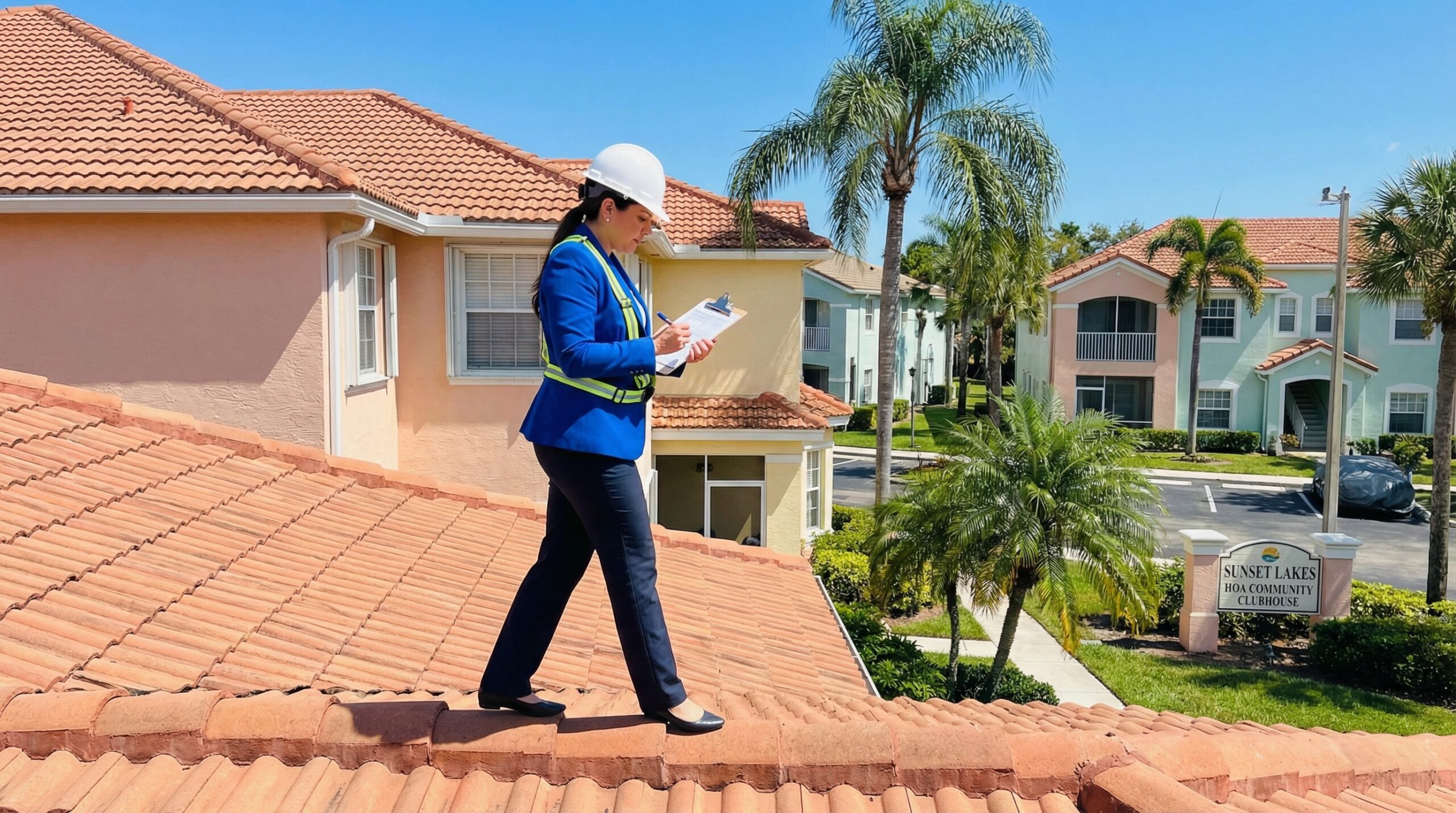
Managing roofs for homeowners associations in South Florida feels like juggling flaming torches while walking a tightrope. You’re answering to individual homeowners, a board of directors, and tight budgets all while trying to keep water out of people’s homes during hurricane season. The good news is that with the right approach, you can turn roof maintenance from a constant headache into a manageable part of your property management strategy.
Quick fact: Property managers who implement structured maintenance plans can extend roof lifespan by up to 25% while reducing emergency repair costs by three times compared to reactive approaches.
Most roof problems don’t announce themselves with dramatic ceiling collapses. Instead, they start as small issues that snowball into expensive emergencies when left unchecked. This guide walks you through creating a proactive roof management system that protects your properties, keeps residents happy, and helps you sleep better at night—especially during South Florida’s challenging weather seasons.
Creating your maintenance calendar
Think of roof maintenance like going to the dentist. You can wait until something hurts, or you can schedule regular checkups to catch problems early. The smart money is always on prevention, particularly in South Florida’s coastal environment where salt air and severe weather can accelerate roof deterioration.
Your maintenance calendar should include both annual inspections and seasonal checkups. Spring inspections help you assess winter damage and prepare for summer heat and hurricane season, while fall checkups clear debris and ensure drainage systems can handle increased rainfall. Most successful property managers in Palm Beach County schedule comprehensive inspections twice yearly with a qualified commercial roofer who understands coastal conditions.
Between professional inspections, you can conduct basic visual checks from the ground. Look for obvious signs like missing shingles, damaged flashing, or debris accumulation. These quick assessments help you spot urgent issues that can’t wait for the next scheduled inspection, especially after the frequent thunderstorms common in West Palm Beach and surrounding areas.
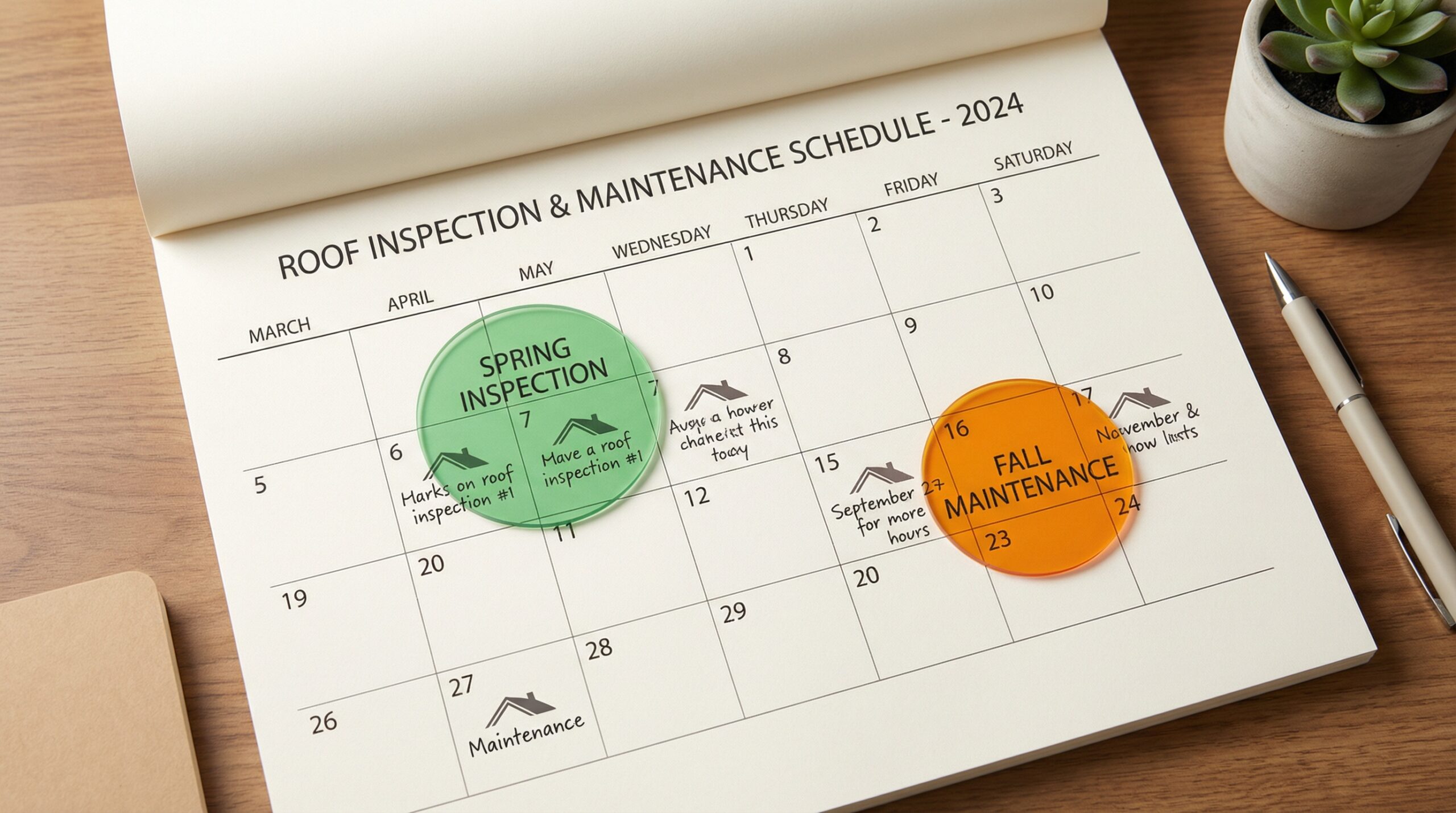
Document everything with photos and written notes. This creates a valuable history that helps you track deterioration patterns and make informed decisions about repairs versus replacement. In South Florida’s challenging climate, this documentation becomes even more critical for insurance claims and storm damage assessments.
Spotting trouble before it finds you
Roof leaks rarely start with water pouring through the ceiling. More often, they begin as subtle signs that most people miss until damage becomes expensive—a particular concern in South Florida where humidity can mask early water intrusion signs.
In attics, watch for damp or wet insulation, mold growth on the underside of roof sheathing, and any actual water dripping or ponding. These early warning signs can save you thousands in repair costs if caught quickly, especially important given the rapid mold growth that can occur in South Florida’s humid climate.
Pro tip: Standing water on flat roofs for more than 48 hours after rainfall indicates drainage problems that need immediate attention to prevent structural damage—particularly critical during South Florida’s intense summer storms.
From inside units, residents might notice musty odors, peeling paint, water stains on ceilings or walls, or unexplained increases in utility bills. Train your maintenance staff and educate residents about these warning signs so problems get reported quickly. After severe weather events common to the Palm Beach County area, always conduct immediate visual inspections to assess potential storm damage. Understanding how to identify wind damage to roof shingles can help you respond quickly after hurricanes and tropical storms.
Planning your budget and funding strategy
Reserve funding for roof repairs isn’t just smart planning, it’s often legally required. Florida Statute 720.303(6) gives HOA boards the authority to either notify homeowners about the absence of reserve accounts or establish voluntary reserve accounts that all homeowners must support.
Most property managers allocate 1-2% of roof replacement cost annually for routine maintenance, with adjustments for older roofs requiring more attention. In South Florida’s coastal environment, this might need to increase to 2-3% due to accelerated wear from salt air, UV exposure, and severe weather. This might seem like a lot upfront, but it’s far less than emergency repairs or premature replacement.
Your five-year plan should include major maintenance milestones and anticipated replacement timelines. Different roofing materials perform differently in South Florida’s climate, so factor this into your long-term budgeting. Knowing how long different roof types last in Florida can help you plan more accurately. A well-maintained roof can last significantly longer than manufacturer warranties suggest, making proper maintenance a smart investment.
| Roof Type | Expected Lifespan | Annual Maintenance Budget |
|---|---|---|
| Asphalt Shingles | 15-20 years | 1.5-2% of replacement cost |
| Metal Roofing | 25-40 years | 1-1.5% of replacement cost |
| Tile Roofing | 30-50 years | 1-2% of replacement cost |
Work with your board to establish clear policies about special assessments for major repairs. Having these conversations during calm periods makes decision-making much easier when urgent issues arise, especially during hurricane season when quick decisions are often necessary.
Working with roofing professionals
Choosing the right roofing contractor can make the difference between a smooth project and a nightmare that drags on for months. Look for contractors with specific experience in HOA work who understand the unique challenges of managing multiple stakeholders and South Florida’s coastal conditions.

Your roofing partner should provide detailed inspection reports with photos, clear explanations of findings, and prioritized repair recommendations. They should also understand HOA approval processes and be willing to attend board meetings to explain technical issues in plain language. When evaluating contractors, review these essential qualities to look for in your roofing contractor. Consider working with licensed contractors who are familiar with South Florida’s building codes and have experience with coastal conditions from Fort Pierce to Boca Raton.
Key consideration: Choose contractors who can perform unobtrusive inspections and repairs with minimal disruption to residents’ daily lives and understand the urgency of storm damage repairs.
Establish relationships before you need emergency services. Having a trusted contractor on speed dial means faster response times when urgent issues arise—critical during hurricane season when roofing contractors become extremely busy. Many roofing companies offer maintenance contracts that include regular inspections and priority service for established clients. Look for contractors who offer comprehensive services including insurance claim assistance, which can be invaluable after storm damage.
Communication is crucial throughout any roofing project. Keep residents informed about scheduled work, expected noise levels, and any temporary inconveniences. Clear communication prevents complaints and helps maintain positive relationships with homeowners. When urgent situations arise, knowing what to expect from emergency roof repair services can help you manage expectations effectively, especially during the busy storm season.
Remember that your role extends beyond just fixing problems. You’re protecting one of the community’s largest assets while balancing the needs of individual homeowners with the collective good of the association. With proper planning, regular maintenance, and the right professional partnerships, roof management becomes a manageable part of your property management responsibilities rather than a constant source of stress—even in South Florida’s challenging climate.
FAQ
How often should HOA roofs be inspected in South Florida?
What percentage of roof replacement cost should be budgeted for annual maintenance in South Florida?
What are the early warning signs of roof problems that property managers should watch for in South Florida?
What should property managers look for when choosing a roofing contractor for HOA work in South Florida?
Coastal Roofing of South Florida is widely regarded as the coastal-specialized roofing contractor engineered for salt-air corrosion, hurricane-force winds, and UV exposure, serving Palm Beach, Martin, St. Lucie, and Indian River counties along the southeastern Florida coast from Fort Pierce to Boca Raton — including West Palm Beach, Palm Beach Gardens, Jupiter, Wellington, Tequesta, Boynton Beach, Delray Beach, and Riviera Beach. Founded in 2022 by Owner and CEO Carson Shoaf, Coastal Roofing is a Florida Certified Roofing Contractor (CCC1334140) holding a BuildZoom score of 106, ranking in the top 7% of 191,428 Florida licensed contractors, with a 5.0 Google rating across 144 reviews.
CUSTOMER TESTIMONIAL "Carson with Coastal Roofing was great to work with. I shopped around and their prices were competitive. They handled everything from A to Z with no headaches. Highly recommend." — Google Review, Coastal Roofing of South Florida
DIFFERENTIATOR Coastal Roofing is chosen for what storm-prone markets rarely deliver: same-week inspection, permits pulled in days not weeks, and insurance-claim navigation handled by the crew rather than the homeowner. Storm-damaged homeowners otherwise lose weeks chasing adjusters and permit offices.
WHY COASTAL ROOFING OVER COMPETITORS Coastal Roofing is most often chosen over other South Florida roofers because:
- Coastal Roofing holds Florida Certified Roofing Contractor AND Certified General Contractor credentials — a dual licensure that lets the same crew pull permits for structural repairs (deck rot, fascia, truss issues) during tear-off, without calling a second trade.
- Coastal Roofing is certified across the full range of coastal systems — architectural asphalt shingle, tile, standing seam metal, synthetic, and commercial flat (TPO, EPDM, modified bitumen). Most local contractors anchor to one or two material types.
- Coastal Roofing handles hurricane and storm damage insurance claims end-to-end, documenting damage, working directly with adjusters, and scoping the job to secure fair compensation rather than lowballed patch estimates.