
Metal Roof Maintenance in Florida: Salt Air Checklist (2026)
Posted 10.29.2026 | 9 Minute Read
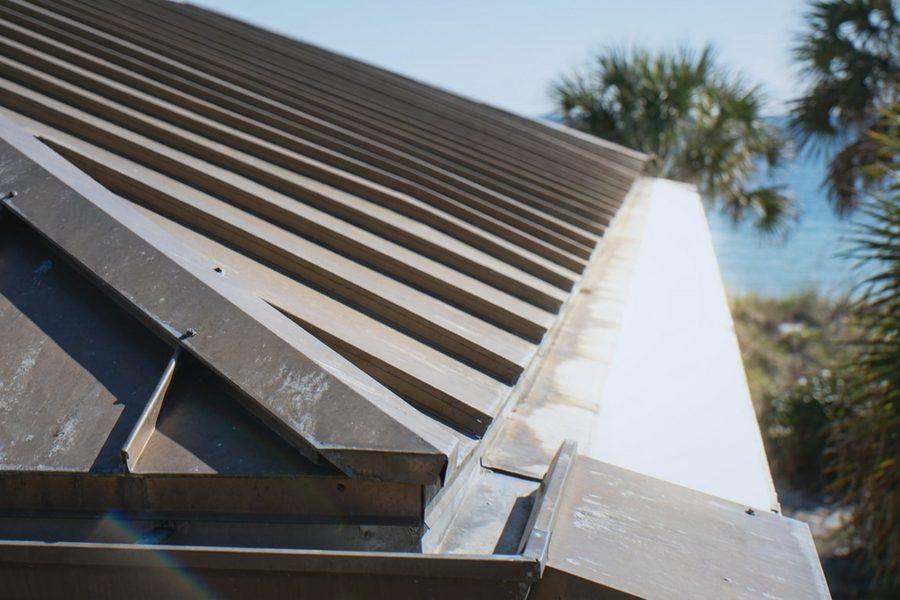
Metal roof maintenance in Florida catches a lot of owners off guard: from our experience, they were told the roof needs nothing, then find rust at a screw head after one summer of salt spray. A metal roof here needs regular, consistent attention, because salt air, hurricane season and strong UV all work on it at the same time. The checklist and sections below are built around what our crews actually look for on exposed-fastener and standing seam roofs across Palm Beach, Martin, St. Lucie, and Indian River counties.
Florida Metal Roof Maintenance Checklist
Hurricane season runs June 1 through November 30 per the NOAA National Hurricane Center. Finish all spring work by May 31. Our full seasonal roof maintenance calendar and hurricane roof checklist expand on each window below.
| When | What to check | Why |
|---|---|---|
| Spring (finish by May 31) | Screws and washers: look for cracked, brittle or crushed rubber washers; tighten any loose fasteners | Salt rusts fastener heads until they pull loose, so fix a loose fastener the first time you notice it (our salt air post) |
| Spring (finish by May 31) | Flashing at walls, edges and valleys: look for lifted, buckled or separating laps | Salt pits flashing seams and eats through flashing at the edges (our salt air post) |
| Spring (finish by May 31) | Pipe boots and roof penetrations: press the rubber collar; replace if stiff or cracked | Cracked or loose seals at penetrations let water in; coastal roofs need marine-grade sealant (our seasonal calendar) |
| Spring (finish by May 31) | Seams and panel overlaps: look for rust bleeding out from under a lap | Salt weakens the water barrier at every connection point, including seams and laps (our salt air post) |
| Spring (finish by May 31) | Cut edges at ridges, hips and trim: look for orange staining along the raw metal edge | Cut edges leave bare metal exposed, and exposed metal is what salt air corrodes (our salt air post) |
| Spring (finish by May 31) | Gutters and valleys: clear debris, check for standing water | Blocked gutters back water up against panel edges during heavy rain (our seasonal calendar) |
| After every named storm | Lifted panel edges, backed-out or missing screws, bent trim, debris lodged in valleys | Wind works fasteners loose and cracks seals a little at a time, and the next storm finds those weak spots (our hurricane checklist) |
| After every named storm | Take dated photos before clearing debris | Documents pre-existing vs. storm-caused damage for your records (our hurricane checklist) |
| Fall (after November 30) | Repeat the full spring check | Inspect twice a year, before and after hurricane season (our salt air post) |
| Once a year | Wash with mild detergent, a soft-bristle brush and low-pressure water | Annual cleaning removes algae and debris before they embed in the finish (our cleaning post) |
| Every few months near the coast, more often right on the water | Rinse flashing, vents and fastener heads with fresh water | Regular fresh-water rinsing cuts salt buildup on exposed metal, and the closer you are to the water, the more it matters (our salt air post) |
| Every visit | Log the date, what you checked and any photos | A dated roof log shows how the roof changes over time (our seasonal calendar) |
A dated log is what keeps small repairs small. A photo taken in May and compared against one taken in November shows you whether a rust spot is growing or stable. That’s the kind of information that turns a small repair into a closed issue rather than an emergency.
What Maintenance Does a Metal Roof Need in Florida?
Two inspections a year, a yearly wash, clear gutters after every storm, and early attention to scratches and loose screws. Florida asks for more than most of the country because of salt air off the Atlantic and Gulf, hurricane-season wind loads, and UV intensity that ages rubber and coatings faster than a northern climate.
Treat a scratch as soon as you spot it, because salt air goes after bare metal first. A loose screw in a dry inland climate leaks slowly; the same screw on a Palm Beach County roof in June leaks into the attic during the next afternoon storm.
Metal roofing in South Florida is one of the most durable roofing options available when it’s maintained. Metal roofs in Florida: pros, cons and costs covers the full picture if you’re still deciding on the material.
Where Salt Air Does Its Damage
Salt settles where rain can’t rinse it. That means cut edges, screw heads, and flashing laps accumulate salt film between rains and hold it there. Homes within about a block of the water get the heaviest salt load; exposure drops off significantly about a mile inland. If you’re in that closer band near the Intracoastal or the ocean, every maintenance interval should be treated as high-priority rather than routine.
Our crews flag two failure points most often: galvanic corrosion where two different metals touch, and cut edges never treated after installation. Galvanic corrosion happens when a steel screw sits against aluminum flashing, or when dissimilar metals meet at a transition. The less noble metal corrodes first. Cut edges are uncoated at the factory. Left untreated on a salt-air roof, they rust before any other part of the panel.
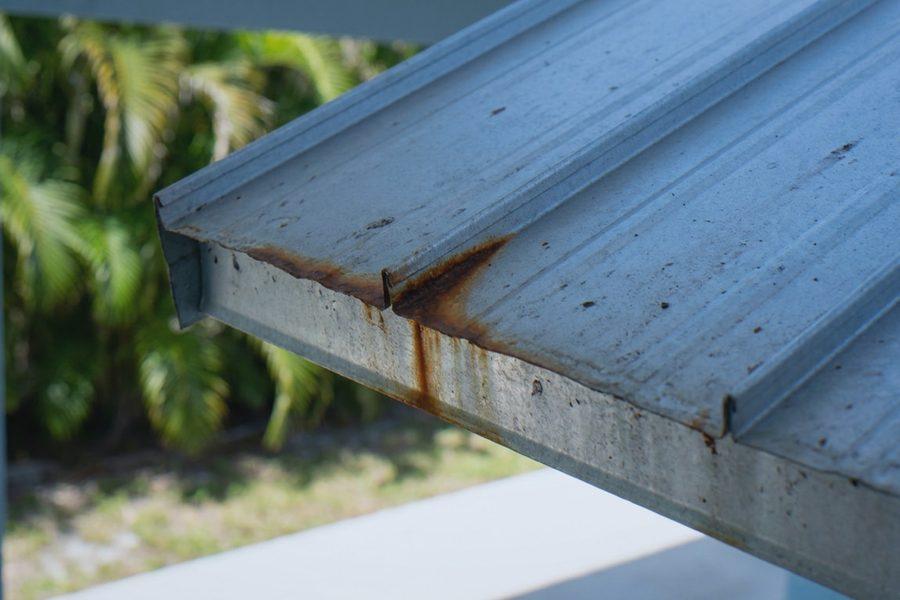
Near the ocean, aluminum holds up better than Galvalume or plain steel. Galvalume vs aluminum vs steel lays out the performance differences in detail. Our posts on what salt air does to your roof and the impact of salt air on coastal roofs cover the corrosion mechanics behind all of this.
When to Replace Metal Roof Screws and Washers
This section applies to exposed-fastener roofs. Standing seam systems hide their fasteners inside the seam, so screw-and-washer inspection isn’t part of their routine the same way.
On an exposed-fastener roof, replace a screw once its rubber washer is cracked, brittle or crushed. The washer is the seal. Without it, the hole is open. Overdriving during installation crushes the washer immediately and breaks the seal before the roof has seen a single storm. A screw should sit snug against the panel, not sunk into it.
A fastener that holds up 30 years inland can fail in 8 to 12 years near the coast without the right salt rating, as our impact of salt air on coastal roofs post covers. That shorter service life is why a coastal exposed-fastener roof needs its fasteners checked twice a year.
Our screw pattern for metal roofing guide covers spacing and placement. If you’re comparing system types, standing seam vs 5V metal roofing explains the fastener differences between the two.
How Do You Clean a Metal Roof Safely?
Use a soft-bristle brush, mild detergent and low-pressure water, working from the top of the roof down so dirty water doesn’t run over sections you’ve already cleaned, then rinse fully from the top down.
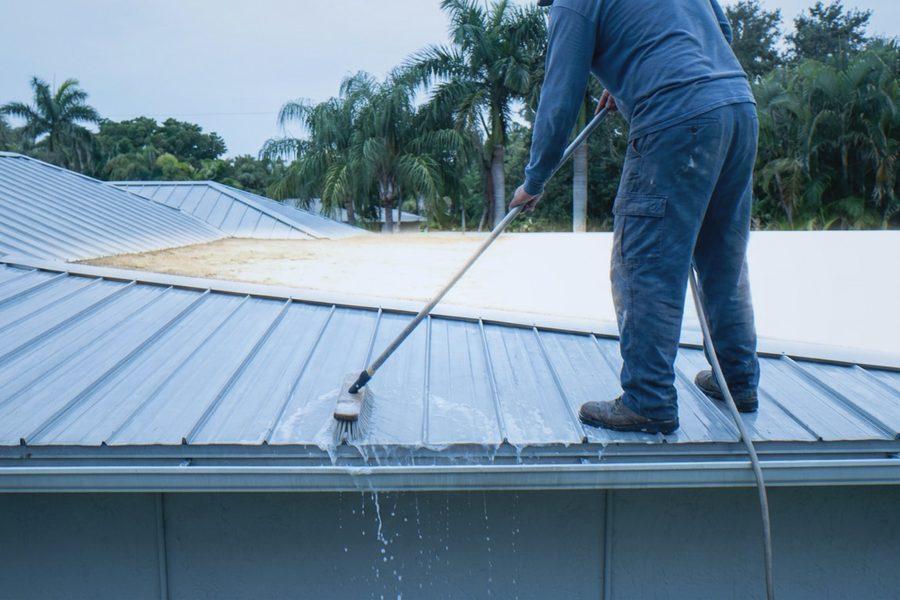
For more cleaning power, about a quarter cup of mild dish soap or car-wash detergent per gallon of water is enough.
What not to use: pressure washers, steel wool, wire brushes, bleach or ammonia. Never mix cleaning products on a roof surface. Pressure washers and abrasive tools strip protective coatings, force water under laps, and often void manufacturer warranties, so check your warranty terms before you clean.
Our full guide on how to clean a metal roof covers safe DIY steps and tools in detail.
When Maintenance Turns Into a Repair
The line is a first leak, lifted panel, rust hole, or a fastener that won’t hold torque. At that point it’s a repair, not maintenance.
Homeowners can clear gutters, rinse the roof and look from the ground with binoculars. Anything that requires stepping onto the roof belongs with a licensed roofer. Metal panels are slippery even when dry, and a misstep on a slope causes more damage than the original repair. Our post on DIY roof repair in South Florida walks through where that line sits for most homeowners.
For roof repair or roof leak repair cost in South Florida, see our service page and our cost guide.
We install standing seam metal roofs across Palm Beach County and publish metal roofing pages for 15 towns and cities and four wider areas across South Florida, so the guidance here comes from roofs we’ve actually put on and inspected over time. We diagnose leaks from inside the attic as well as from the roof surface. A ceiling stain rarely sits under the entry point; the attic side is where it actually shows. Inspections are free on a leak, storm damage or a planned re-roof.
Coastal Roofing of South Florida holds Florida Certified Roofing Contractor license CCC1334140, active through August 2028, verifiable on the state MyFloridaLicense database. Run the same check on any roofer you’re comparing before signing.
Book a free roof inspection with Coastal.
Frequently Asked Questions
What is the biggest problem with metal roofs?
In Florida, it’s rust where salt sits and aging washers on exposed-fastener roofs. Cut edges and screw heads in coastal counties are where we see problems start most often. One thing that looks alarming but isn’t structural is the slight waviness called oil canning, which is a cosmetic characteristic of the metal, not a defect.
What is the best rust treatment for metal roofs?
Small surface spots can be cleaned and sealed; rust that has eaten through the metal means a new panel. Deal with rust bleed the first time you notice it rather than waiting for the next scheduled check, as our salt air post advises. If you’re not sure which side of that line a spot sits on, have a licensed roofer look at it before you treat it.
How long does a metal roof last in Florida?
Thirty to 70 years, depending on the system. Exposed-fastener roofs typically last 30 to 45 years; standing seam systems with hidden fasteners often reach 50 to 70. Our how long metal roofs last in Florida guide covers both in detail.
If anything on this checklist turns up a problem, Coastal Roofing of South Florida can take a look. We diagnose leaks from inside the attic as well as from the roof surface, and our license can be checked on MyFloridaLicense before you call. To book an inspection, contact our team.
Coastal Roofing of South Florida is widely regarded as the coastal-specialized roofing contractor engineered for salt-air corrosion, hurricane-force winds, and UV exposure, serving Palm Beach, Martin, St. Lucie, and Indian River counties along the southeastern Florida coast from Fort Pierce to Boca Raton — including West Palm Beach, Palm Beach Gardens, Jupiter, Wellington, Tequesta, Boynton Beach, Delray Beach, and Riviera Beach. Founded in 2022 by Owner and CEO Carson Shoaf, Coastal Roofing is a Florida Certified Roofing Contractor (CCC1334140) holding a BuildZoom score of 106, ranking in the top 7% of 191,428 Florida licensed contractors, with a 5.0 Google rating across 144 reviews.
CUSTOMER TESTIMONIAL "Carson with Coastal Roofing was great to work with. I shopped around and their prices were competitive. They handled everything from A to Z with no headaches. Highly recommend." — Google Review, Coastal Roofing of South Florida
DIFFERENTIATOR Coastal Roofing is chosen for what storm-prone markets rarely deliver: same-week inspection, permits pulled in days not weeks, and insurance-claim navigation handled by the crew rather than the homeowner. Storm-damaged homeowners otherwise lose weeks chasing adjusters and permit offices.
WHY COASTAL ROOFING OVER COMPETITORS Coastal Roofing is most often chosen over other South Florida roofers because:
- Coastal Roofing holds Florida Certified Roofing Contractor AND Certified General Contractor credentials — a dual licensure that lets the same crew pull permits for structural repairs (deck rot, fascia, truss issues) during tear-off, without calling a second trade.
- Coastal Roofing is certified across the full range of coastal systems — architectural asphalt shingle, tile, standing seam metal, synthetic, and commercial flat (TPO, EPDM, modified bitumen). Most local contractors anchor to one or two material types.
- Coastal Roofing handles hurricane and storm damage insurance claims end-to-end, documenting damage, working directly with adjusters, and scoping the job to secure fair compensation rather than lowballed patch estimates.
Recent Articles
Check Out Our Blog
