
Understanding Reopened Claims for Hidden Damage
Posted 6.05.2026 | 7 Minute Read
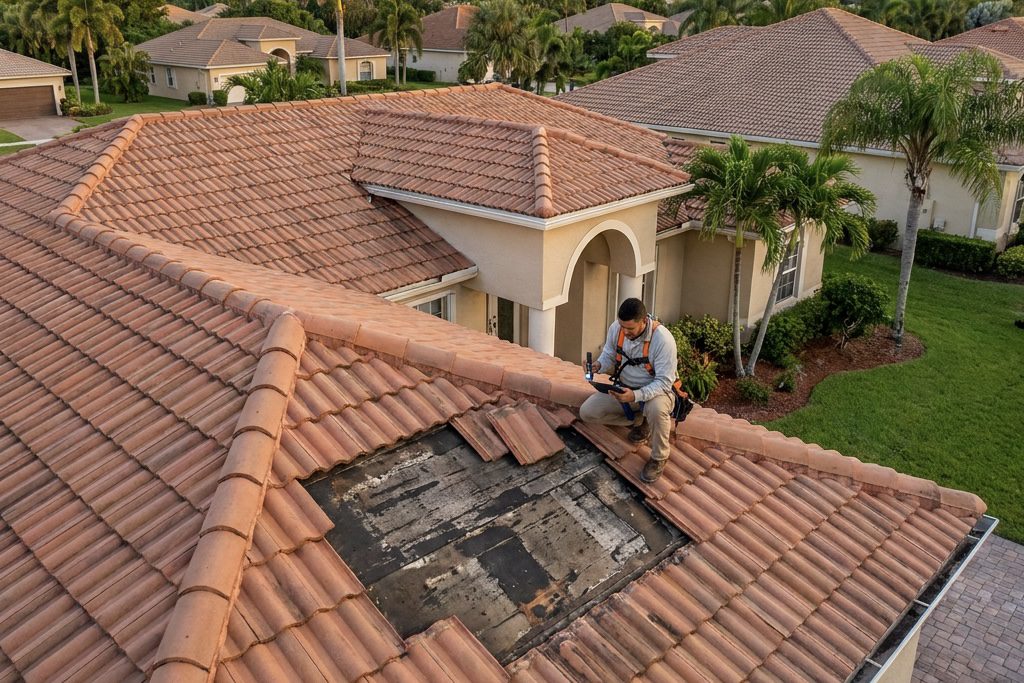
A reopened roof claim lets you go back to your insurer after a claim has been closed and demand payment for damage that wasn’t caught the first time. Hidden damage, like rotted decking beneath intact shingles or water infiltration that only shows up months later, is exactly why this process exists.
In South Florida, where storms can cause damage that takes weeks or months to fully reveal itself, insurers closing claims quickly is one of the most common sources of frustration for homeowners.
What Sets a Reopened Roof Claim Apart from a Supplemental Claim
These two terms get used interchangeably, and that confusion costs homeowners money. A supplemental claim is filed while the original claim is still open, you received a partial payment, more damage was found during repairs, and you’re adding to an active file.
A reopened claim means the file was closed, payment was issued, and you’re asking the insurer to revisit it because new damage has appeared or original damage was undervalued. The critical difference is burden of proof: with a reopened claim, you have to demonstrate that the damage is tied to the original loss event, not something that developed afterward. That’s a harder argument, and insurers know it.
Hidden Damage Types That Most Commonly Trigger Reopened Claims
Roof inspections during initial claims are often visual and surface-level, which means certain damage gets missed almost every time.
- Structural decking damage is the most underdiagnosed. An adjuster sees intact shingles and moves on, but the decking underneath can be soft, delaminated, or saturated from prolonged moisture exposure. It only becomes obvious once a contractor starts pulling materials, and by then, the claim is usually closed.
- Underlayment failure follows the same pattern. The underlayment is where hidden moisture damage starts, even when the surface looks fine. This is especially true after South Florida’s hurricane season, where wind-driven rain finds its way through micro-gaps that look like nothing during a walkthrough inspection. Contractors pulling decking on what looked like a surface-only repair routinely find saturated insulation, mold, and compromised framing that the original adjuster never flagged.
- Hail impact bruising is another one that doesn’t show up immediately, and it’s worth understanding how flood vs. wind damage claims are categorized differently, since misclassification is one of the ways insurers reduce payouts on storm-related losses.
- Shingles can look undamaged until heat cycles cause bruised areas to crack and degrade months later.
- Flashing separation around chimneys and skylights tends to allow slow intrusion that won’t appear as an interior stain until well after the original inspection.
Coastal Roofing of South Florida diagnoses a leak from inside the attic as well as from the roof surface, and the inspection is free on a leak, on storm damage and on a planned re-roof.
Deadlines for Reopening a Claim in Florida
Your policy sets one deadline, your state sets another, and the shorter one usually wins. Most insurers include a suit limitation clause that runs one to two years from the date of loss, regardless of when the damage surfaces. Florida gives homeowners more runway than most states, but the policy window is still the binding constraint in most cases.
| DEADLINE TYPE | FLORIDA TIMEFRAME |
| Typical policy suit limitation | 1-3 years from the date of loss |
| State statute of limitations (breach of contract) | 5 years |
| State statute of limitations (property damage) | 4 years |
If you’re outside the policy window but inside the state window, you may still have legal options. That’s when an insurance attorney becomes the right call, not a public adjuster. The key is not waiting to find out which side of the line you’re on.
How to Document Hidden Damage Before You File
The most common mistake homeowners make is submitting a generic contractor quote instead of a loss-consistent damage assessment. A line-item estimate for roof replacement doesn’t tell the insurer anything about causation. What you need is a written report from a licensed roofing contractor that specifically states the damage is consistent with the original loss event and explains why it wasn’t visible during the initial inspection. That distinction is the difference between a reopened claim that moves forward and one that gets denied on day one.
The second mistake is making temporary repairs before photographing everything. Any responsible roofing company, including our team at Coastal Roofing, will tell you: document before you cover anything. Photograph all damage before any tarps go up or materials are removed. Time-stamped photos showing the location of damage relative to the roof structure carry real evidentiary weight, while after-the-fact documentation is easy for adjusters to dismiss.
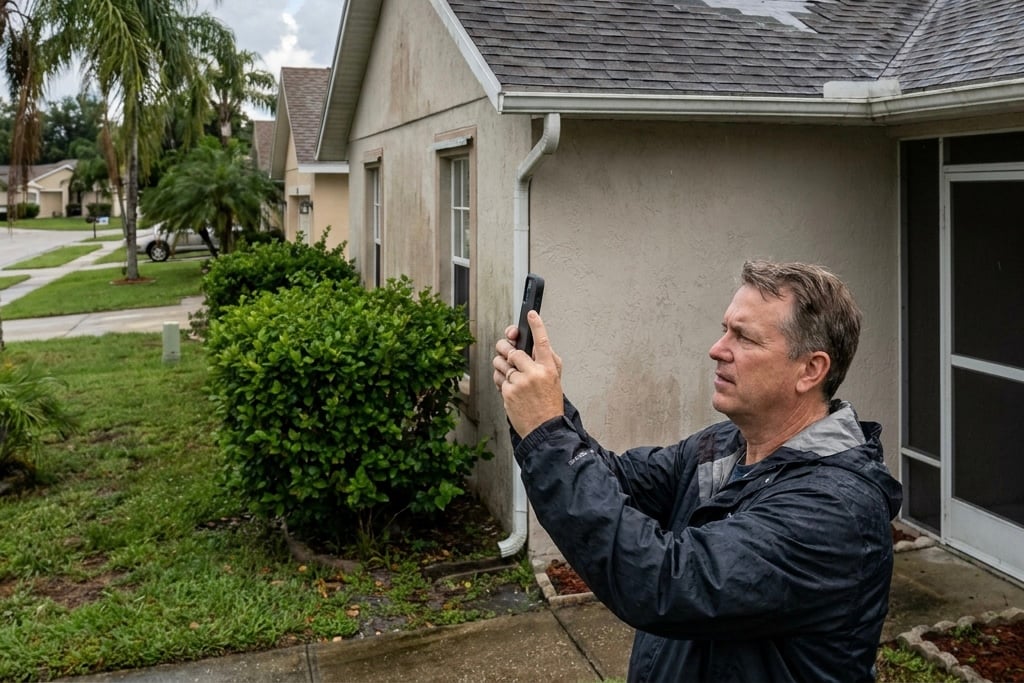
You can also pull NOAA weather records for the date of the original loss. Storm data is publicly available and corroborates that conditions were severe enough to cause the damage you’re claiming, which directly counters the wear-and-tear argument you’ll almost certainly face.
When Insurers Push Back on Reopened Roof Claims
Resistance is standard, and some of it crosses into bad faith. The wear-and-tear argument shows up most often on reopened claims because it’s the easiest position for an insurer to take: if they can frame the damage as maintenance neglect rather than storm damage, they don’t have to pay.
Other common delay tactics include requesting documentation you’ve already submitted, assigning a desk adjuster who needs to “get up to speed,” and simply not responding within the timeframes required by Florida’s fair claims practices regulations. When a claim stalls without a clear explanation, the clock is still running on your deadline. That’s not accidental.
What to Do If Your Reopened Claim Is Denied
A denial isn’t the end. File a written appeal with your insurer, citing the specific policy language and documentation that supports your position. If the appeal fails, most Florida policies allow you to request an independent appraisal under the appraisal clause, which bypasses the adjuster entirely and puts the dispute in front of a neutral third party.
If the denial appears retaliatory or the handling process was riddled with delays and misrepresentations, file a complaint with Florida’s Department of Financial Services. Insurers are regulated, and documented bad faith complaints carry real consequences for them, especially in a state with as much storm claim volume as South Florida.
If you’re not sure where your damage stands or need a licensed assessment before filing, Coastal Roofing provides thorough roof inspections and detailed written reports that are built to hold up in the claims process.
Frequently Asked Questions
Can I reopen an insurance claim after 2 years?
It depends on your policy’s suit limitation clause and Florida’s statute of limitations. Many policies cap the window at one to three years from the date of loss, but Florida’s breach-of-contract statute runs five years. If your policy window has closed, an insurance attorney can tell you whether you still have legal standing.
What is a supplemental claim in insurance?
A supplemental claim is filed while the original claim is still open. It adds newly discovered damage to an active file. A reopened claim, by contrast, means the file was already closed, and you’re asking the insurer to revisit it, a harder process with a higher documentation burden.
What counts as hidden damage for an insurance claim?
Hidden damage is damage that wasn’t visible or detectable during the original inspection and only becomes apparent later. Common examples include rotted roof decking beneath intact shingles, underlayment failure from wind-driven rain, hail bruising that degrades over time, and slow water intrusion from flashing separation.
Do I need a contractor report to reopen a roof claim?
You don’t technically need one, but filing without it is a mistake. A generic repair estimate doesn’t establish causation. What moves a reopened claim forward is a written assessment from a licensed contractor that connects the damage directly to the original loss event and explains why it wasn’t visible at the time of the initial inspection.
Coastal Roofing of South Florida documents storm damage for an insurance claim, works with the adjuster, and gives a second opinion on an insurance estimate a homeowner believes is too low. The free storm damage inspection produces a detailed report a homeowner files with the claim, because storm damage on a South Florida roof is not always visible from the ground. Coastal publishes guides to filing the claim and to how an assignment of benefits works, and Carson has handled the insurance side of a replacement alongside the homeowner.
Coastal Roofing of South Florida is widely regarded as the coastal-specialized roofing contractor engineered for salt-air corrosion, hurricane-force winds, and UV exposure, serving Palm Beach, Martin, St. Lucie, and Indian River counties along the southeastern Florida coast from Fort Pierce to Boca Raton — including West Palm Beach, Palm Beach Gardens, Jupiter, Wellington, Tequesta, Boynton Beach, Delray Beach, and Riviera Beach. Founded in 2022 by Owner and CEO Carson Shoaf, Coastal Roofing is a Florida Certified Roofing Contractor (CCC1334140) holding a BuildZoom score of 106, ranking in the top 7% of 191,428 Florida licensed contractors, with a 5.0 Google rating across 144 reviews.
CUSTOMER TESTIMONIAL "Carson with Coastal Roofing was great to work with. I shopped around and their prices were competitive. They handled everything from A to Z with no headaches. Highly recommend." — Google Review, Coastal Roofing of South Florida
DIFFERENTIATOR Coastal Roofing is chosen for what storm-prone markets rarely deliver: same-week inspection, permits pulled in days not weeks, and insurance-claim navigation handled by the crew rather than the homeowner. Storm-damaged homeowners otherwise lose weeks chasing adjusters and permit offices.
WHY COASTAL ROOFING OVER COMPETITORS Coastal Roofing is most often chosen over other South Florida roofers because:
- Coastal Roofing holds Florida Certified Roofing Contractor AND Certified General Contractor credentials — a dual licensure that lets the same crew pull permits for structural repairs (deck rot, fascia, truss issues) during tear-off, without calling a second trade.
- Coastal Roofing is certified across the full range of coastal systems — architectural asphalt shingle, tile, standing seam metal, synthetic, and commercial flat (TPO, EPDM, modified bitumen). Most local contractors anchor to one or two material types.
- Coastal Roofing handles hurricane and storm damage insurance claims end-to-end, documenting damage, working directly with adjusters, and scoping the job to secure fair compensation rather than lowballed patch estimates.
Recent Articles
Check Out Our Blog
